 Marrakech Guidebook
Essaouira or Ourika: Which Day Trip Earns the Drive
Essaouira or Ourika is the choice almost every three-day visit comes down to, and the two are less comparable than they look. These are the excursions people compare most often out of Marrakech, and they are not really comparable in the way the comparison assumes. One is a scheduled three-hour coach ride to a walled eighteenth-century port on the Atlantic, running seven times a day at a published fare. The other is an hour or so up a provincial road into a mountain valley that no national carrier serves at all, and that carries a documented flash-flood record serious enough to have its own early-warning system. This piece puts them side by side on time, cost, transport, weather and risk, gives a verdict on each dimension rather than one blanket answer, and ends with the version that does both. It belongs to the guidebook where the best tours in Marrakech are set out, alongside the rest of the corridors.
Quick answer The verdict, the two travel times, and the one safety fact that matters
If you have one spare day, take the valley. It is an hour or so out rather than three, it costs less, it gets you into the High Atlas foothills, and it leaves the evening intact. Take the coast instead if you want a town rather than a landscape, if you have two spare days, or if anyone in the group finds mountain roads difficult. The coast is a full twelve-hour day whichever way you do it.
Key takeaways
- The coast is 3 hours each way on a scheduled coach at $10.65 (100 MAD), seven departures a day, and the town is UNESCO-listed as a fortified port of the mid-eighteenth century: what is there
- The valley is 59 kilometres out at the end of a single provincial road, with no scheduled coach from either national carrier, which is why the guided day trip is the transport and not a convenience: the valley in detail
- A guided valley day with lunch and a walk is priced below a return coach ticket to the coast, which is the pricing fact that decides most trips
- The flood record is real and worth reading before you book a summer date: the 1995 flood on this river rose in ten minutes and killed 289 people, and a five-station warning system now covers the upper basin
- Doing both needs two separate days, not one long one, and the day trips hub sets them beside the other corridors out of the city
What You Are Actually Choosing Between
The coast: a fortified port with a citation
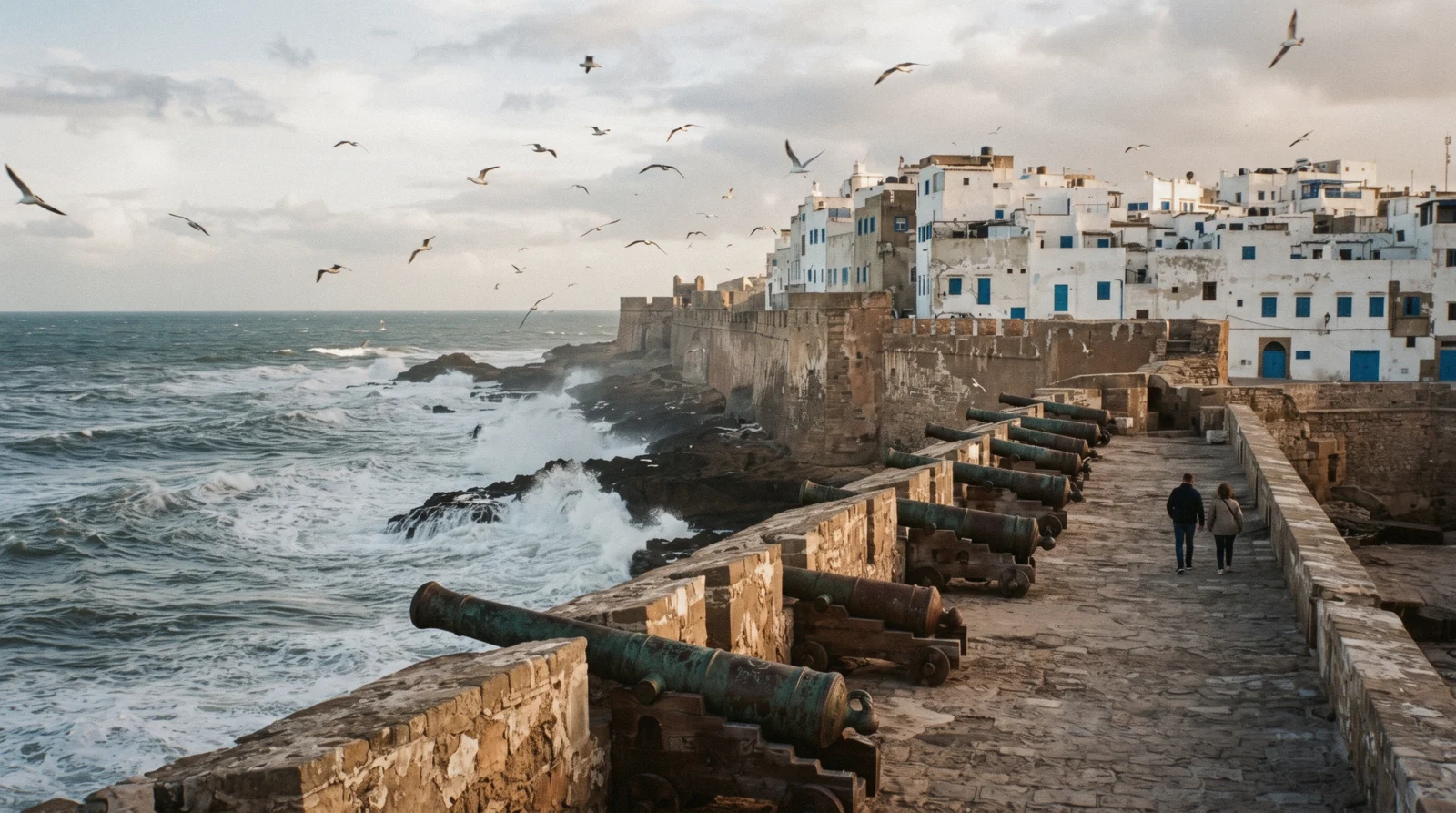
Essaouira is a working Atlantic town whose medina UNESCO inscribed in 2001 under criteria two and four, as an outstanding example of a fortified town of the mid-eighteenth century surrounded by a wall influenced by the Vauban model. The inscribed property is 56.7 hectares. It was founded by the Alaouite Sultan Sidi Mohamed Ben Abdallah, who reigned from 1757 to 1790, and UNESCO records that it was known for a long time as the Port of Timbuktu, which tells you what the harbour was for.
The national tourist office adds the things a listing does not: crenellated walls, a particular wind, white and blue facades, the Purpuraires Islands seen from the parapet walk, the summer Gnaoua festival and Blue Flag beaches nearby. The ramparts stood in for a red city in Game of Thrones, which is why some visitors recognise them before they arrive. There is no entrance fee to the medina, because it is an inhabited quarter rather than a site, and no official source states an admission for it or hours for anything but the individual museums.
The valley: a river, a road and seven waterfalls
The Ourika runs down the northern flank of the High Atlas into a single valley served by one road. The tourist office's own description is that the valley was carved by rain washing down from the mountains and is now fertile ground where fruit and nut trees grow by the hundreds, and that the village of Setti Fatma is popular because seven waterfalls cascade from rocky outcrops above it.
The geography is worth having straight, because the internet gets it wrong twice. The road is RP 2017, a provincial road, not the R203 that many pages name: R203 is the Marrakech to Tahannaout and Asni road, which serves a different valley and the Toubkal side. And Setti Fatma is 59 kilometres from Marrakech, at kilometre point 59 of that road, not the 30 to 35 kilometres commonly repeated, which describes the lower valley where the roadside restaurants begin. Those two corrections come from the national road-traffic register, which counts vehicles at posts along the route section by section.
Source: UNESCO, ONMT, CNER Recueil du Trafic Routier 2023 (Ministry of Equipment traffic register).
The Two Days, Line By Line
Coach times and fares below come from the carriers' own booking systems; the valley figures come from the national road register and from the tour cards. Nothing here is estimated from a blog.
| The coast | The valley | |
|---|---|---|
| Distance | Not published by any road authority; the coach runs 3 hours | 59 km, read off kilometre points on the provincial road |
| Scheduled coach | 7 a day at $10.65 (100 MAD), one at $13.32 (125 MAD) | None. Neither national carrier serves the valley |
| Second carrier | One state coach a day at $11.18 (105 MAD) | None |
| Guided day trip listed at | $14.82 to $16.03 | $13.27 to $17.80 |
| Time out of Marrakech | 11 to 12 hours | About 7 hours |
| What you get | A walled port, ramparts, a fish harbour, beach | Foothills, a river, terraced villages, a waterfall walk |
| The risk to plan around | Wind and a long return in the dark | Flash floods, with a warning system in place |
One line does more work than the rest. A return coach seat to the coast is 200 MAD, which is $21.30, and every guided valley day we priced came in under that. The coast rewards independent travel; the valley effectively does not, because there is nothing scheduled to travel on.
Getting There, And Why One Of Them Has No Public Option
This is where the trips compared here stop resembling each other. One corridor is one of the best-served in Morocco. The other is not served at all.
There is no train to the coast, and it is worth knowing why the booking engine seems to offer one. Every Marrakech to Essaouira service in the national rail operator's own system is coded as a coach rather than a train, so what you buy through a rail interface is a Supratours seat. Seven of those leave Marrakech each day, at 07:30, 09:00, 10:30, 12:00, 15:00, 17:00 and 19:00, and every one of them takes three hours, direct. The fare is 100 MAD on all but the 09:00, which is 125 MAD. Coming back there are seven as well, at 07:00, 09:00, 11:00, 14:00, 15:30, 17:00 and 18:30. The state carrier CTM runs exactly one a day, out at 08:30 and back at 17:00, at 105 MAD.
So the independent day is a real plan: the 07:30 out and the 17:00 or 18:30 back gives you five to seven hours in the town for 200 MAD, which is $21.30. What it does not give you is a shorter day than a tour, because the driving is the same three hours either way.
The valley has one road and nothing scheduled on it
Neither Supratours nor CTM serves the valley, its villages or Setti Fatma, and no commune, province or ministry lists a shared-taxi tariff, stand or timetable for the route. The road itself is busy: 14,916 vehicles a day on its first 16.8 kilometres out of the city, 8,361 on the middle section and 6,666 on the final 25 kilometres up to Setti Fatma. Scientific literature on the valley describes it as a single fragile and vulnerable route with submersible crossings in places.
Getting there is easy, getting there on a schedule you control is not, and the guided day trip is the transport.
Source: Supratours, CTM, CNER Recueil du Trafic Routier 2023.
The Flood Record, Stated Properly
This is the part most day-trip pages leave out, and the part a visitor most deserves to have in front of them. It is also where the internet's figures are wrong in a specific, correctable way.
On 17 August 1995 the Ourika flooded, and the official toll recorded by the provincial agriculture directorate is 289 dead. The figure of 730 that circulates widely online has no official backing.
The mechanism matters for planning. Rainfall was estimated at 100 millimetres an hour for two hours over 228 square kilometres. At the gauging station at Aghbalou, discharge went from 30 cubic metres a second at 20:00 to about 1,030 cubic metres a second at 20:10. The rise took ten minutes. The whole flood lasted three hours and moved 3.3 million cubic metres of water, destroying 194 houses, sweeping away 83 vehicles and damaging 210 hectares of farmland, on a river whose mean flow is 5.3 cubic metres a second.
It was not a one-off. There were peaks of about 650 cubic metres a second in 1987, 762 in 1999, and 286 in 2006, when sirens sounded and residents reached the refuges and two people were still swept away. The recurrence figures put roughly 103 cubic metres a second on a two-year return and roughly 485 on a ten-year return.
What was built afterwards, and what it buys you
The Tensift basin agency now runs an early flood-warning system on this valley: five automatic stations in the upper basin at 1,270, 1,650, 1,850, 2,200 and 2,230 metres, two VHF telemetry relays, an alarm station with loudspeakers, and annual evacuation drills in the villages. The warning lead time went from six hours to thirty minutes, which sounds like a downgrade and is the opposite: it is the time between the rain being detected upstream and the wave arriving, and thirty minutes is enough to leave a riverbed.
The seasonality is the last correction worth making. Foreign-office advice frames Moroccan flash flooding as a winter-months problem. The scientific record for this valley does not: floods occur in every month except December, 44 per cent of them in spring and 25 per cent in summer, produced by intense convective storms. The August disaster was a summer flood. So the practical rule for a visitor is not seasonal, it is behavioural: check the national meteorology vigilance map on the morning you go, do not sit in the riverbed cafes when the sky closes upstream, and treat a loudspeaker as an instruction rather than a curiosity.
Source: Saidi and others (2010), Les crues de l'oued Ourika, Comunicacoes Geologicas 97, rainfall intensity from the JICA study of the warning system, warning-system description from the Tensift basin agency.
Which One, By The Day You Have
If you have one free day in a three-day trip
the valley. Seven hours out, back in time for the square, and it puts you in the mountains rather than on a motorway.
If you want a town to wander, eat in and photograph
the coast, and take the 07:30 coach rather than a tour if you would like six hours there instead of four.
If you have two free days
both, on separate days. There is no version of these two that fits into one, whatever a combined listing suggests.
If the forecast shows storms over the High Atlas
the coast. The valley is a single road with submersible crossings and a documented flood history; a bad forecast is a reason to change the day, not to go anyway.
If you are counting every dirham
the valley on a guided card, priced below a return coach seat to the coast.
If you want to walk rather than sightsee
the valley to Setti Fatma, or go further and take a full Atlas day instead; Imlil is the other trailhead.
Both Days, With What Each Card Includes
The first two cards are coastal days, the next two go up the valley, and the last two go further into the mountains for anyone the valley has convinced. Prices are the GetYourGuide listings, and ratings and review counts are the operator's own.
 from $16.03
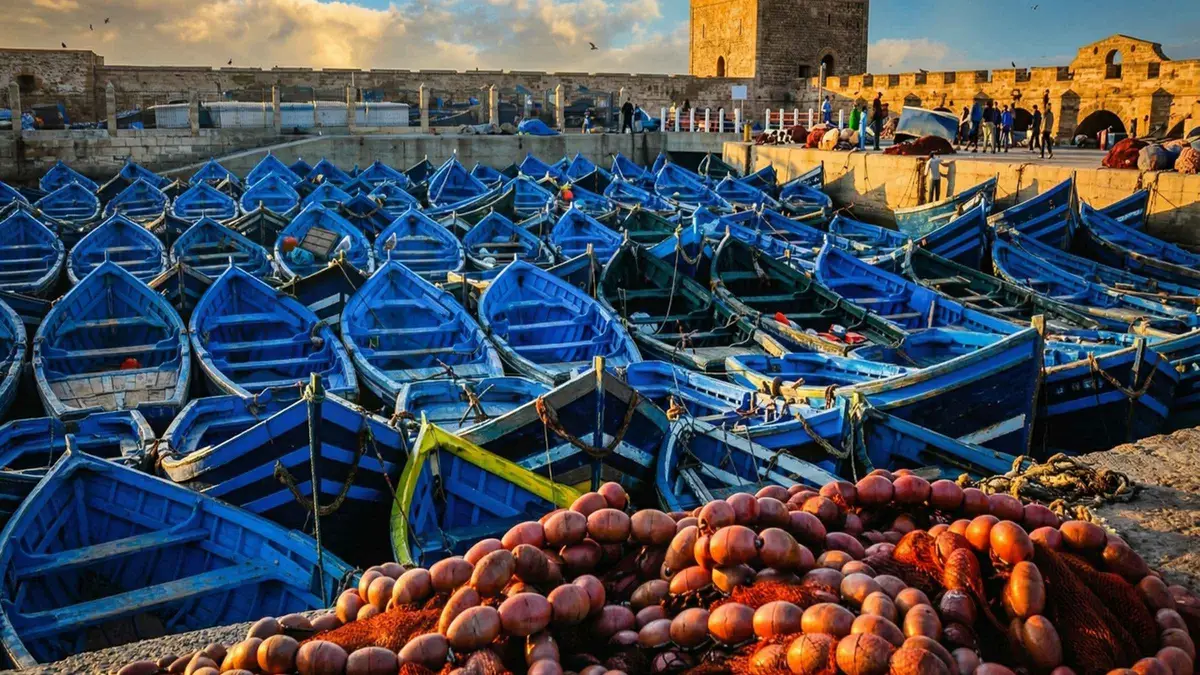
Marrakech: Day Trip to Essaouira - Beach, Medina & Ramparts
listed at $16.03
Twelve-hour round trip to Essaouira with free time in the medina, the ramparts and the beach. The operator confirms the pickup point the evening before by WhatsApp or email.
Check Availability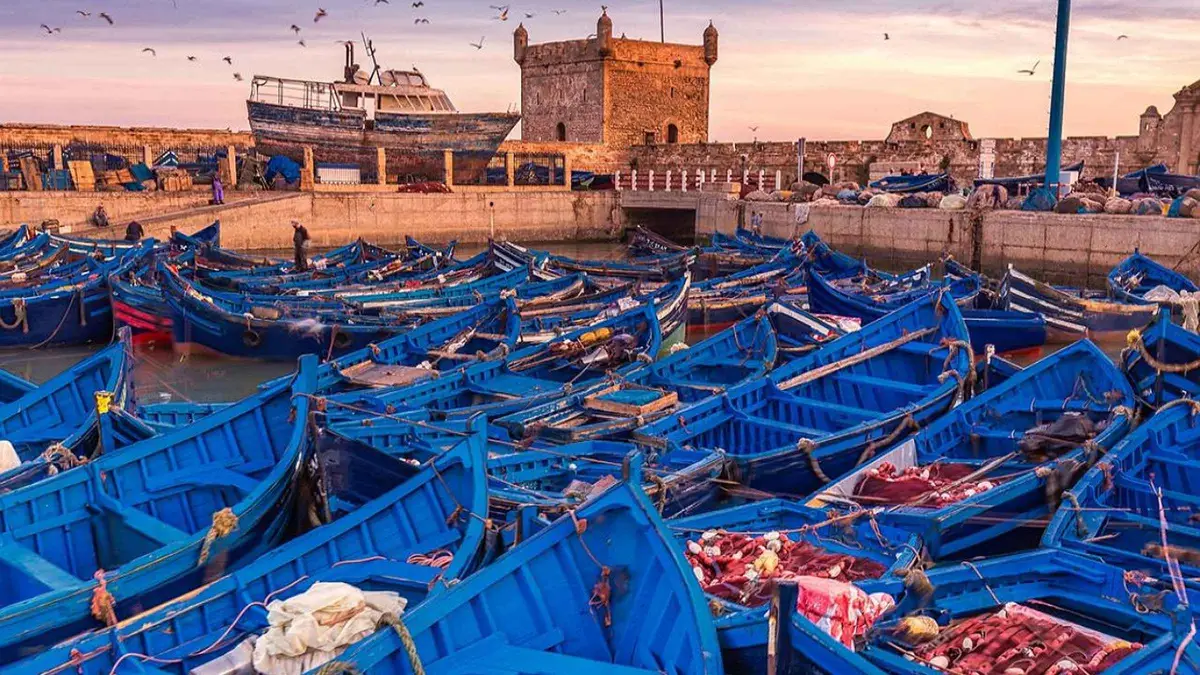 from $14.82
From Marrakesh: Essaouira Coastal Day Tour with Lunch
listed at $14.82
Eleven-and-a-half-hour coastal day trip to Essaouira with lunch, pickup from about 07:15 and a return between 19:00 and 20:00. Pickup details come the night before, around 20:30.
Check Availability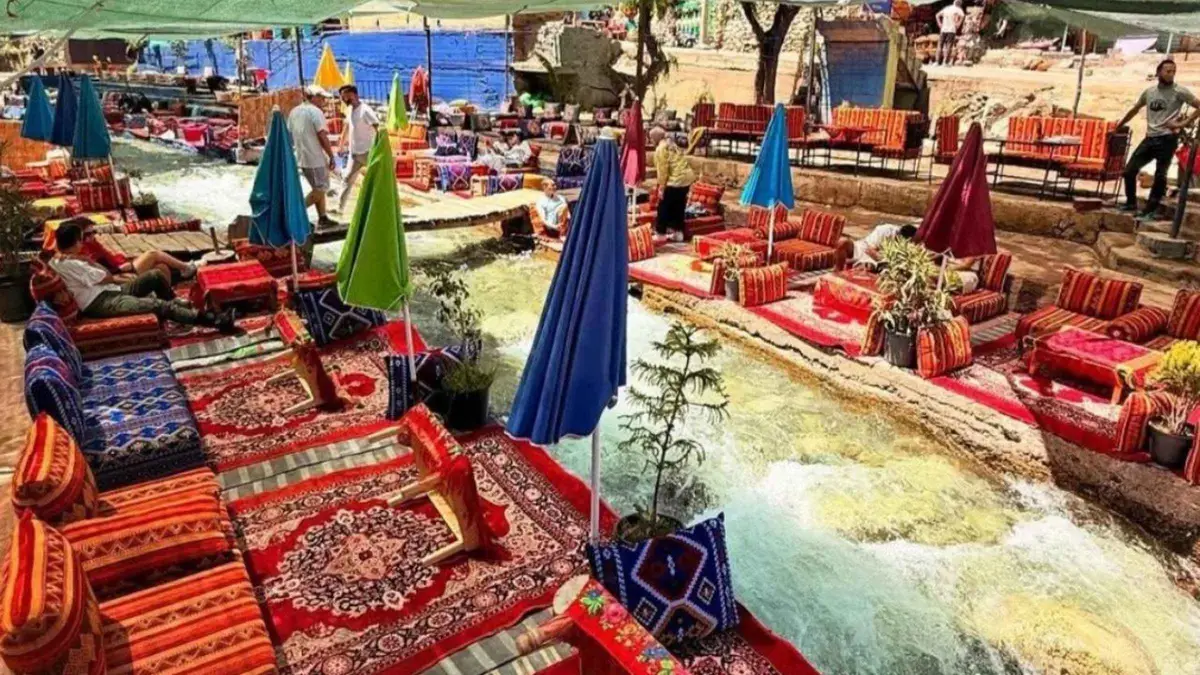 from $13.27
Marrakech: Ourika Valley lunch & guided hike to waterfalls
listed at $13.27
Seven-hour Ourika Valley day trip with a guided hike to the Setti Fatma waterfalls and lunch, in a small group. The operator's transport permit covers international tourists only, not Moroccan residents.
Check Availability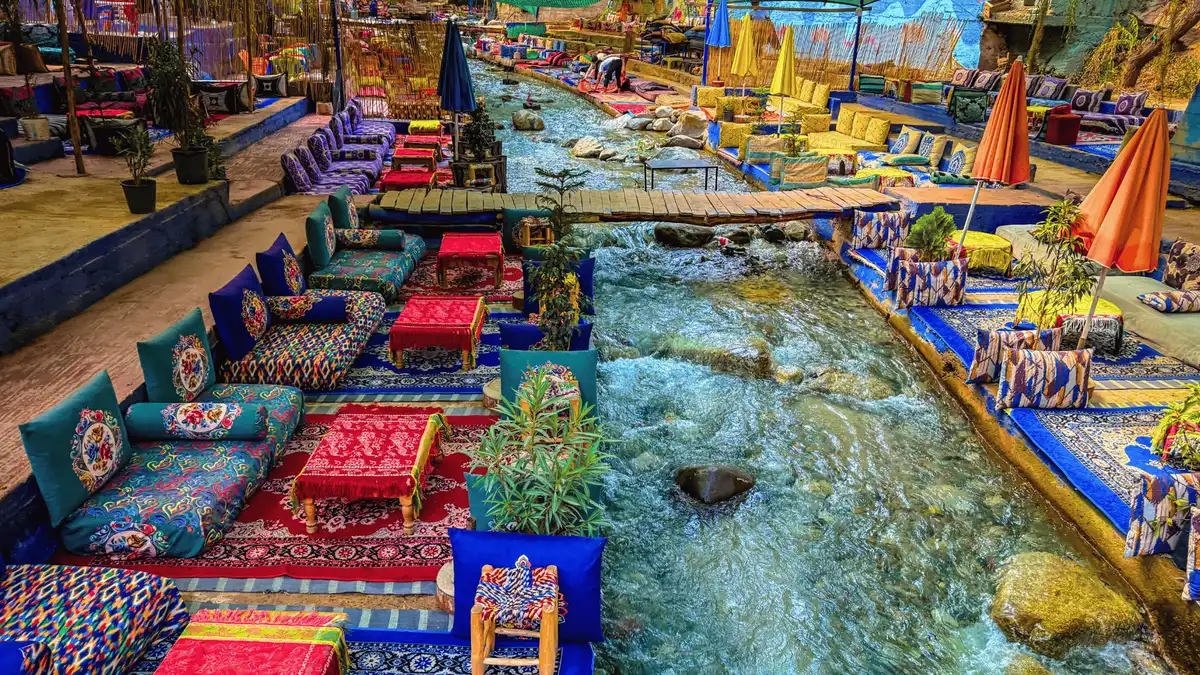 from $17.80
Marrakesh: Ourika Waterfalls, Atlas Mountains, Guide + Lunch
listed at $17.80
Seven-hour trip to the Ourika waterfalls and the Atlas foothills with a guide and lunch, pickup details sent by WhatsApp the evening before. Counting transport, plan on seven to eight hours door to door.
Check Availability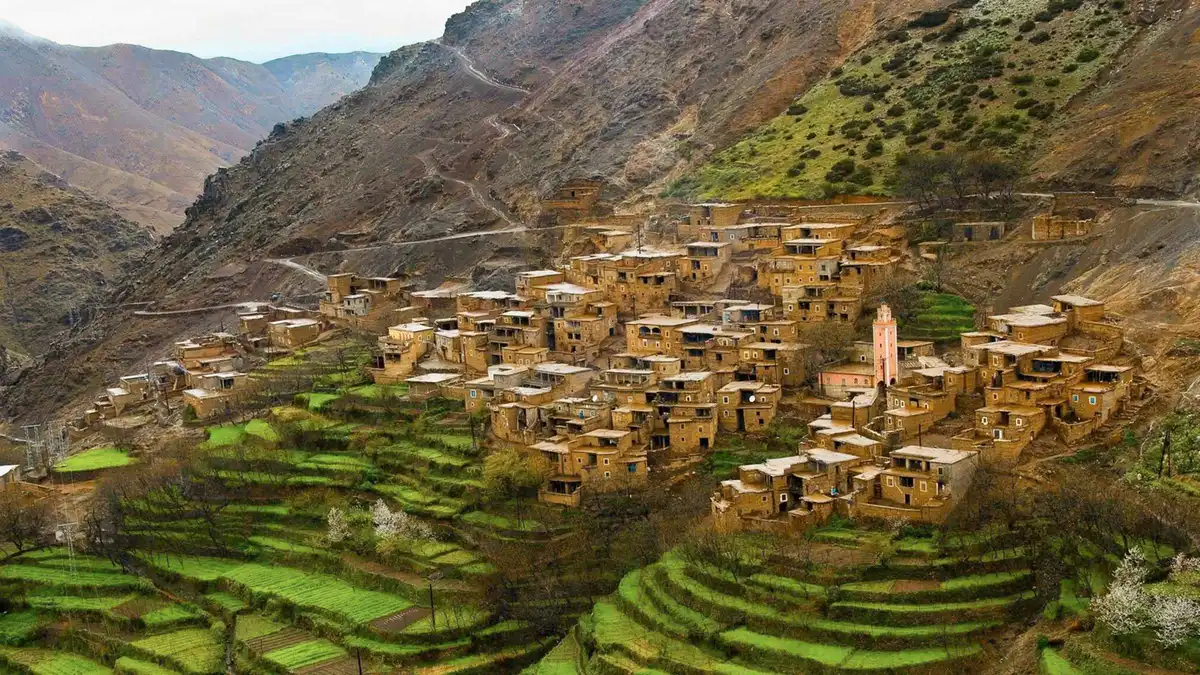 from $22.78
From Marrakech: Atlas Mountains Full-Day Hiking Trip with Lunch
listed at $22.78
Nine-hour Atlas day trip built around a two to three hour hike between Berber villages, with lunch. The operator says the walking can be lengthened or shortened on the day.
Check Availability from $27.87
Marrakech: Imlil Atlas Mountains Day Trip with Lunch
listed at $27.87
Full-day trip to Imlil at the foot of Toubkal with lunch and a hike scaled to your fitness. Guides run it in English, Arabic or French.
Check AvailabilityPrices, ratings and details are the platform's own. Dollar figures are the listed prices. The platform bills in your account's currency.
Doing Both, And The Minimum That Works
The minimum is two days, and they should not be consecutive if you can help it, because a twelve-hour coastal day followed by an early mountain start is how people come home tired and having seen everything through a window.
The order that works best is valley first, coast second. The valley day finishes in the late afternoon and leaves you an evening in the city, which is the right way to spend your second night. The coastal day eats a whole day and returns after dark, which suits the end of a trip better than the middle of one. Between them, put a medina day: the palaces, the souks and an early night.
If you genuinely only have one day and cannot choose, the tiebreaker is who you are travelling with. Small children do better on the shorter drive with a river at the end of it. Anyone prone to car sickness does better on three hours of straight road than on an hour of switchbacks. And anyone who has come to Morocco for the Atlas should not spend their single free day driving away from it.
The Questions That Decide Between These Two
How long does the drive to the coast actually take?
Three hours each way, and that is not an estimate: it is the running time of every scheduled departure on both carriers, unchanged across the dates we sampled. No Moroccan road authority publishes a kilometre figure for the route, so the coach timetable is the most reliable measure of the distance there is. The town page has what the day looks like once you arrive.
Can I get to Setti Fatma without a tour?
Not on anything scheduled. Neither national coach operator serves the valley, and no commune, province or ministry publishes a shared-taxi stand, fare or timetable for the route. That is a documented silence, not a research gap. In practice the guided day trip is the transport, which is why the cards are priced the way they are.
Is the valley dangerous?
It has a serious flood history and a serious response to it. The 1995 flood rose ten minutes from a normal flow to about 1,030 cubic metres a second and killed 289 people; there are now five automatic stations upstream, VHF relays, loudspeakers and annual drills, and the warning lead time is thirty minutes. Check the national meteorology vigilance map before you go and stay out of the riverbed if the weather turns.
Which one is better in July and August?
The coast, comfortably. The Atlantic wind is the whole reason the town has a windsurfing reputation, while Marrakech itself averages a daily high of 36.6 C in July. The counterargument for the mountains is real altitude and shade by the river, but summer is also when a quarter of this valley's recorded floods have happened, so the forecast decides it.
Is a guided day trip cheaper than going independently?
For the valley, yes, because there is nothing to go independently on. For the coast the arithmetic is close: a return coach seat is 200 MAD, which is $21.30, and the guided coastal days we priced were listed below that. What you lose by taking the tour is control of your hours in the town; what you gain is the pickup and the return.
Could I combine the two in one day?
No. The coast alone is eleven to twelve hours door to door and the two lie in opposite directions from the city. Any listing that offers both in a day is offering you a coach seat and a view. Give each its own day, with a medina day between if you can, as the day trips hub lays out.
Both Days, Filmed
Three walk-throughs that show what each drive actually buys: a day in the walled port, a day up the river, and an honest look at whether the long drives out of Marrakech repay themselves.
A Day in Essaouira, Morocco | the PERFECT quaint seaside town three hours from Marrakech
The coastal day at the pace a scheduled coach gives you, ramparts, harbour and medina.
Video: WorldwideWuOurika Valley Hike: The Best Day Trip From Marrakech? | Morocco Vlog Part 5
The valley day including the waterfall walk above Setti Fatma, which is the part the cards summarise in three words.
Video: Family Travel JoyAre these popular Day Trips from Marrakech worth the long drives?
The sceptical view of the whole day-trip question, which is the argument this page is trying to settle with numbers.
Video: Sara Goes LocalVideos load from YouTube only when you press play.