 Marrakech Guidebook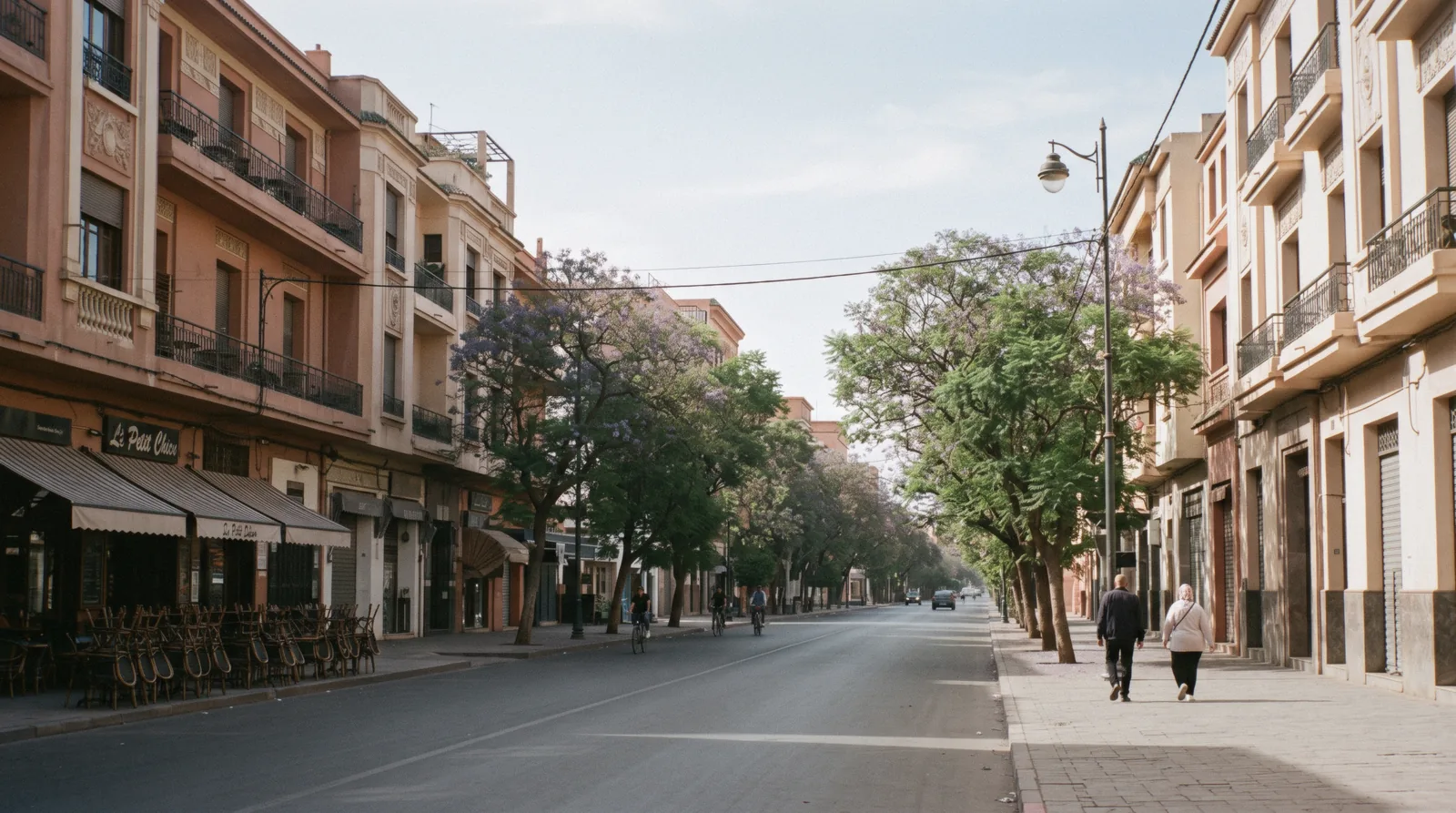
Gueliz, Marrakech
Gueliz Marrakech is the second city, laid out west of the ramparts on a grid of avenues while the walled medina stayed as it was. It is an arrondissement in its own right, with 219,863 residents at the last census, and it exists on this site for one reason above the others: it is where a street address works. A taxi can find your door, the airport bus terminates here, the trains leave from here, and every walk to a monument is a ride rather than a stroll. This page sets out what stands in Gueliz, what each thing charges and when it closes, how long the crossing to the medina really takes, and whether the trade is worth making. Marrakech attractions carries the ticket layer, the districts and the days.
Quick answer What is here, how far the medina is, who should sleep in it
Gueliz is the ville nouvelle west of the ramparts, about 2.0 km from Jemaa el-Fna and one of the five arrondissements of Marrakech, with 219,863 residents in the 2024 census against 81,103 in the walled Marrakech-Medina arrondissement. It sits outside the inscribed World Heritage property, which is why it looks like nowhere else in the city: pavements, numbered buildings, and streets a car can drive down.
Key takeaways
- The straight line from the centre of Gueliz to Jemaa el-Fna is 2.0 km and to the Koutoubia 1.8 km, so the medina is a fifteen minute ride or a walk of about half an hour on flat pavement. Where to stay compares the trade against sleeping inside the walls
- The two ticketed sights in the district are the cobalt garden and the fashion museum beside it, at $18.11 (170 MAD) and $14.91 (140 MAD) for an international visitor, and both are covered on the tickets index
- This is the arrival district: bus 19 from the airport terminates here in thirty minutes for $3.20 (30 MAD), and the railway station on Avenue Hassan II is the southern terminus of the national network. Airport to the city has both routes
- A private guide for the medina is worth more from a Gueliz base than from a riad, because it solves the one thing the district cannot: knowing which lane you are in
What Is Open in Gueliz, and What It Charges
Hours and prices read from each institution's own ticketing page in Q3 2026, converted at the site rate of 1,000 MAD to $106.52. Every price shown is the international visitor rate; residents and Moroccan nationals pay a published lower figure, which is set out on the ticket pages themselves rather than invented here.
| Place | Hours | International adult | Closed | Worth knowing |
|---|---|---|---|---|
| Jardin Majorelle | Every day 08:00 to 17:30, last entry 17:00 | $18.11 (170 MAD) | Published as open every day | The most expensive ticket in Marrakech, and the only Gueliz venue that states it is wheelchair accessible |
| Musee Pierre Berge des Arts Berberes, inside the garden | Every day 08:30 to 17:00, last entry 16:30 | $14.91 (140 MAD) alone, or $24.50 (230 MAD) with the garden | Published as open every day | A supplement, not an inclusion: the garden ticket alone does not admit you |
| Musee Yves Saint Laurent | 10:00 to 18:00, last entry 17:30 | $14.91 (140 MAD), or $33.00 (310 MAD) with the garden | Wednesdays | Same foundation as the garden, but no accessibility statement exists for it |
| All three on one ticket | Limited by the shortest opening, so plan around the museum | $35.20 (330 MAD) | Wednesdays, when the fashion museum shuts | Buy it only if you intend all three in one day; the garden alone is a ninety minute visit |
| Gare de Marrakech, Avenue Hassan II | Not published; the operator's site was unreachable | Fares not published, see the operator | Not stated | Southern terminus of the national network. Nothing runs south of Marrakech by rail |
The Ensemble Artisanal on Boulevard Mohammed V appears on the open map but has no official page, no published hours and no published prices, so it is described rather than tabled. The regional tourism delegation's Gueliz address and hours circulate in business directories but on no first-party page, and are treated here as unverified.
What to Book From a Gueliz Base
A Gueliz address changes what is worth booking: you are further from the monuments and closer to the transport, so the guided medina walk and the transfer earn their keep while a hammam is a ride away rather than a courtyard away. Prices and ratings as listed by the operator on GetYourGuide.
 from $66.35
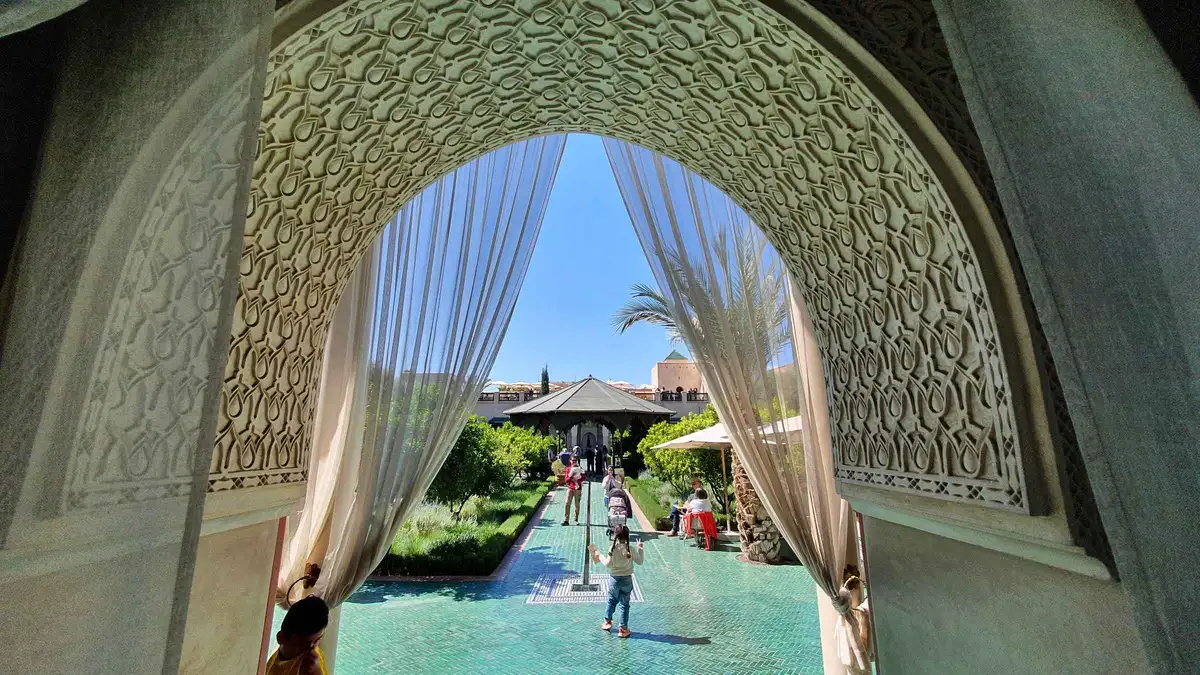
Marrakech: Tailor-Made City Tour With Your Own Private Guide
listed at $66.35
Half or full-day private tour built around what you ask to see, with pickup included. Up to two sights on the half-day and four on the full day; entrance fees are not included.
Check Availability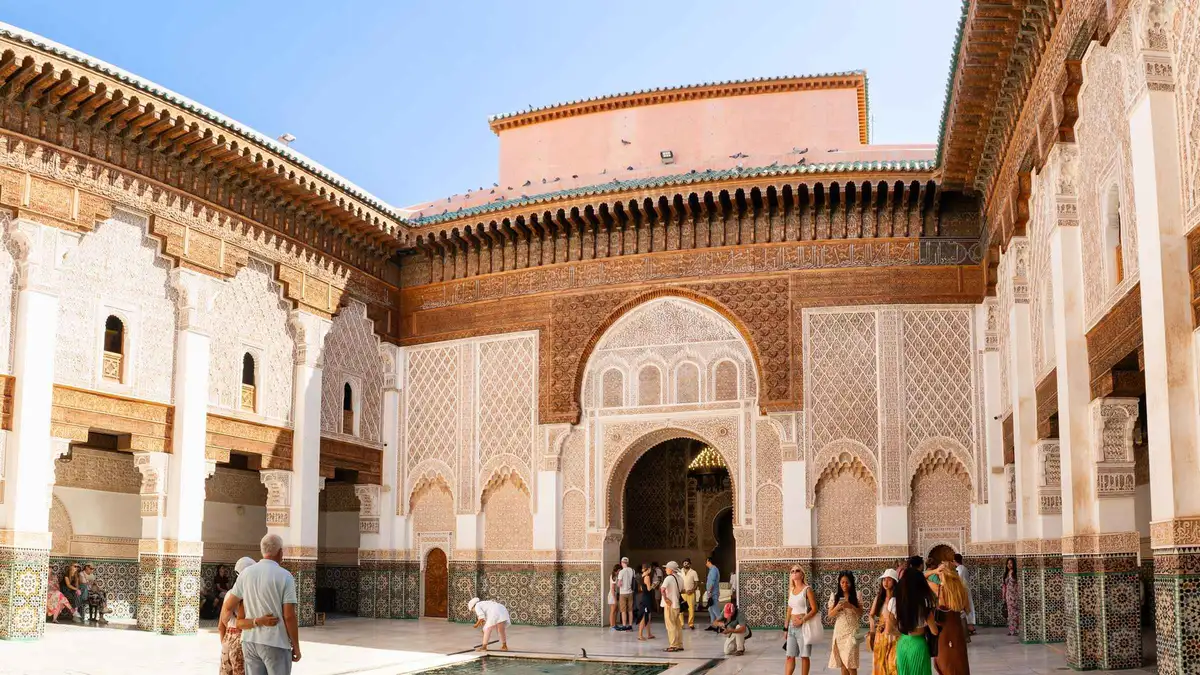 from $17.47
Marrakech: Historical Monuments, Souks & Medina Guided Tour
listed at $17.47
Four-hour licensed-guide circuit of the medina monuments, souks and lanes, with a WhatsApp briefing the day before. Private option includes riad pickup; monument tickets are separate.
Check Availability from $16
Tuk Tuk Marrakech Private Tour: Audio guide, Gift & Pastries
listed at $16
One to three-hour private tuk-tuk circuit with an audio guide, pastries and a gift; a driver, not a guide, is provided. Monument tickets are not included and Majorelle tickets have to be bought online first.
Check Availability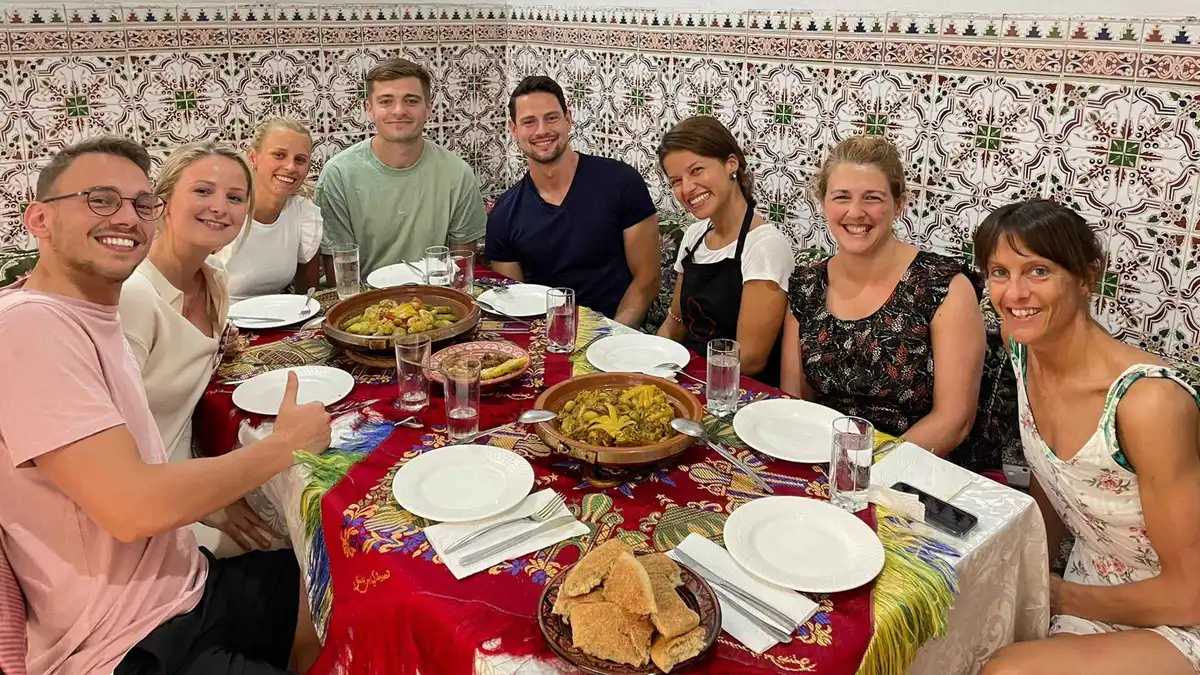 from $38.70
Marrakech Traditional Moroccan Cooking Class & Food Market
listed at $38.70
Two-and-a-half to three-hour cooking class starting with a market shop, then a tagine cooked and eaten at the workshop. Only people booked on the class can attend.
Check Availability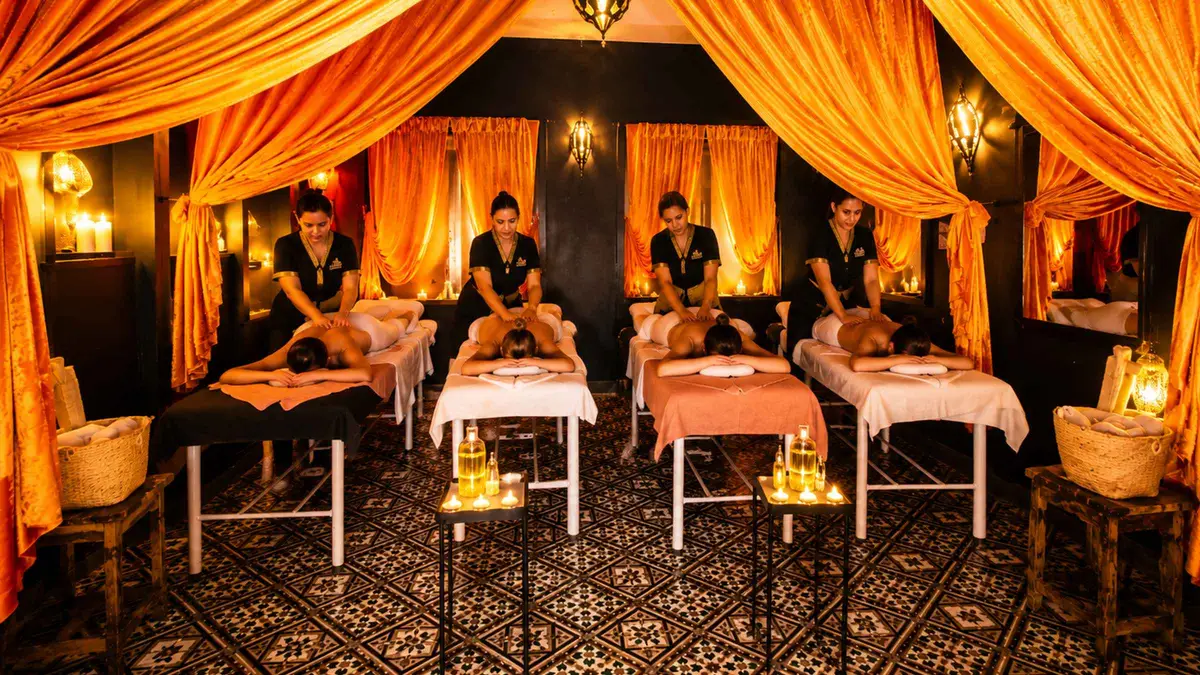 from $44.78
Marrakech: 2-Hour Traditional Moroccan Hammam Experience
listed at $44.78
Two-hour traditional hammam with black soap, kessa scrub and a massage at a city spa. No transfer included, so you make your own way there.
Check Availability from $8.29
Marrakech: Private Transfer to/from RAK Menara Airport
listed at $8.29
Private transfer between Menara airport and your Marrakech address, about 20 minutes. Vehicles cannot enter parts of the medina, so the drop-off can leave a 5-10 minute walk with luggage.
Check AvailabilityPrices, ratings and details are the platform's own. Dollar figures are the listed prices. The platform bills in your account's currency.
What Gueliz Actually Is
A district built to a plan, beside a city that grew without one.
Gueliz is the ville nouvelle: the quarter laid out west of the medina walls in the protectorate era, on a grid of wide avenues, and it is the only part of central Marrakech that reads as a twentieth century town. It takes its name from the Jebel Gueliz, the low hill on its western side. No Moroccan government site publishes an official boundary map or founding document.
The story of how the grid came to be laid out is covered in our guide to 1912 and after.
An arrondissement, not just a quarter
This matters more than it sounds, because most Marrakech districts are informal. Marrakech is divided into five arrondissements, and Gueliz is one of them in law, with its own president and its own census figures. The 2024 general census, published by decree, puts the commune of Marrakech at 1,002,697 residents and the prefecture at 1,571,580, split between the arrondissements as follows.
| Arrondissement | Residents, 2024 census | What sits in it |
|---|---|---|
| Menara | 522,259 | The airport, the Menara gardens and the western suburbs |
| Gueliz | 219,863 | The ville nouvelle, the railway station, Hivernage |
| Sidi Youssef Ben Ali | 107,966 | The south-east, beyond the ramparts |
| Marrakech-Medina | 81,103 | The walled city, its souks and its monuments |
| Annakhil | 71,506 | The north-east, running towards the Palmeraie |
Where the national tourist office puts it
The one official description of the district is the tourist office's, and it pairs Gueliz with Hivernage in a single sentence: the districts of Gueliz and Hivernage offer the most modern infrastructures, luxury boutiques and international ready-to-wear stores, airy avenues, which all contribute to Marrakech's unique offering. The same page frames the crossing you will be making several times a day, saying that you have only to leave the ramparts to be immersed in modern Morocco. Take that as the marketing it is, and note what it concedes: the two cities are different places, and the wall between them is real.
Outside the World Heritage line
The inscribed property is the walled medina, 1,107 hectares of it, bounded in UNESCO's own words by the original ramparts that enclose all the requisite architectural and urban attributes. Gueliz lies outside that boundary. Nothing here is protected by the inscription, which is why building heights, shopfronts and pavement cafes look nothing like the lanes on the other side of the wall, and why the district keeps changing while the medina does not.
Source: HCP, RGPH 2024, Fondation Jardin Majorelle.
What There Is to See, in Walking Order
Gueliz has two ticketed sights and a lot of street. Treat the street as the point and the two sights as the reason you came over.
Start at the northern end. The Jardin Majorelle sits 1.1 km from the centre of the district, a walled garden of cobalt blue buildings, bamboo and cactus beds, open every day from 08:00 with the last entry at 17:00. The foundation lengthens these hours in summer, so check its site for your dates.
It is the most expensive single ticket in Marrakech at $18.11 (170 MAD) for an international visitor. Inside the same walls, the Musee Pierre Berge des Arts Berberes opens half an hour later and shuts half an hour earlier, and its ticket is a separate $14.91 (140 MAD) rather than an inclusion, which is where more visitors are caught out than anywhere else in the city.
A hundred metres further along the same street stands the Musee Yves Saint Laurent, the newer building of the pair, which opens at 10:00 and closes on Wednesdays. The combined ticket for garden and fashion museum is $33.00 (310 MAD), and all three together are $35.20 (330 MAD). Buy the combination only if you intend to do all of it in one visit, because the tickets are same-day and the garden alone is a ninety minute walk-through, not an afternoon.
The rest of the district, which has no tickets
Everything else in Gueliz is free and unticketed, and none of it has published hours: the market halls, the pavement cafes along the main avenues, the bookshops and the galleries. The Ensemble Artisanal, the state-backed crafts hall on Boulevard Mohammed V near Bab Doukkala, has no official page, so its hours and prices are not published anywhere. Go if you are passing, do not build an afternoon around it.
The one accessibility statement in the district
Of ten Marrakech venues with official sites, exactly two have an accessibility statement, and one is in Gueliz. The Jardin Majorelle states that the garden is wheelchair accessible, that visitors with a disability card are admitted free, and that the cafe, the boutique and the Berber museum are each accessible. The fashion museum a hundred metres away, run by the same foundation, has no accessibility information online in either language.
That contrast, inside one foundation, is the most honest guide to accessibility planning in this city.
Crossing to the Medina, and Back Again After Dark
This is the number that decides whether Gueliz suits your trip, and there are three honest ways to cover it.
The straight line from the centre of Gueliz to Place Jemaa el-Fna is 2.0 km, and to the Koutoubia minaret 1.8 km. Walked, along Avenue Mohammed V, it is roughly half an hour on flat pavement, which is pleasant in April and punishing in July when the average high runs above 36 degrees. A petit taxi does it in about fifteen minutes in normal traffic.
There is no metro and no tram in Marrakech: buses, petits taxis, grands taxis and horse-drawn calèches are the entire surface network.
The taxi, and why the meter is the whole argument
Petits taxis are the beige cars, they work inside the city limits only and they carry a maximum of three passengers. The meter is compulsory: the obligation rests on a dahir of 1963 and was restated by ministry circulars in 2022 and again in 2024, which instructed governors to enforce it. No authority publishes the actual Marrakech tariffs, so the drop and per-kilometre figures quoted on blogs have no document behind them.
Ask for the meter, and if the driver refuses, take the next car.
The bus, with the caveat that matters
Line 19 links the airport to Gueliz and is the one city line most visitors use. The commune hosts its timetable: thirty minutes end to end, departures at a quarter past and a quarter to the hour, first 06:15 and last 21:15, identical every day of the week including Sunday. The fare published by the official destination guide is $3.20 (30 MAD) single.
For every other line the picture is worse: the network changed operator when Supratours, the rail operator's subsidiary, took over from ALSA after twenty six years, and no post-handover fare table or line list has been published. The last officially published urban fare is $0.43 (4 MAD), and it dates from the previous operator. Any ALSA timetable still online, including the commune's own line 19 sheet, predates the change.
Ride-hailing, which is not an option
Morocco has no legal framework for ride-hailing. Uber withdrew in 2018 saying it had received no clarity on how such apps could fit the existing transport model; Careem's legality was challenged before the competition authority; inDrive and Bolt operate without authorisation, and ministry circulars have ordered the suppression of clandestine transport. The single lawful app is Heetch, which works because it dispatches already-licensed taxis rather than running its own drivers.
In Gueliz, where the streets are wide and taxis are plentiful, none of this costs you anything; it is worth knowing before you install something at the airport.
Eating and Drinking in Gueliz
The one district in Marrakech where a printed menu, a card terminal and a licensed bar are all normal, and the reason this page still names almost no restaurants.
There is no MICHELIN Guide restaurant selection anywhere in Morocco. Searching Marrakech on the Guide's own restaurant pages returns the message that there are no selected restaurants in the area searched, and Casablanca returns the same. No stars, no Bib Gourmands, nothing.
That matters here because Gueliz is where the international dining scene is, and where you are most likely to be shown a certificate on a door. What the Guide does have in Marrakech is a hotels selection, which is set out on the where to stay page.
So we describe the type of place and the street rather than handing you a list we cannot source. The avenues around the market carry the pavement cafes; the streets running off them carry the small international restaurants and the wine licences, which are rare inside the walls. The national tourist office is quotable on what to order rather than where: tanjia, in its own words, traditionally prepared with lamb or veal in a terracotta jar, is the staple dish of Marrakech, and couscous is described as traditionally eaten on Fridays. Where to eat sets out the whole food layer, including why the site names so few addresses.
Practical differences from the medina
Cards are accepted in most Gueliz restaurants and in the supermarkets, which is not true of the souks, the food stalls or the taxis. Alcohol is sold in licensed restaurants and hotels here in a way it generally is not inside the walls, and UK travel advice notes that drinking anywhere other than a licensed restaurant or bar is illegal. Bring cash anyway: the dirham is a closed currency that cannot be bought abroad and must be changed on arrival, and travellers may carry only 2,000 MAD in banknotes in or out. What Marrakech costs covers the money rules.
Sleeping in Gueliz: What You Gain and What It Costs You
The case for the grid, made against the case for the courtyard.
What you gain is access. Buildings have numbers, streets have names, a taxi can stop outside and a car can park. There are lifts, which matters because a riad is a courtyard house with rooms on two or three floors and stairs that are often steep and open on the courtyard side.
Arriving after dark is a non-event here, where inside the walls it means meeting someone at the nearest vehicle point and walking the last stretch of an unlit derb with your luggage.
What it costs you is the evening. Everything ticketed in this city, apart from the two sights above and the gardens on the far side of the airport road, is inside the walls, so a Gueliz stay means crossing twice a day and coming home in a taxi at midnight. It also costs you the format: no hotel corridor in Gueliz does what a courtyard does at seven in the morning.
Most travellers on a first visit of two or three nights should be inside the walls; most travellers on a week, with children, or with any mobility question at all, are better here.
What the bill adds
Two levies land on the room rate per person per night, the taxe de sejour and the taxe de promotion touristique. The statutory band for a four-star hotel, which is what most Gueliz hotels are, is $0.53 to $1.07 (5 to 10 MAD) per person per night, against $1.60 to $3.20 (15 to 30 MAD) for a riad or guest house. Children under twelve are exempt and no maximum number of nights applies.
The commune's local rate is not available online, so expect the statutory band. The full bracket table is on the where to stay page.
The star on the door
Moroccan accommodation law was rewritten, and since the classification order took effect riads and kasbahs are classified types in their own right while guest houses moved onto a star scale. Operators were given twenty four months to comply and there is no public register of classified establishments, so a star advertised by any Marrakech property in 2026, hotel or riad, may well predate the new grid. That applies to Gueliz hotels exactly as it applies to medina riads.
Gueliz on the Map
Green pins are in Gueliz, terracotta pins are the medina landmarks the distances are measured to. The lines are straight, so the walked route is longer.
Coordinates from the Wikidata items for the districts and from the institutions' own ticketing pages for the two museums.
Next Stop From Gueliz
The garden at the top of the district
The most expensive ticket in the city, what the price does and does not include, and when the queue forms: the Jardin Majorelle.
1.1 km northThe hotel quarter to the south
Pools, parking and a shorter walk to the Koutoubia, with the same street-address advantage: Hivernage.
1.3 km southThe walled city you are crossing into
What stands inside the ramparts, and why the addresses work differently: the medina.
2.1 km eastSleeping in Gueliz, and the Two Alternatives
Three bases compared on access rather than on price. No nightly rate band is published here, since rates change daily, so each card opens a live search for your own dates.
Gueliz
- Straight line to Jemaa el-Fna
- 2.0 km, about half an hour on foot
- Suits
- Longer stays, families, late arrivals, anyone who needs a lift or a car to the door
Street numbers, pavements, supermarkets and the railway station, plus the airport bus terminus. The cost is a taxi at the end of every medina evening. Most hotels here fall in the four-star tourist tax band of $0.53 to $1.07 (5 to 10 MAD) per person per night.
See stays in GuelizHivernage, the quieter neighbour
- Straight line to Jemaa el-Fna
- 1.6 km
- Suits
- Pools, parking, a walkable line to the Koutoubia, quiet nights
The same street-address advantage as Gueliz and half a kilometre closer to the walls, in a quarter of large hotels and gardens rather than shops and cafes. The Hivernage guide sets out the trade.
See stays in HivernageThe medina, the opposite trade
- Straight line to Jemaa el-Fna
- Inside the walls
- Suits
- A first visit of two or three nights, courtyard houses, monuments on foot
No vehicle reaches most doors, so arrival is met on foot with a porter. In exchange every ticketed monument is a walk rather than a fare. What a riad is in law before you pick one.
See stays in the medinaAreas compared on published coordinates and on the statutory tax bands. These links open a hotel search for that area and we take a commission if you book through them, at no extra cost to you.
Gueliz: Questions
Is Gueliz worth staying in, or should I be inside the walls?
Stay in Gueliz for a week, with small children, with luggage you cannot carry, or if you need a lift and a taxi that reaches the door. Stay inside the walls for a first visit of two or three nights, when the monuments and the courtyard format are the point. The gap between them is 2.0 km, which is fifteen minutes and one fare, so this is a question about evenings rather than about sightseeing. Where to stay compares all six areas.
How far is Gueliz from Jemaa el-Fna?
2.0 km in a straight line from the district centre, which walks in about half an hour along flat pavement and rides in about fifteen minutes. The Koutoubia is nearer at 1.8 km and is the landmark you steer by on the way back. In July, when average highs run above 36 degrees, take the taxi in both directions and treat the walk as an evening option.
What is there to do in Gueliz?
Two ticketed sights and a great deal of street. The cobalt garden and the fashion museum beside it are the ticketed pair, at $18.11 (170 MAD) and $14.91 (140 MAD) for an international visitor, with the combined options in the table above. Everything else, the market halls, the pavement cafes, the galleries and the crafts hall on the boulevard, is free and unticketed, and none of it publishes hours.
Does the airport bus go to Gueliz?
Yes, and it terminates there. Line 19 runs the airport to Gueliz in thirty minutes, with departures at a quarter past and a quarter to each hour from 06:15 to 21:15, the same every day of the week including Sunday, for $3.20 (30 MAD) one way on the destination guide's figure. The route runs through Hivernage and past the Koutoubia, so it serves the walls on the way. Airport to the city sets out the taxi alternative and why its two official prices disagree.
Can I get a taxi easily in Gueliz, and what should it cost?
Easily, yes: the streets are wide and the beige petits taxis work the district all day. What it should cost, nobody can tell you, because no Moroccan authority publishes the Marrakech meter figures. What is published is that the meter is compulsory under a dahir of 1963, restated by ministry circulars in 2022 and 2024. Insist on it rather than agreeing a price, and treat any blog figure as guesswork. Getting around has the detail.
Is Gueliz part of the UNESCO World Heritage site?
No. The inscribed property is the walled medina, 1,107 hectares bounded by the original ramparts, and Gueliz lies outside that line. Nothing in the district carries heritage protection from the inscription, which is why it keeps rebuilding while the lanes on the other side of the wall do not. The medina page covers what the listing actually protects.
Is Gueliz accessible for a wheelchair user?
The most plausible base in the city for accessibility, because the streets have pavements and kerbs and the hotels have lifts, though nothing is officially certified. Of ten venues across Marrakech with official sites, only two have an accessibility statement and one is here. The Jardin Majorelle states the garden is wheelchair accessible and admits visitors with a disability card free. The fashion museum beside it, run by the same foundation, offers no accessibility information at all.
What is Gueliz known for?
Gueliz is Marrakech's ville nouvelle, the quarter laid out west of the medina walls in the protectorate era on a grid of wide avenues. It is the district where street addresses work, so taxis find doors, the airport bus terminates here and the railway station stands on Avenue Hassan II. Its two ticketed sights are the Jardin Majorelle and the fashion museum beside it, and it sits outside the World Heritage boundary that protects the walled medina.
Gueliz on Video
Three street-level walks through the district: the main avenues, the shopping streets, and the crossing from Gueliz towards the walls after dark.
Gueliz Marrakech Walking Tour 4K
A long walk through the grid, showing the pavements and shopfronts that make the district different from the medina.
Video: Pro Walking ToursEurope in Morocco? Gueliz neighborhood of Marrakech
The avenues and cafe terraces at street level, and the contrast the district is usually sold on.
Video: Walks and AdventuresMarrakech Beyond the Souks: Evening Walk from Gueliz to Zerktouni
The evening version of the same streets, which is when a Gueliz base actually feels different.
Video: Lost and CruisinVideos load from YouTube only when you press play.
Prices, hours and terms are set by the venue or operator and confirmed at checkout.
We may earn a commission if you book through one of our links, at no extra cost to you. Full affiliate disclosure