 Marrakech Guidebook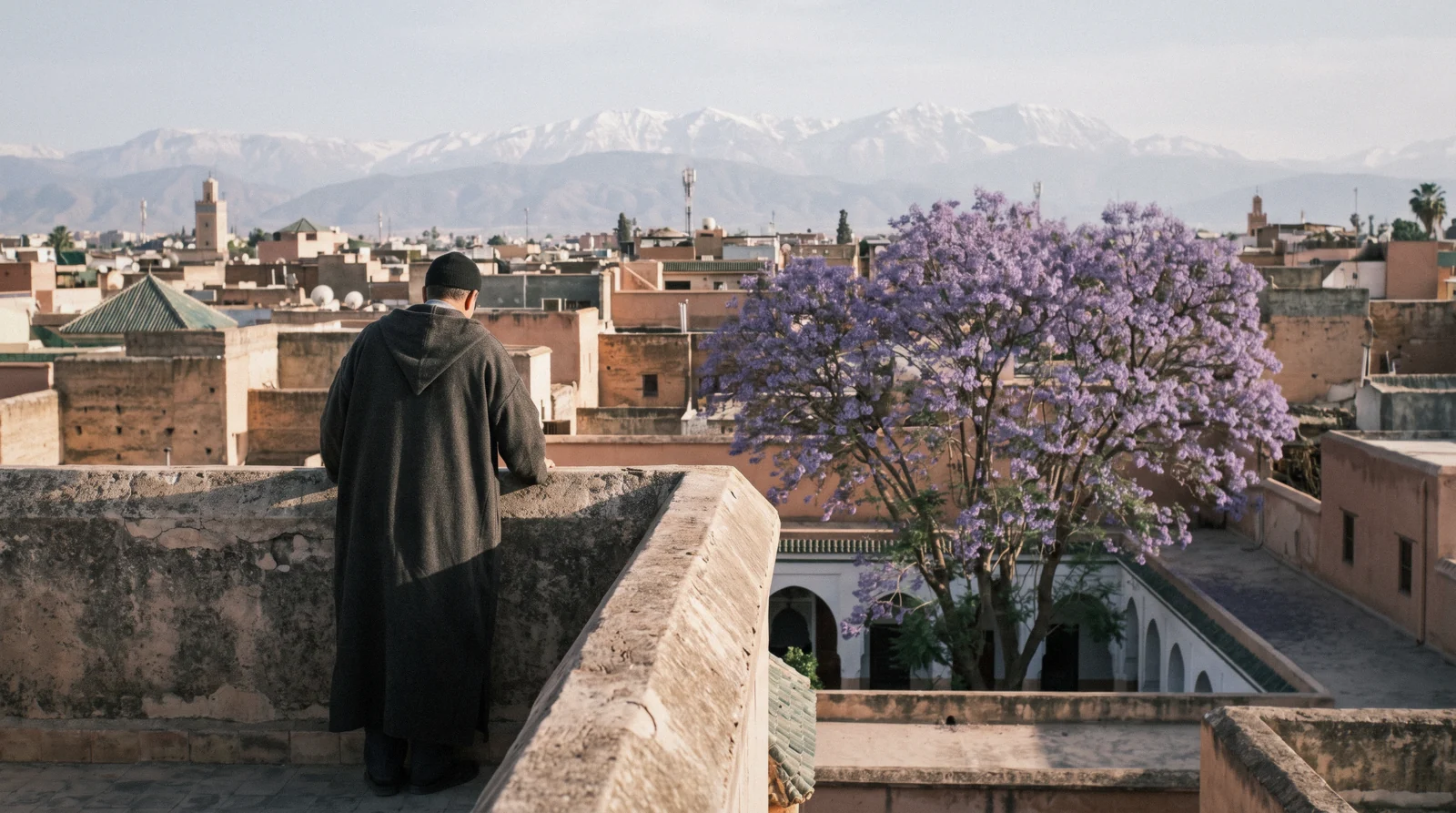
Best Time to Visit Marrakech
The best time to visit Marrakech is March to May and October to November, when the mean daily high sits between 22.4C and 28.5C and a full walking day through the medina is possible without a siesta built into it. Those figures are not recalled from a guidebook. They are thirty complete years of daily records from the Open-Meteo ERA5 archive for 31.63 N, 7.98 W, 10,958 days with none missing, aggregated for this page. A second official series exists and disagrees with the first by more than a degree, and this page prints both rather than picking the flattering one. Once the dates are chosen, what to do in Marrakech covers the monuments and their opening hours.
Quick answer Two good windows, one heat trap, one cold surprise
Come in March, April, October or November. Those four months average daily highs of 22.4C to 28.0C, which is the range in which the medina walks comfortably from opening until dusk. July and August average 36.6C and 36.2C and turn the day into two short shifts with a five-hour gap in the middle. Winter is the bargain and the surprise at once: January days reach 18.1C, but the January mean overnight low is 3.8C and few riads are heated.
Key takeaways
- The month chart and the weather table carry the full thirty-year series; the second official series disagrees with it by over a degree in July and this page says which one it uses.
- In July the monuments close before the heat does: the Ministry sites shut at 17:00 while the temperature is still near its peak, which is the argument for an early Atlas day or a sunrise balloon flight instead of a second palace.
- Ramadan next begins in February 2027 and shortens the hours at the Ben Youssef Madrasa to 16:30; the exact date is fixed by crescent observation about a day ahead.
- Winter nights are the thing nobody packs for. Read the cold-nights section before booking an unheated riad, and check what to wear for the layer that covers both the 18C afternoon and the 4C courtyard.
Marrakech Month by Month
Mean daily maximum temperature by month in Celsius, with the Fahrenheit reading printed underneath each bar, computed from the Open-Meteo ERA5 reanalysis for 31.63 N, 7.98 W across the thirty complete years from 1995 to 2024. The bands below the bars are what those numbers do to a day on foot.
The chart shows maxima only, which is half the story in a continental climate. The mean January low is 3.8C and the mean July low is 19.0C, a spread of more than fifteen degrees between the coldest and warmest nights of the year. No Moroccan authority publishes a monthly visitor count for Marrakech, so the peak band is labelled as our own reading and nothing on this page presents it as data.
Marrakech Weather by Month
Thirty-year means from the Open-Meteo ERA5 archive for the grid cell nearest the city centre, 1 January 1995 to 31 December 2024, aggregated for this page and read in Q3 2026: the mean of every daily maximum and minimum in that calendar month, the mean monthly rainfall total, and the mean number of days with at least a millimetre of rain.
| Month | Mean daily high | Mean daily low | Rainfall | Rain days |
|---|---|---|---|---|
| January | 18.1°C (65°F) | 3.8°C (39°F) | 34.5 mm | 5.4 |
| February | 19.9°C (68°F) | 5.2°C (41°F) | 31.8 mm | 5.5 |
| March | 22.7°C (73°F) | 7.5°C (46°F) | 37.3 mm | 5.8 |
| April | 24.7°C (76°F) | 10.1°C (50°F) | 36.9 mm | 5.5 |
| May | 28.5°C (83°F) | 13.0°C (55°F) | 17.3 mm | 4.2 |
| June | 32.5°C (90°F) | 16.2°C (61°F) | 6.2 mm | 2.1 |
| July | 36.6°C (98°F) | 19.0°C (66°F) | 2.7 mm | 1.1 |
| August | 36.2°C (97°F) | 19.4°C (67°F) | 5.5 mm | 2.2 |
| September | 31.4°C (89°F) | 16.8°C (62°F) | 11.3 mm | 2.4 |
| October | 28.0°C (82°F) | 13.5°C (56°F) | 22.2 mm | 4.0 |
| November | 22.4°C (72°F) | 8.3°C (47°F) | 34.3 mm | 4.9 |
| December | 19.1°C (66°F) | 5.1°C (41°F) | 29.6 mm | 5.0 |
Annual totals: 269.6 mm of rain across 48.1 rain days. ERA5 returns the nearest grid cell rather than the exact requested point, in this case 31.599 N, 7.976 W at 465 m, and the elevation matters: Marrakech sits on a plain at the foot of a 4,000 m range, which is why the nights read colder than the latitude suggests. Fahrenheit figures are rounded conversions of the Celsius means, not separate measurements.
Two Official Climate Series, and Which One This Page Uses
This is the part no other page about the best time to visit Marrakech carries. There are two published, official temperature series for this city, they are built on different periods by different methods, and they do not agree. Printing one and calling it the weather hides a real gap of more than a degree.
The first is the reanalysis series used throughout this page: Open-Meteo's ERA5 archive, a gridded model reconstruction of the atmosphere, averaged here over the thirty complete years to 2024. The second is the set of climatological normals the World Meteorological Organization publishes on its World Weather Information Service for Marrakech, supplied by Morocco's own Direction de la Meteorologie Nationale and computed from station observations over the 1991 to 2020 standard normal period.
A grid cell and a station thermometer are not measuring the same thing. The cell is a model average over several hundred square kilometres of city and open plain; the station sits at one point, and the two periods differ by four years at each end. Both are official. Neither is wrong.
The gap is consistent in direction: the national service reads warmer than the reanalysis in every month compared, by about one degree on the maxima and by one and a half to two degrees on the minima. The rainfall difference is larger in proportion, roughly 50 mm on an annual total of a quarter of a metre.
| Figure | ERA5 1995 to 2024 | WMO and DMN 1991 to 2020 | Gap |
|---|---|---|---|
| July mean daily high | 36.6°C (98°F) | 37.7°C (100°F) | 1.1°C |
| August mean daily high | 36.2°C (97°F) | 37.4°C (99°F) | 1.2°C |
| January mean daily high | 18.1°C (65°F) | 19.1°C (66°F) | 1.0°C |
| July mean daily low | 19.0°C (66°F) | 20.6°C (69°F) | 1.6°C |
| August mean daily low | 19.4°C (67°F) | 21.1°C (70°F) | 1.7°C |
| January mean daily low | 3.8°C (39°F) | 5.9°C (43°F) | 2.1°C |
| Annual rainfall | 269.6 mm | about 220 mm | about 50 mm |
Why this page uses the reanalysis series
Three reasons, none of them that the numbers look better. The series is reproducible: the query is a public URL, the response is 10,958 daily rows, and anyone can rerun it. It covers a period ending in 2024 rather than 2020, which matters in a warming climate. And it yields the two derived figures a traveller plans around, the monthly rainfall total and the count of days with at least a millimetre of rain, which the normals tables do not give in the same shape.
The practical consequence of the gap is small and worth stating anyway. If you are deciding whether July is survivable, the honest answer is that the two official series bracket it between 36.6C and 37.7C, and that a degree either way does not change the plan. If you are deciding whether a January courtyard needs a heater, the two series bracket the overnight low between 3.8C and 5.9C, and both answers mean yes.
What neither series measures
Both are shade temperatures at two metres above the ground, and the medina is not that. A lane one and a half metres wide under a reed roof runs several degrees cooler than the figure; the open ground at El Badi Palace or the unshaded stretch of Menara at two in the afternoon runs several degrees hotter. Neither series carries humidity, which stays low here, or wind.
No authority publishes a heat index or a heat-health warning threshold for the city, so this page prints the shade temperature and says what it leaves out.
In July the Monuments Close Before the Heat Does
The single most useful thing to understand about summer here is not the temperature. It is that the opening hours of the ticketed sights were not designed around it. The Ministry of Culture monuments run 09:00 to 17:00 in every month, and 17:00 in July is close to the hottest hour of the day.
That produces a genuine mismatch. The four Ministry sites, Bahia Palace, El Badi, the Saadian Tombs and the Almoravid Koubba, all shut while the thermometer is still near its peak, so there is nothing ticketed to walk into during the two hours when you most want a roof. The two venues that stay open later are both privately run, and the one that changes with the season does so by season rather than by heat.
The table below is the summer day as the published hours actually shape it. Hours come from each venue's own ticket page.
| Venue | Published hours | Last useful entry in July | What that means |
|---|---|---|---|
| Ministry of Culture monuments (Bahia, El Badi, Saadian Tombs, Almoravid Koubba) | 09:00 to 17:00 all year | Around 15:30 | Closes at the hottest hour; do these before 11:00 |
| Ben Youssef Madrasa | 09:00 to 19:00, and 09:00 to 16:30 in Ramadan | 18:00 | The one interior open through the late afternoon |
| Le Jardin Secret | 09:30 to 18:30 January to March, 09:30 to 19:30 April to September, 09:30 to 18:00 October, 09:30 to 17:30 November and December | 18:30 | Shaded courtyard and the only seasonal hours in the city |
| Jemaa el-Fna | Open square, no published hours | After 18:00 | Empty and hostile at 15:00, full and cool after dark |
The summer day that works
Out of the riad by 08:30 and into the first monument at opening. Two ticketed sights before 11:00, because the second one at 11:30 is already an endurance exercise. Back under a roof from midday until about 17:30, which is the hour a hammam or a long lunch exists for.
Out again at 18:00 for the souks and the square, both better after dark and neither charging admission. That shape costs you only the middle of the day, which was never going to be productive, and it is why a summer trip needs one more night than a spring trip to cover the same list.
What the heat does to a day trip
It reverses the logic. In spring the Atlas is a scenic day out; in July it is temperature control. Imlil sits at about 1,740 m, and the standard lapse rate alone puts it roughly eight degrees below the city. The Ourika valley runs water past the lunch tables, and Essaouira on the Atlantic is the largest single swing available in a day.
The Agafay desert is the exception that catches people out. It is stone desert an hour away at the same altitude, so it is not cooler, and the reason its trips run at sunset is that the middle of an Agafay afternoon in July is worse than the medina, not better.
The Worst Time to Visit, Said Plainly
If you want the answer to the question rather than the nuance around it: the worst time to visit Marrakech is July and August. The thirty-year series puts the average July maximum at 36.6C and August at 36.2C, which is an average rather than a peak, so the hot days in those months run well above it. Nothing about the city is arranged for that.
The ticketed monuments shut at 17:00, the square is empty until dark, the medina lanes hold the heat after sunset, and the day trips that make this city worth a week are all uphill or exposed. The heat is also the only variable here that no amount of planning removes: you can dress for rain in March and take a jacket in January, and there is nothing you can wear in a 40-degree afternoon. Everything else people call a bad time is manageable.
December nights are cold, at an average low of 5.1C, and the answer is a coat. March is the wettest month at 37.3 mm across about six rainy days, and the answer is an afternoon indoors.
March, April and May: the Best Walking Weather and the Wettest Month
Spring is the answer for most people, and it contains the year's rainiest month, which surprises everyone who assumes a Moroccan spring is dry. Both facts come out of the same series.
March averages a daily high of 22.7C and a daily low of 7.5C, and it is the wettest month on the thirty-year record at 37.3 mm over 5.8 rain days. April is barely drier at 36.9 mm and 5.5 rain days, with highs of 24.7C. May is the pivot: 28.5C by day, and the rainfall halves to 17.3 mm over 4.2 days.
Read those rain figures properly. 37.3 mm is not a wet month by European standards, it is about a tenth of what falls on Manchester in March, and 5.8 rain days out of 31 means that five days in six are dry. What it does mean is that a March trip should not treat an open-air plan as guaranteed, and that the unshaded courtyards, which are most of the ticketed sights here, are occasionally unusable for an hour.
Why April is the busiest month
Nothing official measures it, so this is our reading and labelled as such. April is the intersection of European school holidays, comfortable weather and the last of the Atlas snow on the skyline, and it is when the tour calendars fill first. The consequence you can act on is booking distance rather than price: the small-group medina and souk walks and the Ourika day trips sell out on an April Saturday, and the palaces rarely do, because the Ministry sells at the gate.
May is the underrated month here: spring comfort in the morning, summer reliability in the afternoon, the rain effectively finished, and a thinner crowd than April.
The snow line is a winter and spring sight
From late winter into spring the High Atlas carries visible snow and stands behind the city on a clear morning from any rooftop. February is when the line sits lowest, and it is gone by late spring. Worth knowing if the photograph that made you book had white mountains in it: no June trip reproduces it.
October and November: the Quietest Good Weather of the Year
If one month has to be named, it is October. The figures put it alongside April for comfort while the calendar puts fewer people in it, and the heat has broken but the evenings are still usable outdoors.
October averages a daily high of 28.0C and a low of 13.5C, with 22.2 mm of rain over 4.0 days. That is a shirt-sleeves day and a jacket evening, which is the ideal division for a city where the sights are outdoors and the eating is on a terrace. November drops to 22.4C by day and 8.3C at night, with the rain climbing back to 34.3 mm over 4.9 days.
September is the month people get wrong in the other direction. Its mean daily high is 31.4C, which is still a summer figure, and the break in the heat happens inside the month rather than at the start of it. A trip in the first ten days of September is a summer trip; the last ten days are autumn.
The one November date that fills the city
The Marrakech International Film Festival ran 20 to 28 November in 2026, according to the Centre Cinematographique Marocain, the Moroccan state film body. Dates for the following edition are not published. It is a genuine crowd event, with screenings on Jemaa el-Fna itself, and it moves hotel prices in a way nothing else in the autumn does.
Nothing else in October or November competes with it. The 55th Festival National des Arts Populaires ran in early July, and no dates beyond that edition are published; the Marrakech du Rire comedy festival has published no edition since 2022 and its own site is unreachable, so this guide does not print a date for it.
What thins out and what does not
Tour calendars loosen in November and day trips run with spare seats, making it the month for the longer Atlas and five-valleys itineraries. The monuments do not visibly thin out, since the Ministry publishes no visitor numbers, and it keeps Moroccan nationals free on Fridays year-round, which keeps Friday busy in every season. That rule belongs to the Friday and holiday openings page.
December to February: Cheap, Bright, and Genuinely Cold After Dark
Winter here is not mild. The days are among the most pleasant of the year and the nights are the thing that ruins an unprepared trip, because the traditional riad was built to shed heat and most of them do it very well in January.
December averages a daily high of 19.1C, January 18.1C and February 19.9C, which is a comfortable afternoon in a shirt. The overnight means are 5.1C, 3.8C and 5.2C. That spread, over fourteen degrees between the afternoon and the small hours in January, is the fact to plan around.
A riad is a courtyard house with the rooms opening onto open air. It is unheated by default, the walls are thick and cold, and a room facing north across a courtyard in January can be genuinely uncomfortable at seven in the morning. The question to ask before booking, and it is worth asking directly, is whether the room has heating rather than whether the riad does. Where to stay covers the district choice; the heating question is the winter-specific one.
What winter buys you
Space, and light. The monuments are at their emptiest, the queue at the Jardin Majorelle is at its shortest, and the low sun through the Ben Youssef courtyard is the best photographic light of the year. Rainfall stays modest at 29.6 mm in December, 34.5 mm in January and 31.8 mm in February, about five rain days each.
Prices move, though not on tickets: Ministry admission is $10.65 (100 MAD) for a foreign adult in every month, with no seasonal reduction. What moves is accommodation. Nobody official publishes a Marrakech hotel rate index, so this guide prints no percentage and gives only the direction.
The January date that closes streets
The Marrakech Marathon is on Sunday 31 January 2027, the 37th edition. The marathon starts at 07:45 and the half at 09:15, both from Place de la Koutoubia, with bib collection on the two preceding days at the same place. The organiser claims more than 15,000 runners.
It is a single Sunday morning and the course runs through the centre and out along the Palmeraie road. If your one full day in the city is that Sunday, plan the morning on foot inside the medina and leave anything involving a taxi across town until the afternoon. Getting around covers the normal position; the marathon is the one predictable exception to it.
Ramadan, and the Dates That Move Every Year
Ramadan changes the rhythm of the city more than any weather does, and it cannot be looked up more than about a day in advance with certainty. Both halves of that sentence are official.
Ramadan next begins in February 2027. The UK Foreign, Commonwealth and Development Office states that the dates vary by year and country, next starting in February 2027. Global Affairs Canada is more specific and says that in 2027 the lunar month of Ramadan is expected to begin on or around 7 February. Neither is a fixed date, and neither claims to be.
The reason is procedural rather than astronomical. In Morocco the start is confirmed by physical observation of the crescent on the evening of the 29th of the preceding month and announced by the Ministere des Habous et des Affaires Islamiques, which means the country learns the date roughly one day ahead. Government portals publish Hijri dates and do not publish a forward Gregorian equivalent. Any month-in-advance date you find, including the one above, is an estimate.
What actually changes
Two venues list shortened Ramadan hours in the ticket layer. The Ben Youssef Madrasa runs 09:00 to 16:30 instead of 09:00 to 19:00, and Le Jardin Secret 09:30 to 16:30. The Ministry monuments list no Ramadan variation, which is not the same as promising there will be none.
The rest of the calendar
Morocco has 17 paid public holidays, ten on fixed dates and four moving with the lunar calendar. One correction worth carrying, because commercial calendars repeat it: 31 October is not on the ministry's own list. They matter here for one reason.
The Ministry of Culture ticket pages state that entry is free for Moroccans every Friday and on the first days of national and religious holidays, so those are the days the four monuments are fullest and a foreign visitor still pays $10.65 (100 MAD).
Rain: 269.6 mm a Year, and Where It Actually Falls
Marrakech is dry rather than arid, and the distinction matters for a plan. A quarter of a metre of rain a year, concentrated in the cool half, means the outdoor sights are reliable but not guaranteed.
The annual total is 269.6 mm across 48.1 rain days on the thirty-year mean, where a rain day is any day with at least a millimetre. Nearly all of it falls between November and April. July has 2.7 mm across 1.1 rain days, which is as close to a guarantee as a climate series gives.
The practical reading is that a March or November trip should hold one indoor option in reserve rather than reorganising around a forecast, and that the reserve options here are thin, because most Marrakech sights are open courtyards. The genuinely covered ones are the Maison de la Photographie, Dar Si Said, the souk lanes under their reed roofs, and a hammam.
The rain that is not in the city figures
The day trips carry a different risk profile from the city, and it is not the millimetres. The Ourika valley sits in a mountain catchment with a recorded flood history, and mountain rainfall is not what the city gauge measures. A wet day in the High Atlas can close a valley road while the medina stays dry, which is why an Ourika or Atlas booking in the wet half of the year deserves a free-cancellation option and a look at the operator's own weather policy before the deposit.
Snow closes the Tizi n'Tichka pass to Ait Ben Haddou occasionally in winter, and the operators reroute or cancel rather than run it. Nothing in the city is affected.
One Date on the Horizon: the 2030 World Cup
Most best-time pages stop at the twelve months ahead. One structural change is already fixed, and it explains why parts of the city are a building site.
FIFA appointed Morocco, Portugal and Spain as hosts of the 2030 World Cup by a vote of all 211 member associations at an Extraordinary Congress in December 2024, and Marrakech is one of Morocco's six host cities, alongside Agadir, Casablanca, Fez, Rabat and Tangier. The Grand Stade de Marrakech goes from about 41,000 seats to 46,000: phase one of the rebuild took the turnstiles from 36 to 77, and phase two completes at the end of 2028, removing the athletics track and roofing the bowl. Match dates for Marrakech are not stated.
The city has already run the rehearsal, hosting eight Africa Cup of Nations matches at the Grand Stade including a quarter-final. Nothing about it touched the monuments or their hours. What it moved was room availability on specific nights, which is the only mechanism by which a football calendar reaches a visitor here. For a trip in the next two years, check your dates against a fixture list before booking a room and otherwise ignore it. For 2030 itself, assume the city is full.
The Trips That Change With the Season
Season-sensitive bookings, in the order the calendar affects them. Prices are the operator's own listed figures in US dollars, and each card opens the operator's page where the date calendar shows what is still available.
 from $14.52
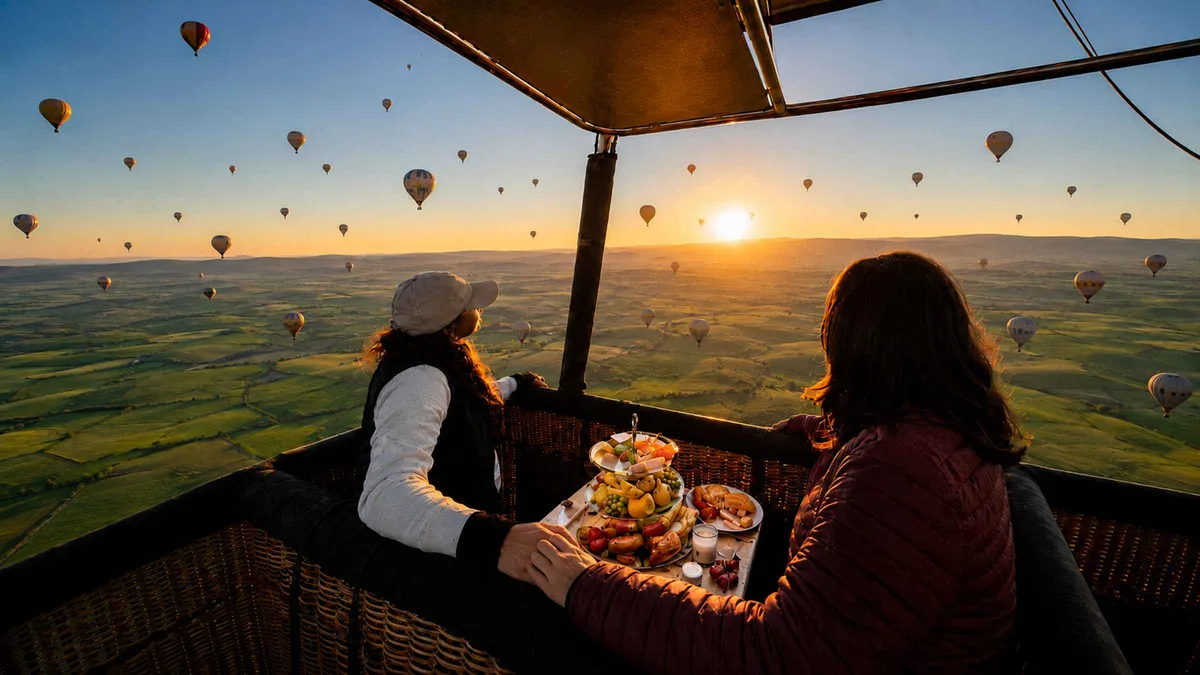
Marrakech: Balloon Activity, Berber Breakfast & Certificate
listed at $14.52
Five-hour sunrise balloon flight north of the city with hotel pickup, a Berber breakfast and a flight certificate. Maximum weight per person is 110 kg and the minimum age is 3.
Check Availability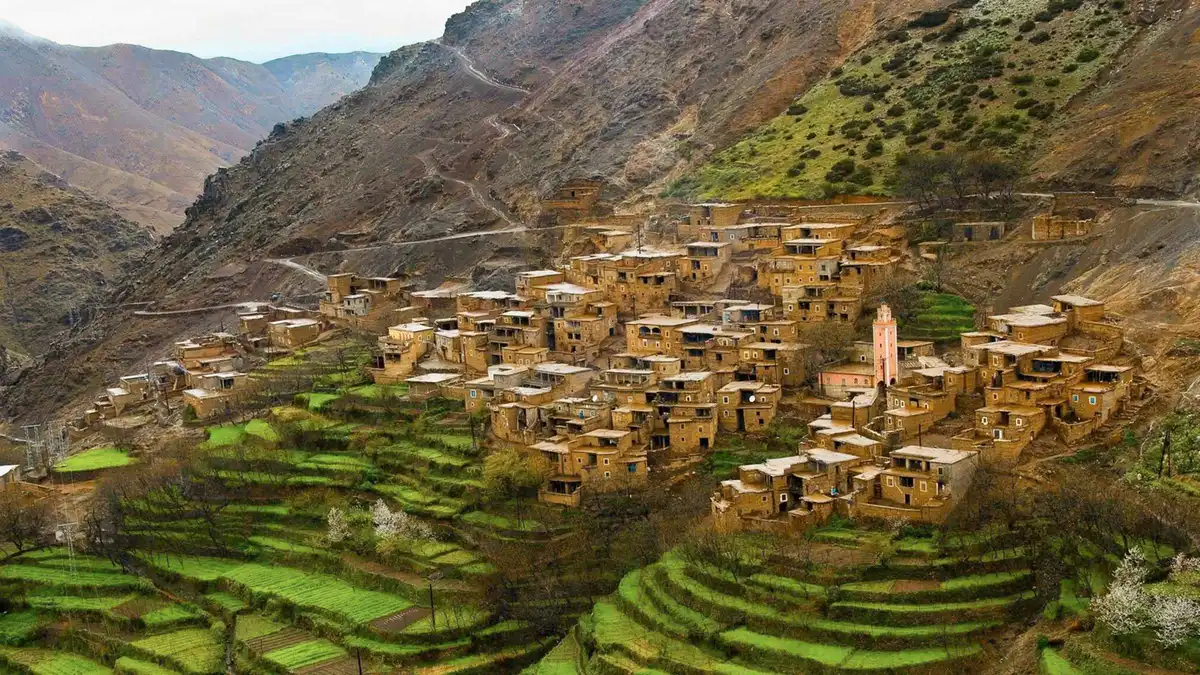 from $22.78
From Marrakech: Atlas Mountains Full-Day Hiking Trip with Lunch
listed at $22.78
Nine-hour Atlas day trip built around a two to three hour hike between Berber villages, with lunch. The operator says the walking can be lengthened or shortened on the day.
Check Availability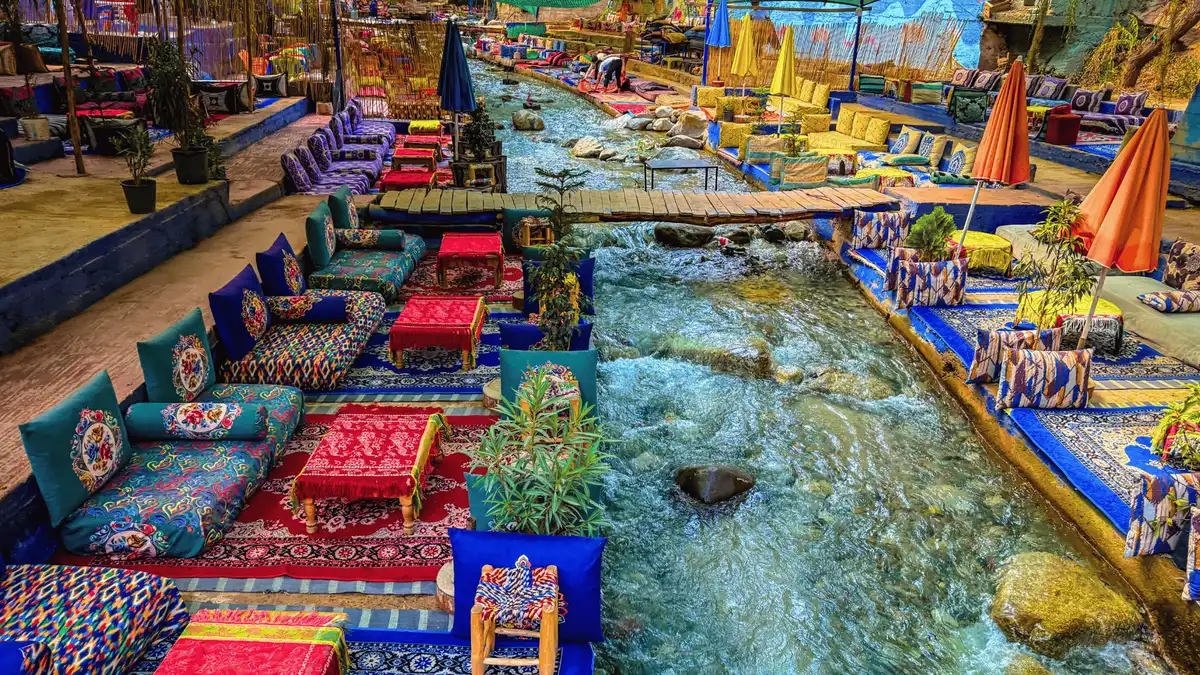 from $17.80
Marrakesh: Ourika Waterfalls, Atlas Mountains, Guide + Lunch
listed at $17.80
Seven-hour trip to the Ourika waterfalls and the Atlas foothills with a guide and lunch, pickup details sent by WhatsApp the evening before. Counting transport, plan on seven to eight hours door to door.
Check Availability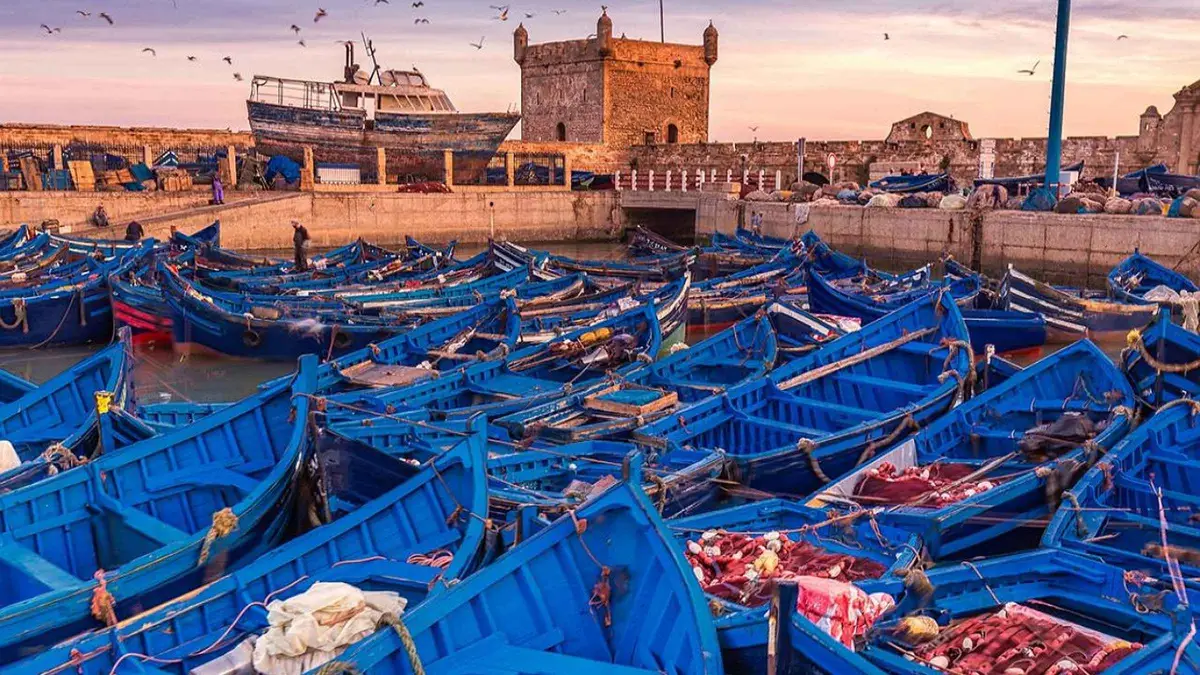 from $14.82
From Marrakesh: Essaouira Coastal Day Tour with Lunch
listed at $14.82
Eleven-and-a-half-hour coastal day trip to Essaouira with lunch, pickup from about 07:15 and a return between 19:00 and 20:00. Pickup details come the night before, around 20:30.
Check Availability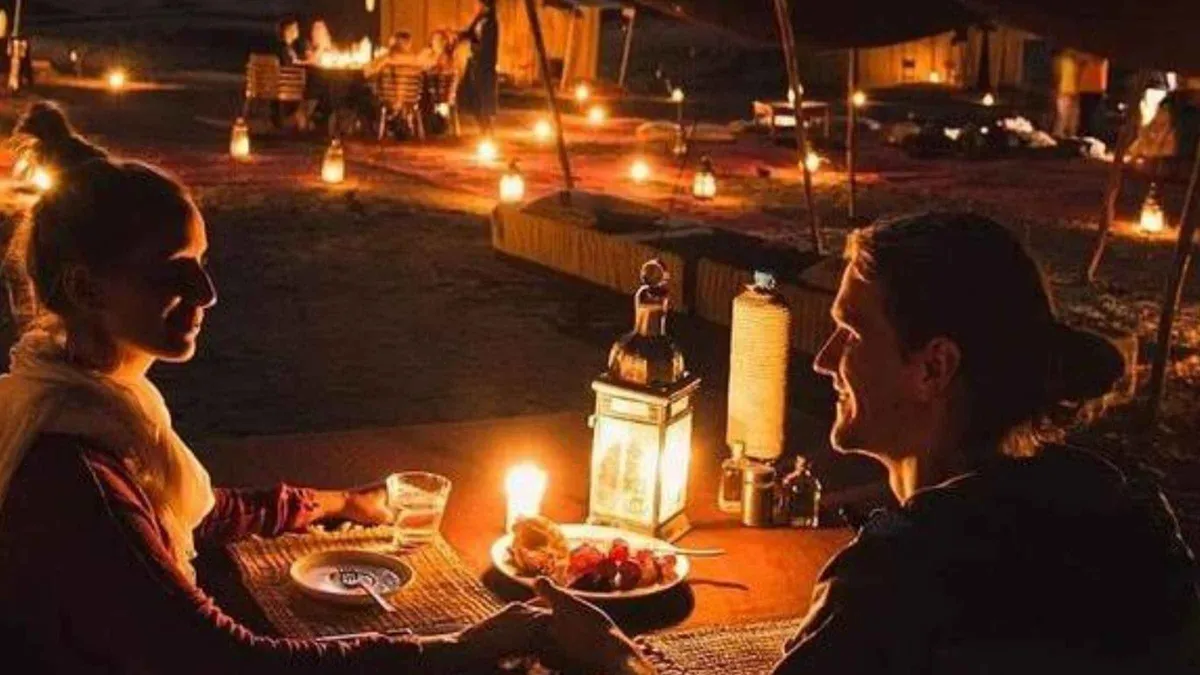 from $16.59
Marrakech: Agafay Desert Sunset, Camel Ride, and Dinner Show
listed at $16.59
Four-hour late-afternoon trip to an Agafay camp for a camel ride, sunset and a dinner show, pickup included. Shorter and cheaper than the full quad packages.
Check Availability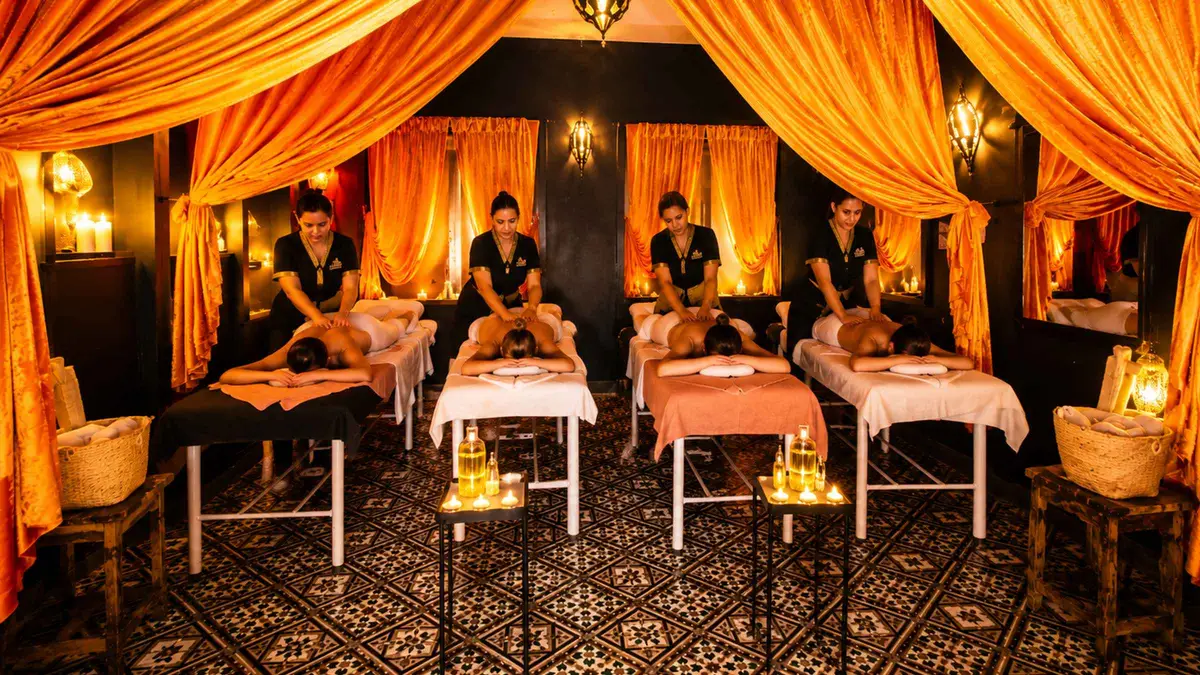 from $44.78
Marrakech: 2-Hour Traditional Moroccan Hammam Experience
listed at $44.78
Two-hour traditional hammam with black soap, kessa scrub and a massage at a city spa. No transfer included, so you make your own way there.
Check Availability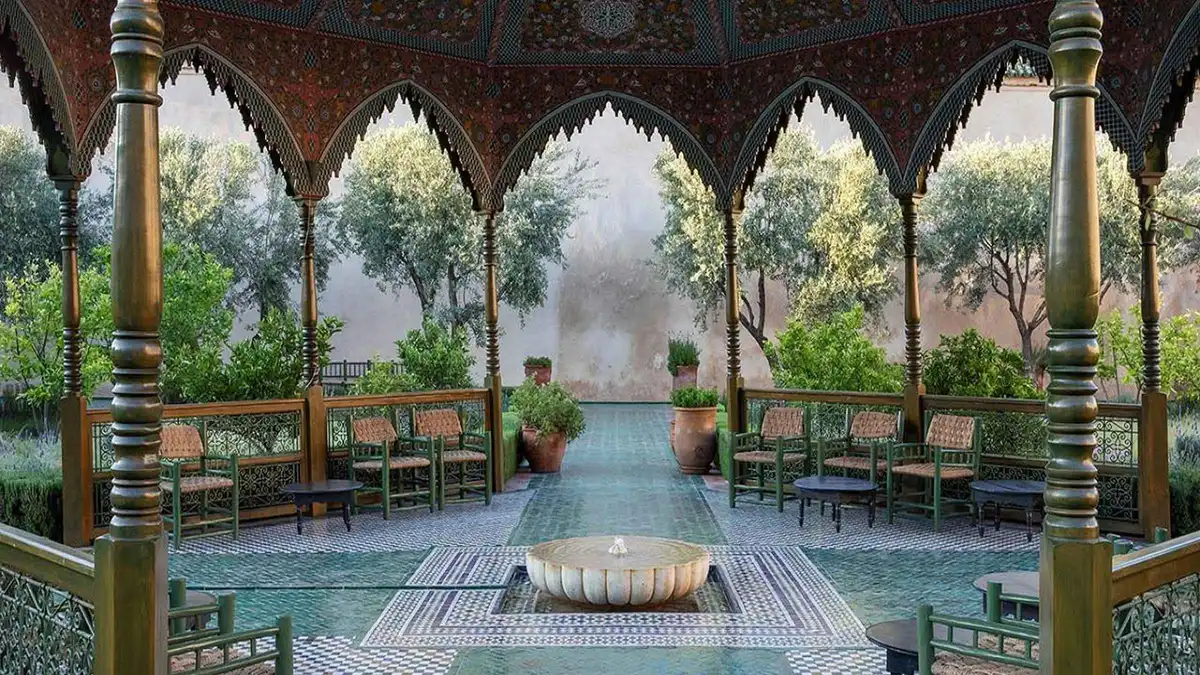 from $17.44
Marrakech: Ben Youssef, Secret Garden, & Souks Walking Tour
listed at $17.44
Three-hour walk linking Ben Youssef, Le Jardin Secret and the souks, with the guide steering the ticket queues. Entry is cash on site: 100 MAD for the garden, 50 MAD for the madrasa.
Check Availability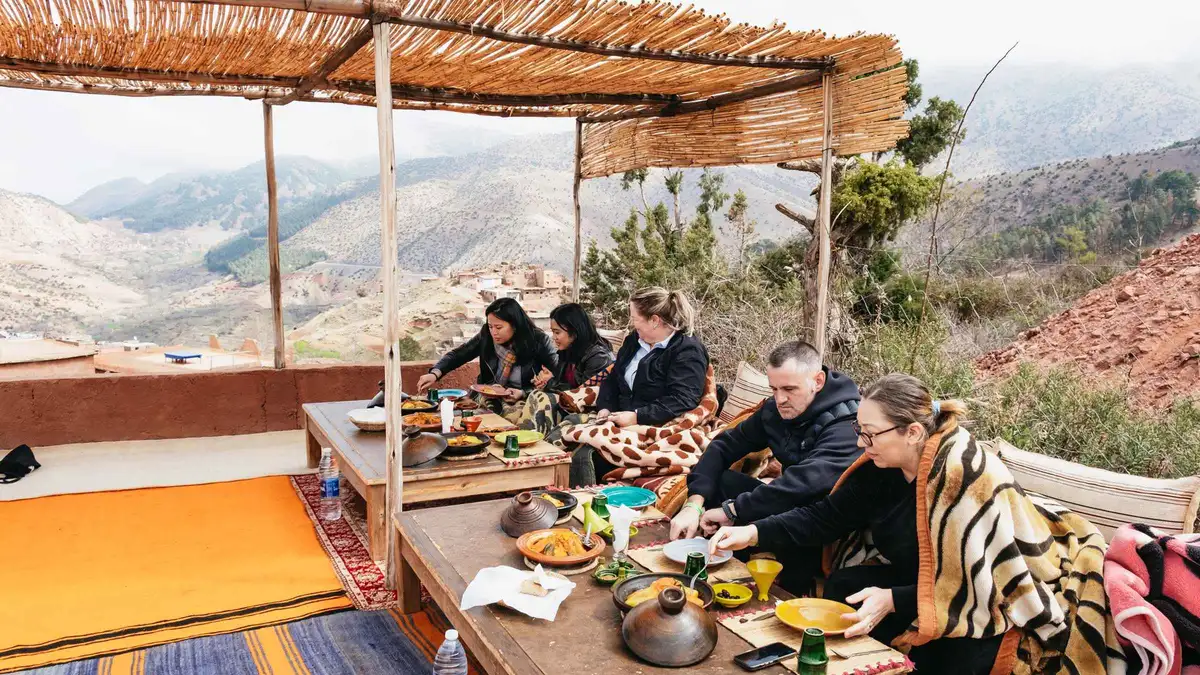 from $80.20
Marrakech: Atlas Mountains and 5 Valleys Day Tour with Lunch
listed at $80.20
Eight-hour drive through the Atlas foothills and five valleys with stops for tea and lunch, pickup included. More driving and viewpoints than walking.
Check AvailabilityPrices, ratings and details are the platform's own. Dollar figures are the listed prices. The platform bills in your account's currency.
Once the Dates Are Fixed
Four pages that turn a chosen month into a plan.
What Marrakech costs
Admission does not move with the season here, and neither does the taxi meter. What Marrakech costs has the ticket prices, the tourist tax brackets and the two figures nobody publishes.
Next decisionWhat to wear
A 4C night and a 36C afternoon fall in the same city, and the dress question here is about custom as much as temperature. What to wear covers both, with what each advisory actually says.
PackingFriday and holiday openings
Free entry for Moroccan nationals every Friday and on the first day of each holiday makes those the busiest days at the four Ministry monuments. The openings page has the pattern in full.
The closuresMarrakech in 3 days
The route that puts the timed indoor sights in the cool hours and the square after dark. Three days in Marrakech is written around the hours in the table above.
The itineraryBest Time to Visit Marrakech: Questions
What is the best month to visit Marrakech?
October, on the figures. It averages a mean daily high of 28.0C and a low of 13.5C with 22.2 mm of rain over four rain days, which is a shirt-sleeves day and a jacket evening, and it carries a thinner crowd than April at almost identical comfort. April is the close second and the busiest month of the year. If the Atlas snow line matters to the photographs you want, take March instead and accept 37.3 mm of rain, the wettest month on the record. A full-day Atlas hike works in all three.
How hot does Marrakech actually get in July and August?
Two official series bracket it. The thirty-year ERA5 mean daily high is 36.6C in July and 36.2C in August; the WMO normals supplied by Morocco's national weather service put July at 37.7C and August at 37.4C. Nights stay near 19C to 21C. Both series are shade figures at two metres, so an open courtyard at El Badi at two in the afternoon runs hotter. The plan that works is monuments before 11:00, indoors until 17:30, the square after dark.
What is Marrakech actually like in December and January?
Yes, with one caveat that costs money to fix afterwards. Daytime highs of 18.1C to 19.9C from December to February are among the most pleasant walking conditions of the year, the monuments are at their emptiest, and rainfall stays around 30 mm a month. The caveat is the overnight mean of 3.8C in January in a housing type designed to shed heat: confirm the room has heating before booking, not just the riad. See where to stay for the district question.
When is the rainy season in Marrakech?
There is no rainy season in the tropical sense. The city takes 269.6 mm a year across 48.1 rain days, almost all of it between November and April, with March the wettest month at 37.3 mm over 5.8 days and July the driest at 2.7 mm over 1.1 days. Five days in six are dry even in March. The greater weather risk in the wet half of the year is in the mountains rather than the city, which is why an Ourika valley day in winter deserves a free-cancellation option.
How does Ramadan affect a visit to Marrakech?
It next falls in February 2027, with Global Affairs Canada expecting a start on or around 7 February and the exact date confirmed by crescent observation about a day ahead. Two venues publish shortened hours: the Ben Youssef Madrasa runs to 16:30 instead of 19:00 and Le Jardin Secret to 16:30. Restaurant hours change, the hour before sunset is the quietest the souks ever get, and the conduct question is covered on what to wear.
Which month is quietest in Marrakech?
No Moroccan authority publishes a monthly visitor count, so nobody can answer this with data and this guide will not pretend otherwise. Our reading, from tour availability and hotel pricing rather than from a count, is that the quiet stretch runs from late November through January, excluding the marathon weekend at the end of January and the days around the film festival in late November. Winter also gives the shortest queue at the Jardin Majorelle.
Do ticket prices in Marrakech change with the season?
No. The four Ministry of Culture monuments charge a foreign adult $10.65 (100 MAD) in every month, with a foreign child of 7 to 13 at $5.33 (50 MAD), and no low-season rate exists. The Ben Youssef Madrasa is $5.33 (50 MAD) year round and Le Jardin Secret $10.65 (100 MAD). The only seasonal variable in the ticket layer is opening hours, not price. Full figures on the tickets page.
When should you avoid Marrakech?
July and August, said plainly on this page as the worst time to visit. Average daily highs reach 36.6C and 36.2C, the Ministry monuments shut at 17:00 while the heat is still near its peak, and Jemaa el-Fna stays empty until after dark. The heat is the one variable no planning removes.
Marrakech Through the Year on Film
Three films that show what the seasons actually look like on the ground here, chosen because the footage carries daylight, crowds and clothing rather than because the titles match.
7 Things to Know BEFORE Visiting Marrakech
Covers the practical timing questions, including how the day divides when it is hot.
Video: Jake BraymillerMARRAKECH, MOROCCO | 10 BEST Things To Do In & Around Marrakech
Shows the city and the day trips in the same film, which is the choice most seasons force.
Video: World Wild HeartsWhat You NEED TO KNOW Before Visiting MARRAKECH!
Useful for the clothing and the pace of a walking day in warm weather.
Video: Frolic & CourageVideos load from YouTube only when you press play.
Prices, hours and terms are set by the venue or operator and confirmed at checkout.
We may earn a commission if you book through one of our links, at no extra cost to you. Full affiliate disclosure