 Marrakech Guidebook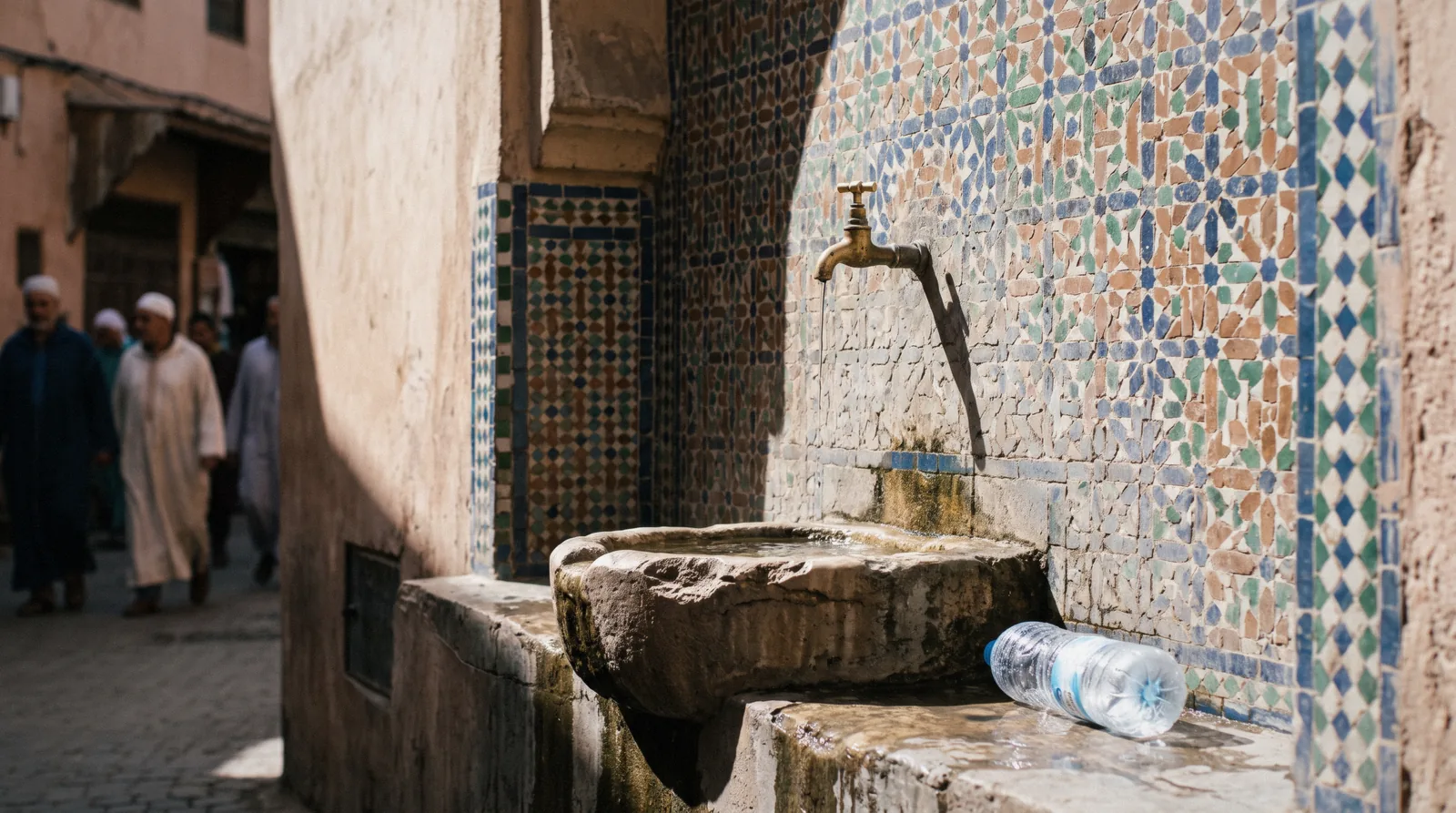
Can You Drink the Tap Water in Marrakech?
The Marrakech tap water question has a documented answer on one side and documented silence on the other. The distributor has stated publicly that the drinking water it supplies in Marrakech meets the national standards NM 03.7.001 and NM 03.7.002, on the basis of 15,524 analyses carried out in a single year, of which 6,885 were bacteriological. No Moroccan authority and no foreign ministry publishes any advice to visitors about drinking it. For the rest of the city, see things to do in Marrakech.
Quick answer What the utility says, what nobody says, and what to actually do
No authority, Moroccan or foreign, tells a visitor to drink Marrakech tap water or not to, and most visitors drink bottled water. The utility says the water leaving its network complies with the Moroccan drinking-water standard, on 15,524 analyses in one year. This guide will not turn either a compliance statement or a silence into a recommendation it cannot source.
Key takeaways
- The statement that exists is about the network, not about your stomach: compliance with NM 03.7.001 is a treatment and monitoring claim, not visitor advice.
- The UK Foreign Office health page for Morocco says nothing about tap or bottled water.
- No Moroccan authority publishes a retail price for bottled water either, so any figure you read is a shelf price on a day, not a tariff: what Marrakech costs explains why.
- In July, with a mean daily high of 36.6 °C and a mean daily low of 19.0 °C, how much you drink matters more than where it came from, particularly on a seven-hour valley day at $13.27.
The Whole Record, Question By Question
Five questions a visitor asks about water in Marrakech, with what is published against each and who published it. Two have real answers, three are silences, and the difference between the two kinds of row is the point of this page.
| Question | What is published | Source status |
|---|---|---|
| Does Marrakech water meet the national standard? | Yes: the distributor states compliance with NM 03.7.001 and NM 03.7.002 | Reported by the Moroccan state news agency, quoting the utility |
| How much is it tested? | 15,524 analyses in 2021, of which 6,885 bacteriological and 263 physico-chemical | The utility's own figures, via the same reporting |
| Should a visitor drink it? | Nothing published, by anyone | No Moroccan authority and no foreign ministry states a position |
| What does the standard actually require? | Named but not retrievable: NM 03.7.001 sets quality requirements, NM 03.7.002 the sampling regime | No official IMANOR or ministry text could be fetched |
| How hard is the water, what minerals are in it? | Nothing published | The distributor's own site was unreachable from this network |
Checked in Q3 2026. The compliance statement and the analysis counts are reported by MAP, the Moroccan state news agency, carrying the distributor's own position; that is a state agency reporting a utility, not the utility's own page, and this guide labels it as such rather than upgrading it.
What The Utility Has Actually Said
There is one substantive statement on the record, and it is worth reading precisely rather than loosely.
RADEEMA, the municipal utility that distributes drinking water in Marrakech and now sits inside the regional operator SRM Marrakech-Safi, has stated publicly that the water it distributes meets all the national quality standards in force, naming NM 03.7.001 for quality parameters and NM 03.7.002 for control conditions and sampling frequency. It made that statement in response to public complaints about taste and turbidity in the city, and it published figures with it: 15,524 analyses and tests on distributed water in one year, of which 6,885 bacteriological, 44% of the total, and 263 physico-chemical, including 263 physico-chemical, carried out by its own laboratory together with an external one. That is an average of about 42 tests a day across the network.
Knowing what RADEEMA publishes about the water in Marrakech is one part of planning a visit, and a Marrakech tour comparison is a natural next step for sorting out the rest of the trip.
What that statement covers, and what it does not
The compliance statement covers the water leaving the network. It does not cover the building it arrives in, the tank on the roof of a riad, or a traveller's digestion, and the utility does not address visitors. No Moroccan public body says tourists may drink the tap water, and none says they should not.
Where the water comes from
ONEE, the national water and electricity office, produces and supplies bulk treated water which RADEEMA distributes.
Source: MAP.
What Nobody Publishes
Three silences, each checked directly, and each more useful to know than a guessed answer.
No foreign-office advice. The UK Foreign Office publishes a health page for Morocco and it says nothing about drinking water in any form. That is a confirmed negative rather than an unread page: the page loaded, and the subject is simply not in it. The US State Department country page, which would normally be the second check, returned a 403 and could not be read.
No Moroccan health-ministry statement. No page from the Ministere de la Sante et de la Protection Sociale addressing whether tap water is potable for visitors was retrievable. Enforcement of drinking-water quality sits with that ministry together with the water ministry and is applied through the distributors, which is why the distributor's statement is the closest thing to an official answer that exists.
And no retrievable text of the standard itself
NM 03.7.001 is published by IMANOR, the Moroccan standards institute, and defines scope, quality requirements, reference analytical methods and admissible tolerances, paired with NM 03.7.002 on control and sampling frequency. Neither text was retrievable from IMANOR or from any ministry at the time of checking; the only full copy found was a third-party upload, which this guide records as evidence that the standard exists and does not cite as a source for what it contains.
And no official answer to the question people actually type
Search engines push how to avoid getting sick in Morocco toward pages like this one, and on the water half of it the record above is the entire answer: a distributor's compliance statement about the network, and no advice from any authority, Moroccan or foreign. The food half is not a water question, and no source this guide could reach publishes a protocol for it. A page that hands you a confident list is writing from memory, not from a document.
What The CDC Page Actually Contains
The CDC keeps a destination page for Morocco. Its water content is generic. The line on record reads: food and water standards around the world vary based on the destination.
There is nothing on Marrakech tap water specifically, and nothing that names the city. So a traveller looking for a straight official answer on the tap will not find it there. The same gap holds for most government travel pages.
This is why so many visitors end up relying on forum threads and riad blogs, which give firm opinions but speak for themselves, not for any authority.
Source: UK FCDO Morocco health page, which carries no statement about tap or bottled water, wwwnc.cdc.gov.
Exactly What We Tried
A silence is only worth printing if the search behind it is on the record, so here is the search.
Five first-party sources were attempted for this page and four of them failed at the network level rather than at the content level, which is unusual and worth saying plainly.
| Source | What it should hold | What happened |
|---|---|---|
| radeema.ma | The distributor's own potability page | Connection refused, then timed out, on both fetch methods |
| srm-marrakechsafi.ma | The successor regional operator | No DNS record resolved |
| onee.ma | National producer, treatment and bulk supply | DNS lookup failed |
| IMANOR and ministry pages | The text of NM 03.7.001 and NM 03.7.002 | No official copy retrievable |
| gov.uk Morocco health page | Foreign-office health advice | Loaded successfully, and says nothing about water |
Why this is printed rather than smoothed over
Every travel page on this subject prints a confident sentence. Almost none of them names a source, because the sources are not reachable and the standard is not published in the open. Four of the five sources above failed at the network layer, one after a 20 second timeout and two on DNS alone.
Recording which host refused a connection, and on which day, is what allows a reader to weigh this page against the next one. The same discipline is applied to the taxi meter, the tourist tax and the bus fare, all of which are set out in what Marrakech costs and getting around.
Two Travellers, Two Approaches
Forum reports from actual trips show the range. One poster went strict: water only from a bottle unsealed personally, and tooth brushing only from bottled water. Another drank bottled water but brushed teeth with the hotel tap, then ate everywhere from higher end restaurants to the Jemaa el-Fna food stalls.
The second traveller chose stalls busy with locals and with high turnover, so nothing had sat long. Both report no problems. That is anecdote, not proof, but it shows the tap question does not ruin a trip either way.
More city context lives in plan and marrakech in 3 days.
Source: community.ricksteves.com.
What This Means At A Tap
The practical position, stated as a position rather than as advice this guide cannot source.
Bottled water is sold everywhere in Marrakech, in every shop, on every corner of the square and in every riad, and it is what the overwhelming majority of visitors drink. Nobody publishes a price for it: the brands are private companies, there is no regulated tariff, and any figure quoted online is a shelf price someone saw on a day. Buy it sealed, and check the seal, which is ordinary practice anywhere.
A 1.5 litre bottle is the size sold on every corner; a 5 litre one is what a riad refills a room from.
Heat is the bigger variable
In July the mean daily high in Marrakech is 36.6 °C over a thirty-year record and the mean daily low is 19.0 °C, and the Ministry monuments still close at 17:00, so a walking day in high summer needs far more water than most people carry: on a 10 km day of medina walking, three to four litres a person is not excessive. August is barely behind at 36.2 °C, and even January, with a mean daily high of 18.1 °C, is warmer than most people pack for. That is the water fact most likely to affect a trip, and it applies whatever you are drinking.
On a valley day or an Agafay evening the gap between shops is longer than it looks, and the operators do not always supply enough.
The one honest sentence
The utility says the network complies with the national standard and publishes a monitoring volume to back it; no authority anywhere advises a visitor to drink from the tap; and this guide is not going to convert either half of that into a recommendation. What it will do is tell you exactly which side of the line each statement sits on, which is the most any page on this subject can currently do.
Bottled Water Habits Visitors Recommend
Travellers on the Rick Steves forum share a simple routine. Buy bottled water and unseal it yourself, or watch it being opened in front of you. Use the same bottle for brushing teeth and rinsing the toothbrush.
One poster reports a looser approach, brushing with hotel tap water and eating everywhere from restaurants to the food stalls on Jemaa el-Fna without problems. That poster picked busy stalls with high turnover so food had no time to sit. The same thread carries a rule for street food: if there is a line, it is not sitting around.
These are personal reports, not official advice.
Brushing Teeth: What Riads Tell Guests
Riad Hikaya, a riad with its own blog, tells guests it is safer to stick to bottled water for drinking and brushing teeth. The same page says it is generally not recommended to drink tap water in Marrakech or elsewhere in Morocco. No source is cited for this, so treat it as house advice from a host rather than an official rule.
Still, it matches what many riads tell travellers at check-in. Keeping a bottle by the bathroom sink is the easy fix and costs little.
Taste, Chlorine And Your Stomach
Two blogs disagree on the water itself. Tappwater, which sells filters, says water in major cities like Marrakech, Casablanca and Rabat is treated and technically safe when leaving the plants, but not recommended for direct consumption by tourists. Hijrah to Morocco, written by a resident, says the opposite: in big cities including Marrakech, tap water is treated and generally safe to drink.
Both names are given so the split is on the table. The resident blog adds a point most visitors can use. Some people find the tap water has a strong mineral taste, and if it is unfamiliar, it might cause minor stomach discomfort at first.
That is about the water being different, not dirty.
Spring Pumps And Street Fills
Elsewhere in Morocco, public spring pumps are part of daily life. The Hijrah to Morocco blog describes one in Dar Ben Karrich, near Tetouan, where spring water is always flowing and locals fill bottles. Nothing similar is documented for Marrakech in the pages this guide reads, so no claim is made here either way.
For a visitor in Marrakech, sealed bottled water from a shop stays the straightforward choice. See getting around and where to eat for how a day in the city usually runs.
Source: community.ricksteves.com, riadhikaya.com, tappwater.co, hijrahtomorocco.com.
Days Where Water Planning Actually Matters
Three listings that put you a long way from a shop: the valley day at $13.27, the Agafay evening at $16.59 and the balloon morning at $14.52, running 4 to 7 hours door to door and 5 hours in the balloon case. Check what each operator supplies, because none of them publishes a water allowance in a way this guide could verify. Prices are the platform's own listed figures.
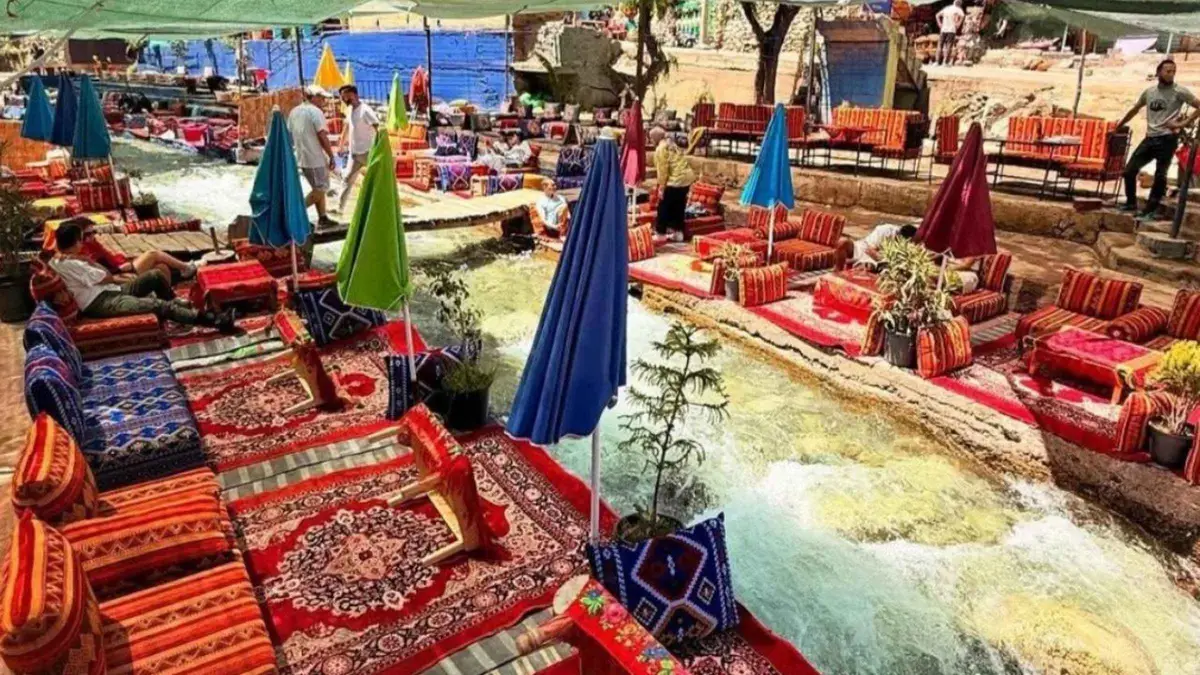 from $13.27
Marrakech: Ourika Valley lunch & guided hike to waterfalls
listed at $13.27
Seven-hour Ourika Valley day trip with a guided hike to the Setti Fatma waterfalls and lunch, in a small group. The operator's transport permit covers international tourists only, not Moroccan residents.
Check Availability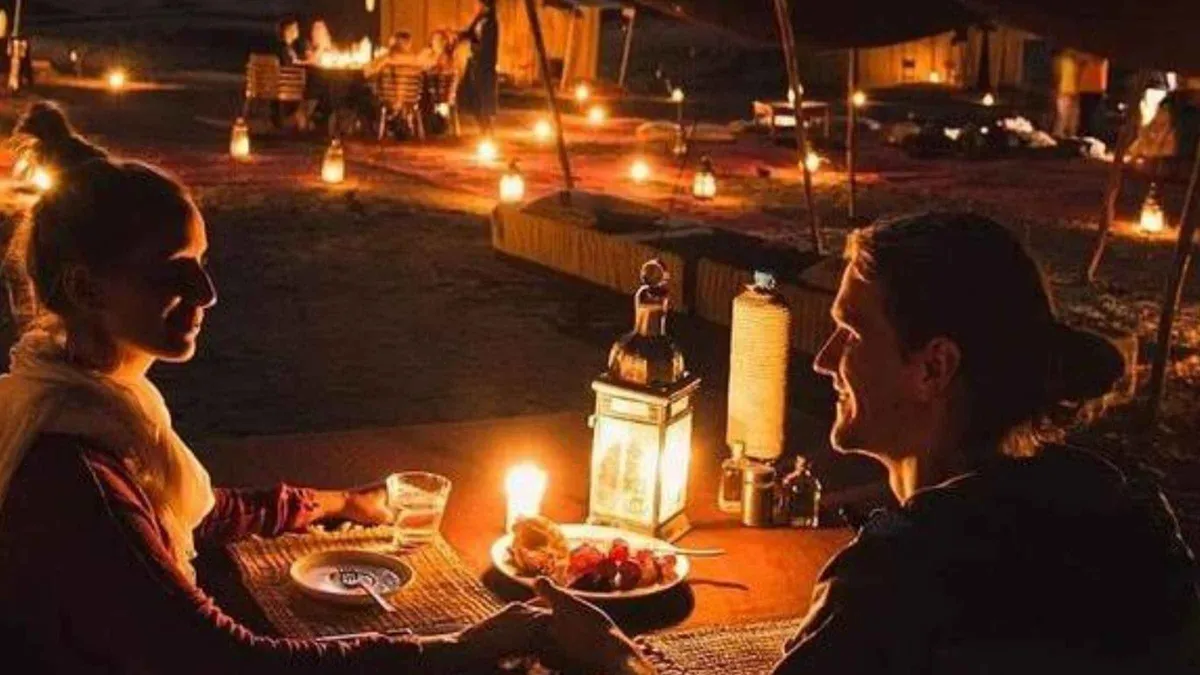 from $16.59
Marrakech: Agafay Desert Sunset, Camel Ride, and Dinner Show
listed at $16.59
Four-hour late-afternoon trip to an Agafay camp for a camel ride, sunset and a dinner show, pickup included. Shorter and cheaper than the full quad packages.
Check Availability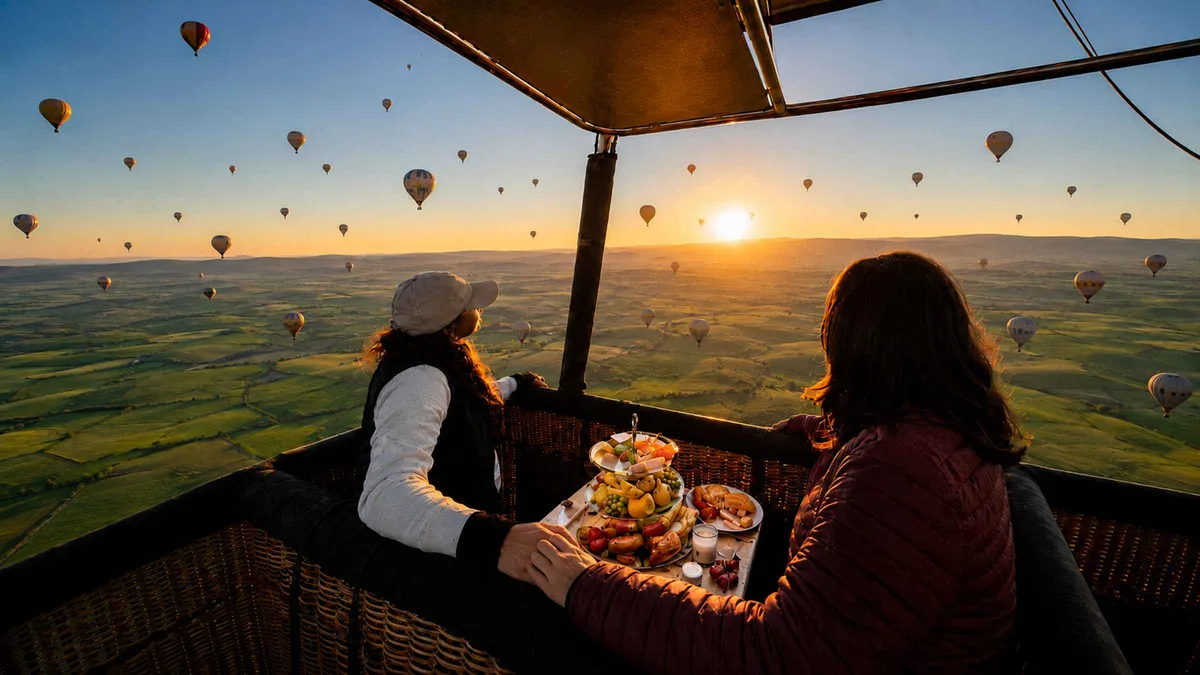 from $14.52
Marrakech: Balloon Activity, Berber Breakfast & Certificate
listed at $14.52
Five-hour sunrise balloon flight north of the city with hotel pickup, a Berber breakfast and a flight certificate. Maximum weight per person is 110 kg and the minimum age is 3.
Check AvailabilityPrices, ratings and details are the platform's own. Dollar figures are the listed prices. The platform bills in your account's currency.
The Pages Next To This One
Three practical pages built the same way, from what is published and what is not.
What it costs
The bed tax, the ATM surcharge and the taxi fare, each traced to the document that should carry it: what Marrakech costs.
Three figures nobody publishesWith children
Every published child tariff, the pushchair decision and the heat: Marrakech with kids.
Four venues admit young children freeWhen to come
The thirty-year climate record, month by month, including the four months when hydration is the plan: the best time to visit.
36.6 °C mean high in JulyWater In Marrakech: The Questions
Has anyone official said the water is safe to drink?
The distributor has said the water it supplies complies with the national standards NM 03.7.001 and NM 03.7.002, and published a monitoring volume of 15,524 analyses in a year to support it. That is a statement about the network. No Moroccan or foreign authority has published advice to a visitor about drinking it, in either direction.
What does the UK Foreign Office say about it?
Nothing. The FCDO health page for Morocco contains no statement about tap water, bottled water, ice or water-borne illness.
Is the water in the riad the same water?
The compliance statement covers the network. What happens between the mains and the tap in a specific building, including any roof tank, is not covered by anything published, and no Moroccan authority publishes rules or inspection results for building storage. If it matters to you, it is a question for the property.
Is it okay to brush your teeth with the tap water?
Nothing published answers it. The distributor's compliance statement covers the water in the network and says nothing about any particular use, and no health authority, Moroccan or foreign, addresses brushing teeth in Morocco at all. Most visitors use the tap for that and bottled water for drinking, which is a widespread habit rather than a sourced recommendation, and this guide labels it as one.
How much bottled water should I budget for?
There is no published price to budget against, because bottled water in Morocco is sold by private companies with no regulated tariff, and no official source publishes a retail figure. What is worth planning for is volume rather than cost: in July, with an average daily high of 36.6 °C, a walking day takes several litres per person.
Why will this page not just give a yes or no?
Because the sources do not support one. The utility's compliance statement and the complete absence of visitor advice are both real findings, and collapsing them into a one-word answer would hide which of the two you are relying on. Every page on this site handles an unreachable authority the same way: print what was said, print what was tried, and let the reader weigh it.
Can I drink tap water in Marrakech?
No official body publishes a plain yes for the city. A riad blog advises sticking to bottled water for drinking, and a filter seller says city water is treated but not recommended for tourists. A resident blogger calls it treated and generally safe. Most visitors simply buy bottled water.
Is it safe to drink tap water in Morocco?
The answer depends on who is asked. The Hijrah to Morocco blog says tap water in big cities like Rabat, Casablanca and Marrakech is treated and generally safe to drink. Tappwater says the same city water is technically safe when leaving the plants but not recommended for direct consumption by tourists.
What does the CDC say about water in Morocco?
The CDC Morocco page keeps to general wording, noting that food and water standards vary by destination. It says nothing specific about tap water in Marrakech or anywhere else in the country. Travellers wanting a city-specific official ruling will not find one there.
The Water Question On Film
Three films that deal with drinking water in Morocco directly, including one that tests bottled against tap and one that shows a supply project in the valley above Marrakech.
Moroccan Bottle Water Vs Tap Water PH Test: Before You Drink Water In Morocco Marrakesh
A home pH comparison filmed in Marrakech; a test of one sample, not a standard.
Video: ZRK REVIEWSWater Supply Project to the 7 villages of Iger Oufella in Ourika Valley Marrakech
Shows what drinking-water supply looks like in the valley above the city, where the network ends.
Video: Abdelouahed BenihiaVideos load from YouTube only when you press play.
Prices, hours and terms are set by the venue or operator and confirmed at checkout.
We may earn a commission if you book through one of our links, at no extra cost to you. Full affiliate disclosure