 Marrakech Guidebook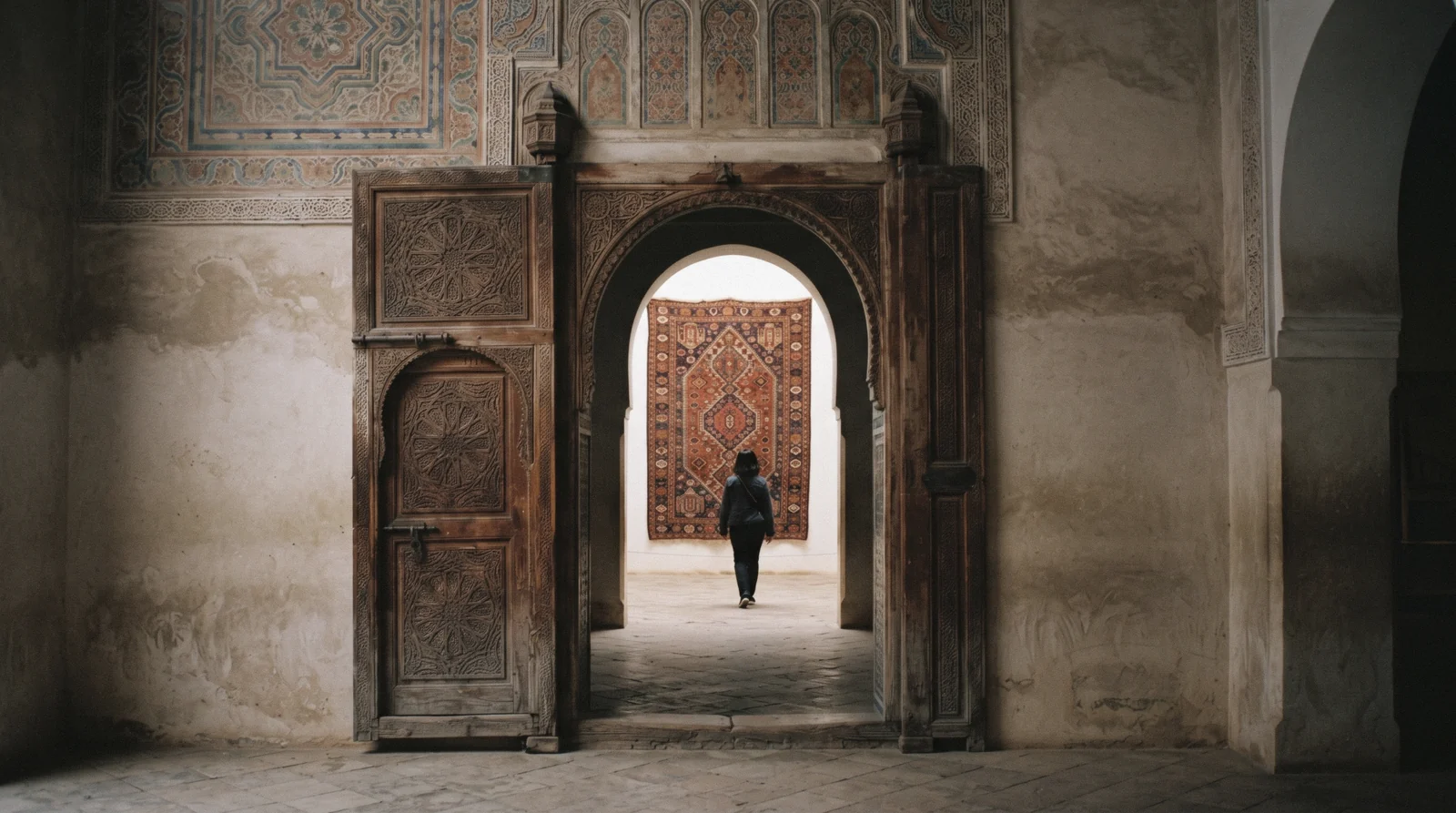
Dar Si Said, the National Museum of Weaving and Carpets
Dar Si Said is a nineteenth century palace two lanes north of the Bahia in the Marrakech medina, run by the Fondation Nationale des Musees as the Musee National du Tissage et du Tapis, the national museum of weaving and carpets. Two facts decide the visit and neither appears on the pages that rank above this one: it charges $3.20 (30 MAD) to everybody, the only ticket in the city with no separate foreign rate, and it is closed on Mondays, the only Monday closure in Marrakech. This page has the hours, the entry, the rooms and the route in; the full comparison is on the museums page.
Quick answer Price, the Monday trap, what is inside, how long to allow
Dar Si Said opens Tuesday to Sunday from 10:00 to 18:00 and closes on Mondays, the only weekly Monday closure in Marrakech. Entry is $3.20 (30 MAD), published as a single rate with no separate foreign price, which makes it the cheapest ticket of any museum or monument in the city.
Key takeaways
- The $3.20 (30 MAD) ticket is a third of what the Bahia Palace charges a visitor two lanes away and a sixth of the Jardin Majorelle. No online shop exists, so the desk takes your money on the day
- If your Marrakech days include a Monday, this is the one page you have to plan around. A Bahia and Saadian Tombs walk or a medina monuments circuit still runs that day, and neither includes this museum's entry anyway
- Inside are Moroccan carpets and weavings from the High Atlas, the Anti Atlas, the Sous and the Tensift, hung in a palace built by the brother of the man who built the Bahia. Allow about an hour
Key facts
Opening hours
| Tuesday to Sunday, all year | 10:00–18:00 |
|---|
Closed Mondays. No annual closure is published
Admission
- Adult
- $3.20 (30 MAD), one rate with no nationality split published
- Reduced
- $1.07 (10 MAD) for children over 12
- Free
- Not stated. The rate for children under 12 is not published either
Planning it
- Time needed
- Not stated by the museum. Our routing: 50 minutes for the collection, 75 with the courtyards and the upper hall
- Book ahead
- Optional — walk-up usually fine
- Address
- Derb El Bahia, Riad Zitoun Jdid, Medina, Marrakech
One official price, sold at the desk, against the guided walks that pass the door. Prices read on the Fondation Nationale des Musees page for this museum and on GetYourGuide in Q3 2026. No operator sells entry to Dar Si Said, so the tour rows below are guides and routing; the museum's own $3.20 (30 MAD) is extra on every one of them.
Are you buying entry, or buying a guide who can put this palace next to the Bahia and explain why they look alike?
| Option | Price | Includes | Cancel | Book |
|---|---|---|---|---|
| Museum ticket at the deskEveryone. The foundation's online ticketing does not work, so this is the only counter | $3.20 (30 MAD) adult, $1.07 (10 MAD) child over 12 | The whole museum; no audio guide is published | Nothing to cancel, nothing is sold in advance | Official site |
| Bahia Palace, Saadian Tombs, souks and medina, 4 hoursAnyone doing the Riad Zitoun Jdid quarter properly, with this museum added at the end | From $17.58 | Licensed guide; $10.65 (100 MAD) per monument paid in cash on site | Free up to 24 hours before | Check Availability |
| Historical monuments, souks and medina walk, 4 hoursFirst full day, when the medina still needs someone who knows the lanes | From $17.47 | Licensed guide and a briefing the day before; entries separate | Free up to 24 hours before | Check Availability |
| Private tailor made city tour, 3.5 to 6.5 hoursVisitors who want the carpet collection explained rather than labelled | From $66.35 | Private guide, pickup, up to four sites of your choosing; entries separate | Free up to 24 hours before | Check Availability |
There is no reseller row on this page because there is nothing to resell. The foundation's own museum page shows a buy tickets button, but every ticket path we tried returned an error when we checked: its tariffs page, its practical information page and its museums index all returned 404, and its ticketing subdomain did not resolve at all. Treat the desk as the only seller and bring dirhams.
Guided walks that take in this quarter
Nothing on this list includes the museum's own $3.20 (30 MAD) ticket, which is paid at the desk. What they buy is a licensed guide for the Riad Zitoun Jdid lanes and the palaces around them. Platform prices as listed.
 from $17.58
Marrakech: Bahia Palace, Saadian Tombs, Souk and Medina Tour
listed at $17.58
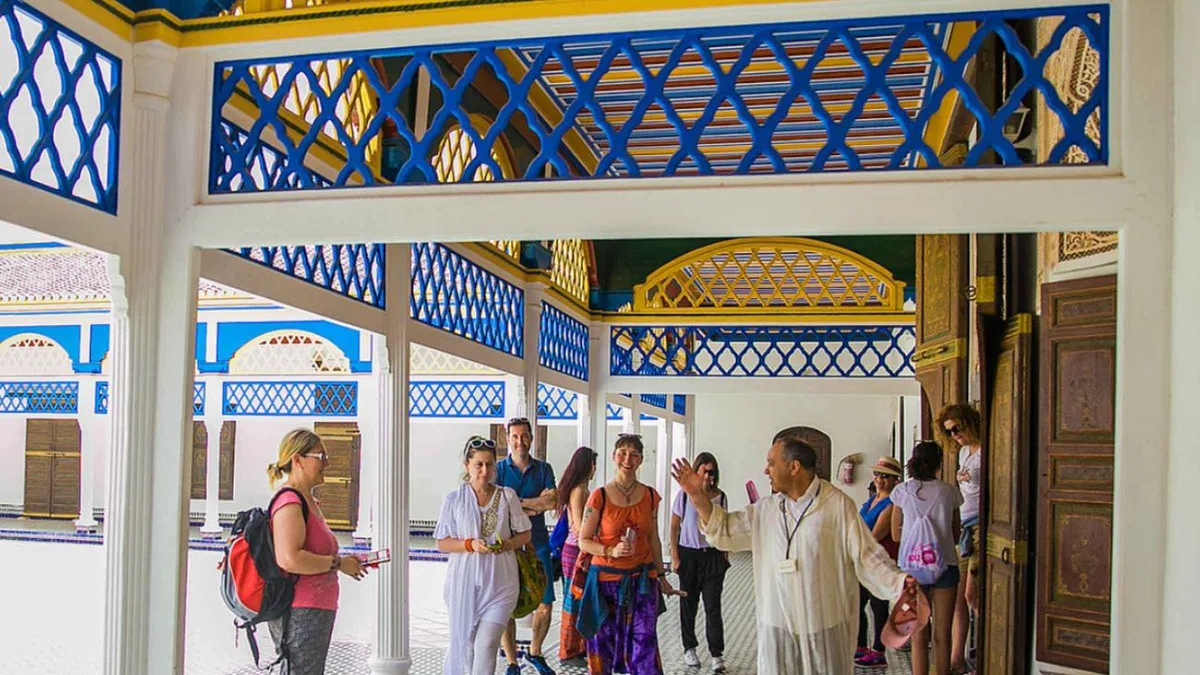
Four-hour licensed-guide walk covering Bahia Palace, the Saadian Tombs, the souks and the medina, with a WhatsApp reminder the day before. Monument tickets are paid in cash on site: 100 MAD per adult per monument, 30 MAD ages 7-13.
Check Availability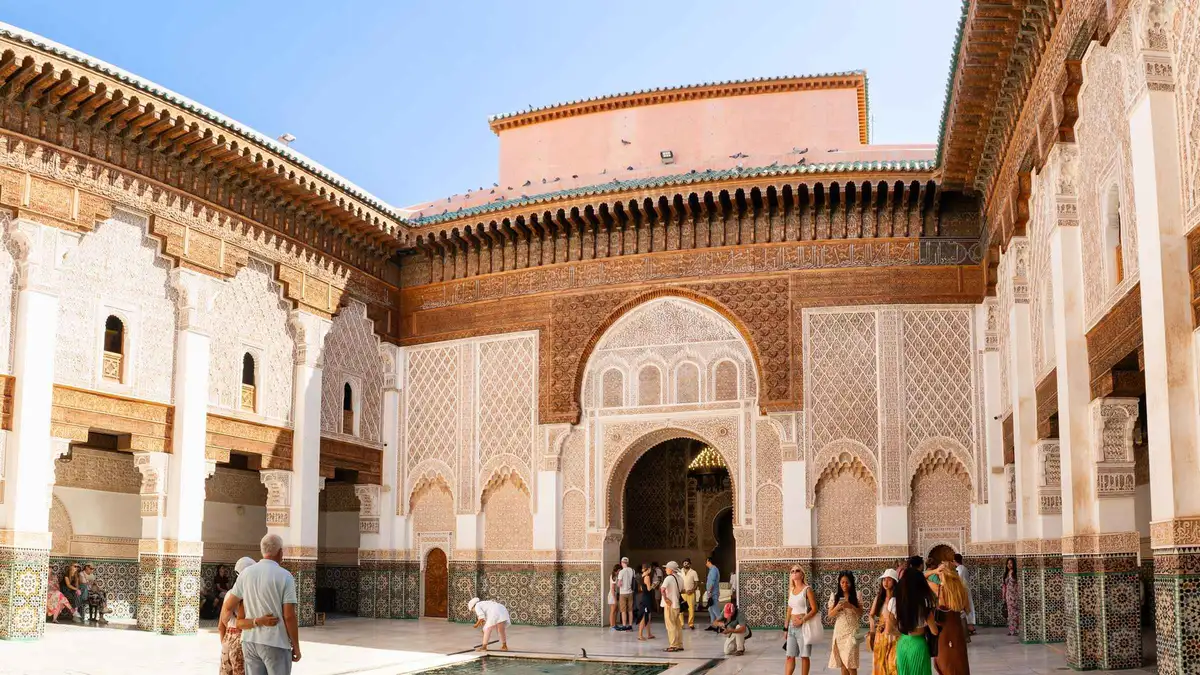 from $17.47
Marrakech: Historical Monuments, Souks & Medina Guided Tour
listed at $17.47
Four-hour licensed-guide circuit of the medina monuments, souks and lanes, with a WhatsApp briefing the day before. Private option includes riad pickup; monument tickets are separate.
Check Availability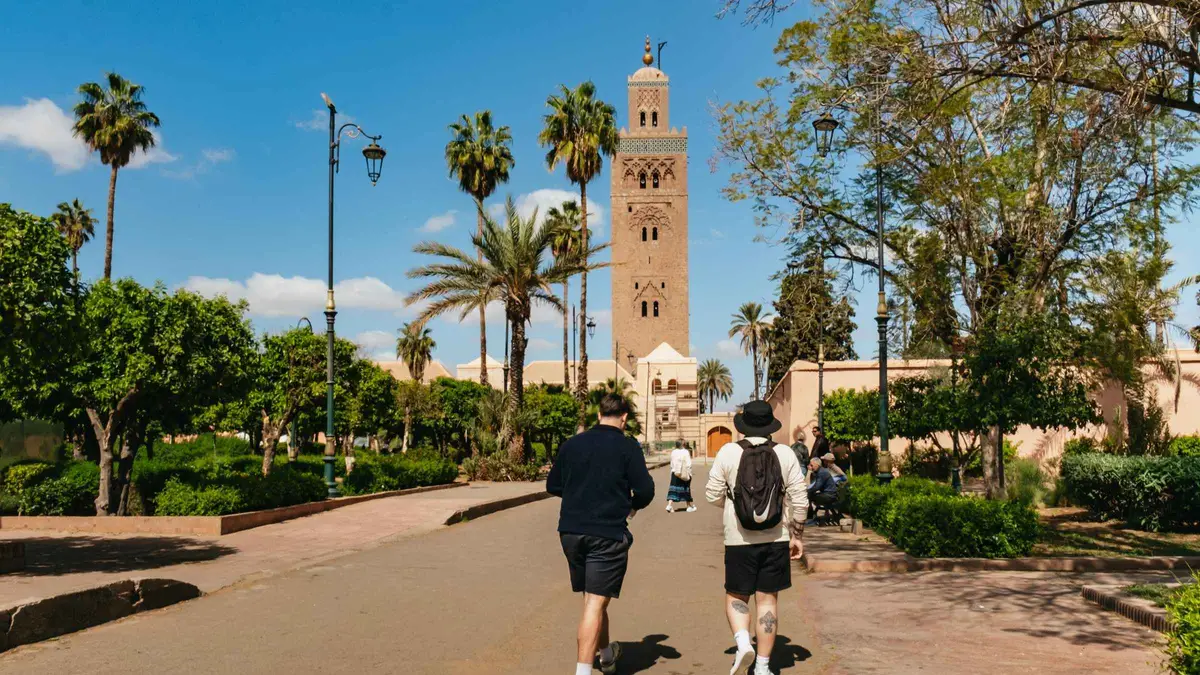 from $16.85
Marrakech: Saadian Tombs & Bahia Palace, Medina Guided Tour
listed at $16.85
Four-hour guided walk linking the Saadian Tombs, Bahia Palace and the medina lanes, with pickup available. Runs in several languages and is sold as shared or private.
Check Availability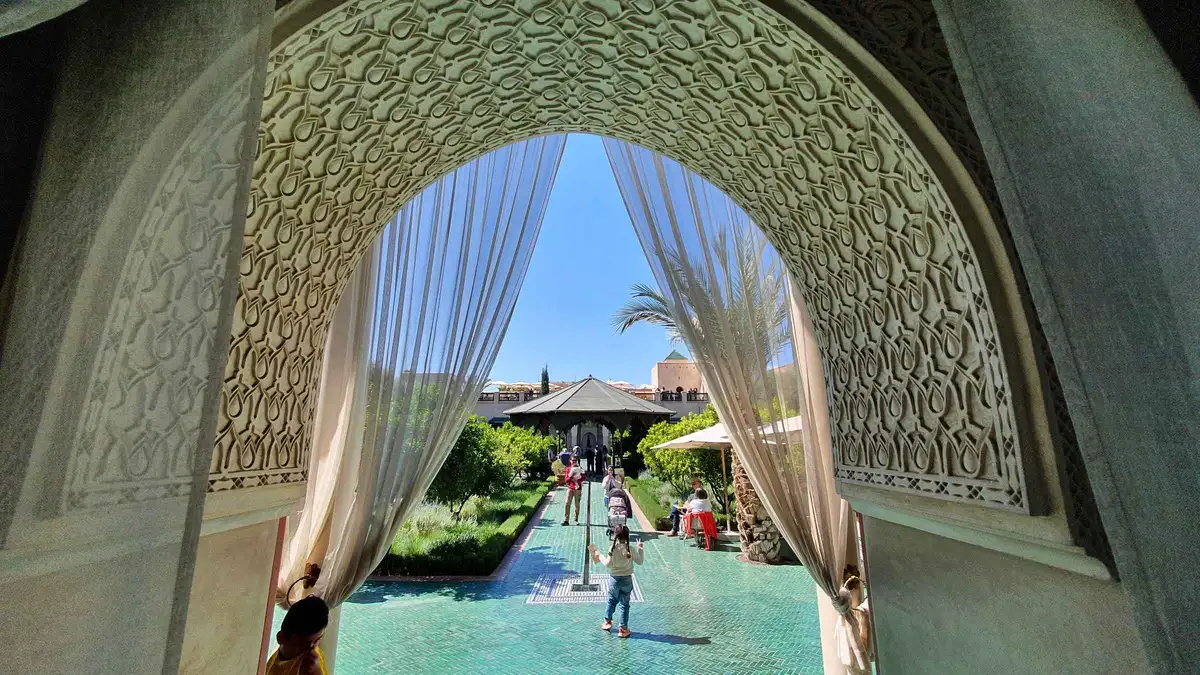 from $66.35
Marrakech: Tailor-Made City Tour With Your Own Private Guide
listed at $66.35
Half or full-day private tour built around what you ask to see, with pickup included. Up to two sights on the half-day and four on the full day; entrance fees are not included.
Check Availability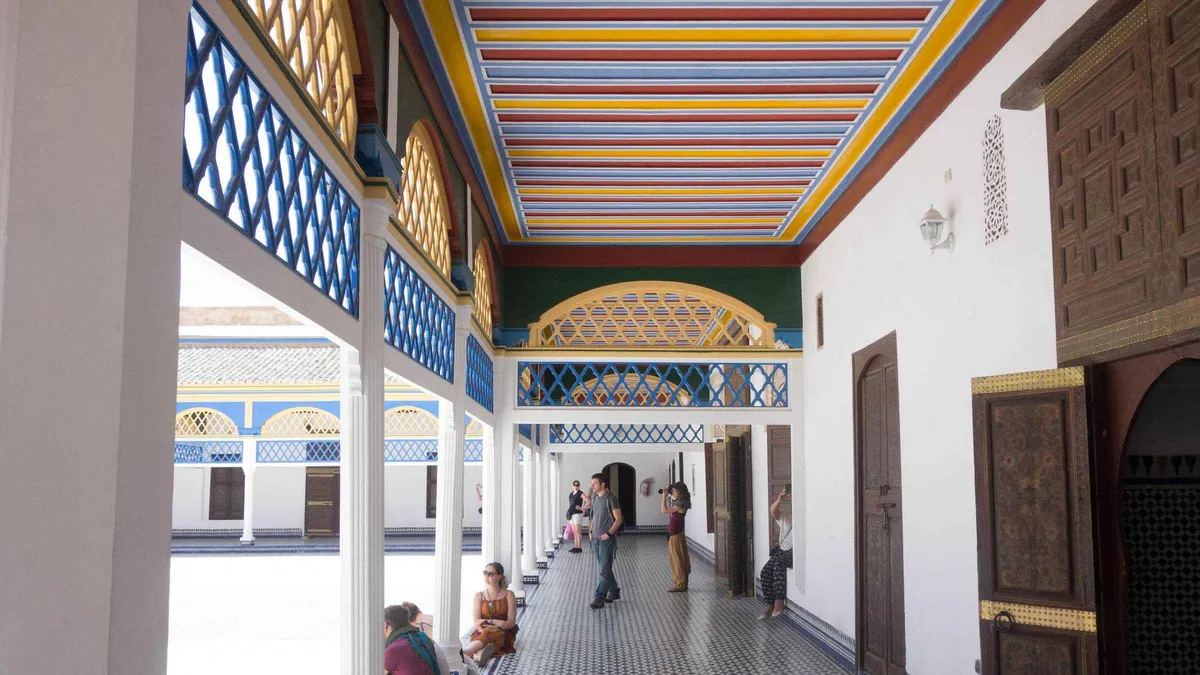 from $17.58
Marrakech: Bahia Palace, Madrasa Ben Youssef and Medina Tour
listed at $17.58
Four-hour guided walk through Bahia Palace, Madrasa Ben Youssef and the medina with a licensed guide. Entry is paid in cash at the door: 100 MAD for Bahia Palace and 50 MAD for the madrasa.
Check Availability from $16
Tuk Tuk Marrakech Private Tour: Audio guide, Gift & Pastries
listed at $16
One to three-hour private tuk-tuk circuit with an audio guide, pastries and a gift; a driver, not a guide, is provided. Monument tickets are not included and Majorelle tickets have to be bought online first.
Check AvailabilityPrices, ratings and details are the platform's own. Dollar figures are the listed prices. The platform bills in your account's currency.
The house: built by the Bahia's brother, between 1894 and 1900
Dar Si Said is the smaller, stranger sibling of the palace everyone queues for. Understanding whose house it was explains both the resemblance and the difference.
One family, two palaces, three lanes apart
The house was built between 1894 and 1900 by Si Said ibn Musa, a vizier and minister of defence, whose brother Ba Ahmad ibn Musa was Grand Vizier to Sultan Abdelaziz and the builder of the Bahia Palace a few minutes to the south. The two buildings share their craftsmen, their painted cedar and their zellij vocabulary, which is why a visitor who has done the Bahia in the morning walks into this one with a distinct sense of having seen the hand before.
What is different is the plan. Dar Si Said goes upward as well as outward: there is a grand reception hall on the upper floor and a large riad garden with a central pavilion, where the Bahia spreads sideways across eight hectares at ground level. The upper hall is the room people photograph, and it is the one part of the visit that is worth slowing down for.
From private house to national museum
The building was allocated in 1930 to hold artisan workshops and a museum of indigenous arts, and by 1957 it had formally split in two, one part for craftsmen's workshops and one for art and traditional heritage. That double life explains the collection: this was a place for making before it was a place for showing.
After a restoration by the Fondation Nationale des Musees the museum reopened in 2018 under a new name, the Musee National du Tissage et du Tapis, the national museum of weaving and carpets, and the collection was rebuilt around textiles rather than around general decorative arts. The September 2023 earthquake damaged the building and closed it for repairs. The foundation now lists full opening hours again, a sign the repairs are done, but gives no account of what the earthquake took.
The object that left
For decades the most famous thing in this house was not a carpet. It was an Andalusi marble basin carved at Madinat al-Zahra between 1002 and 1007, brought to Marrakech by the Almoravids and later kept here. It has been returned to the Ben Youssef Madrasa, so if that basin is what you came for, this is the wrong door.
The connection is worth holding on to, because the same Almoravid century produced the Almoravid Koubba five minutes from where the basin now stands.
What is inside: carpets, hanbels, and the rooms they hang in
The foundation describes the holding as a rich and varied collection of Moroccan carpets and weavings from every region, and the regional labels are the thing to read. Urban carpets from the cities are knotted, dense and formal. Rural weaving from the High Atlas, the Anti Atlas, the Sous and the Tensift is flat woven, looser, and carries the pattern languages of the groups that made it: the hanbel, the striped flatweave that does the work of a rug and a blanket; the handira, the wedding cape sewn with sequins that catches every light in the room; caftans, and the woodwork, jewellery, pottery, ceramics, weapons and archaeological pieces that came with the older museum and stayed.
What the labels give you is a map of the country by loom. Two hours south of here, in the valleys the Atlas day trips climb into, the same patterns are still being woven, which is why this museum is the best possible preparation for a carpet shop in the souks. You learn to tell a knotted urban rug from a flatweave, and a modern synthetic dye from an old one, before anyone offers you tea.
The building carries half the visit. The riad garden and the central pavilion at ground level, the painted cedar ceilings, the zellij, the carved plaster and the upper reception hall with its dome. Take the stairs before the last room; the light through the upper hall is best in the middle of the day and the room empties as soon as a group leaves.
- Urban knotted carpets against rural flatweaves, the collection's central contrast
- Hanbel flatweaves and sequinned handira wedding capes from the Atlas
- Woodwork, jewellery, ceramics, weapons and archaeological pieces from the earlier museum
- The riad garden and pavilion at ground level
- The upper reception hall, the best single room in the building
The Monday closure, and what it does to a short trip
Marrakech has no city wide closing day, which is what makes this one dangerous: nothing else in your plan will be shut, so nothing reminds you.
Every figure below was read on each venue's own page. The point of the table is the second column: this is the only museum in the city that takes a Monday off, and the ones that do close weekly close on different days from each other.
| Venue | Closed | Hours | Adult |
|---|---|---|---|
| Dar Si Said | Mondays | 10:00 to 18:00, Tuesday to Sunday | $3.20 (30 MAD) |
| Musee Yves Saint Laurent | Wednesdays | 10:00 to 18:00, last entry 17:30 | $14.91 (140 MAD) |
| Maison de la Photographie | No closing day published | 09:30 to 19:00 daily | $8.52 (80 MAD) |
| Ben Youssef Madrasa | No closing day published | 09:00 to 19:00 daily | $5.33 (50 MAD) |
| Bahia Palace and the other Ministry monuments | No closing day published | 09:00 to 17:00 | $10.65 (100 MAD) |
If your Monday is fixed
Swap this museum for the Bahia Palace, which is three minutes away, open, and shares the same craftsmen. If it is the textiles you want rather than the architecture, the souks are open on a Monday and the souks and shopping page explains what to look at and what to pay. The two day itinerary puts this museum on the second morning for exactly this reason.
One price for everyone, which happens nowhere else here
Entry is a flat 30 dirhams for adults, with no nationality split. Every other ticket authority in Marrakech splits its tariff. The Ministry of Culture charges a foreign adult $10.65 (100 MAD) at the Bahia, El Badi, the Saadian Tombs and the Koubba where a Moroccan national or resident pays $3.20 (30 MAD). The Ministere des Habous charges $5.33 (50 MAD) at the madrasa against $2.13 (20 MAD). The Fondation Jardin Majorelle charges $18.11 (170 MAD) against $7.99 (75 MAD). Here, a visitor and a resident pay the same $3.20 (30 MAD), and the only distinction published is age.
The age line is incomplete and worth knowing before you arrive with a family: the foundation publishes 10 dirhams for children over 12 and states nothing at all for children under 12, so ask at the desk and carry small notes.
There is no combined ticket in this city and none that includes this museum. Nothing links the four authorities, no city pass exists, and the closest thing to a two for one is the Maison de la Photographie ticket, which also opens the Musee de la Musique. The tickets index sets out the whole layer, and what Marrakech costs puts the entries against the rest of a day's spending. For anyone planning a wider circuit around the medina's monuments, Marrakech tours bundle entries differently than the per-museum tariffs described here.
Five Things Most Visitors Do Not Know About Dar Si Said
Each line ends in the source it came from, and each one changes a decision.
- It is the only museum in Marrakech with no foreign price. Adults 30 dirhams, full stop, where four other authorities in the same city publish two columns [fnm.ma/museums/30, read]. - The foundation sells nothing online, however it looks. The museum page shows a ticket button, but its tariffs page, practical information page and museums index all returned 404 and the ticketing subdomain did not resolve [fetched]. - The palace was built by the brother of the man who built the Bahia, between 1894 and 1900, which is why the two buildings share a hand [English Wikipedia, Dar Si Said]. - The famous Almoravid marble basin is no longer here. Carved at Madinat al-Zahra between 1002 and 1007, it has been returned to the Ben Youssef Madrasa [English Wikipedia, Dar Si Said]. - The building was closed by the September 2023 earthquake and the foundation publishes no account of the damage; the evidence that it reopened is that full hours are published again [English Wikipedia, Dar Si Said; fnm.ma/museums/30].
Getting there: Derb El Bahia, off Riad Zitoun Jdid
The address is Derb El Bahia, in the Riad Zitoun Jdid quarter of the medina, and the derb is a short lane rather than a street with numbers. From Jemaa el-Fna walk south east down Riad Zitoun el-Jdid for about ten minutes: it is one of the medina's few long, straight, legible streets, lined with shops the whole way, and it delivers you into the palace quarter without a single decision. The museum door is on the left before the Bahia, set back in its lane.
From the Bahia Palace it is three minutes on foot, which is the pairing that makes the most sense of the morning. From the Place des Ferblantiers and the Mellah it is about seven. A petit taxi can bring you to the end of Riad Zitoun el-Jdid or to the Place des Ferblantiers, never to the door; the meter is compulsory in Moroccan law and the getting around page explains what to do when a driver does not use it.
The palace has ground floor courtyards, a garden and its best room up a flight of stairs, so a visitor with limited mobility will see most but not all of it.
- From Jemaa el-Fna: about 10 minutes down Riad Zitoun el-Jdid, no turns to remember
- From the Bahia Palace: 3 minutes, the natural pairing
- From Place des Ferblantiers: about 7 minutes
- No taxi reaches the door; the last stretch is on foot
- No published accessibility statement; the upper hall is up stairs
Dar Si Said map: the lane, and the palaces around it
The museum in its derb off Riad Zitoun Jdid, with the three ticketed sites within ten minutes on foot.
Next stop from Dar Si Said
Walk minutes are our estimates from the GPS distances; this quarter is the easiest part of the medina to navigate.
Bahia Palace
The larger palace by the same family, open every day 09:00 to 17:00 for $10.65 (100 MAD). The Bahia is the Monday substitute for this museum and the natural pairing on any other day.
3 min walkEl Badi Palace
A stripped sixteenth century ruin with storks on the walls, same Ministry price. El Badi is the counterweight: this museum is full of objects, that one is full of space.
10 min walkSouks and shopping
The carpets you just learned to read are for sale fifteen minutes north. The souks page covers what to pay and what the labels mean, and a guided souk shopping walk puts a translator between you and the price.
12 min walkDar Si Said questions
Is Dar Si Said closed on Monday or Tuesday?
Monday. The Fondation Nationale des Musees, which runs the museum, publishes Tuesday to Sunday 10:00 to 18:00 and states it is closed on Mondays. Non official pages circulate a Tuesday closure; the operator's own page is the source we follow. If your visit falls on a Monday, the Bahia Palace three minutes away is open, and a medina monuments walk runs that day too.
How much is the Dar Si Said entrance fee?
$3.20 (30 MAD) for an adult and $1.07 (10 MAD) for a child over 12, as published by the foundation. There is no separate foreign rate, which is unique in this city, and the rate for children under 12 is not published at all, so ask at the desk. See the museums page for how that compares with the other three ticket authorities.
Can I buy Dar Si Said tickets online?
Not as far as we could establish. The foundation's museum page shows a buy tickets button, but its tariffs page, its practical information page and its museums index all returned 404 when we checked, and its ticketing subdomain did not resolve. Bring dirhams to the desk. The tickets index lists the venues in Marrakech that genuinely do sell online.
What is inside Dar Si Said, and how long does it take?
Moroccan carpets and weavings from the High Atlas, the Anti Atlas, the Sous and the Tensift, along with woodwork, jewellery, ceramics and weapons, in a palace with a riad garden and a painted upper reception hall. Plan on about 50 minutes for the collection and about 75 if you take the courtyards and the upper hall properly.
Is Dar Si Said the same as the Bahia Palace?
No, and the confusion is understandable. They were built by two brothers within a few years of each other, share their craftsmen and sit three minutes apart. The Bahia is a vast single storey palace at $10.65 (100 MAD); this is a smaller house on several levels at $3.20 (30 MAD), and its content is a national textile collection rather than empty state rooms.
Is the Almoravid marble basin still at Dar Si Said?
No. The basin carved at Madinat al-Zahra between 1002 and 1007 was long kept here and has been returned to the Ben Youssef Madrasa in the northern medina. If it is the object you came for, buy the madrasa ticket instead; a Ben Youssef and Le Jardin Secret walk covers that quarter.
Is Dar Si Said wheelchair accessible?
The museum has no accessibility statement, and only two of the ten Marrakech venues list one at all. The courtyards, the garden and the ground floor rooms are level; the upper reception hall, which is the best room in the building, is reached by stairs. The plan page collects what the city's venues do and do not publish about access.
Where Dar Si Said fits in a Marrakech day
Take it with the palace quarter, not on its own. The straightforward morning is the Bahia Palace at opening, this museum straight afterwards, then south to El Badi and the Saadian Tombs before the Ministry monuments shut at 17:00. That is four entries for about $27 in tickets, and this one is the cheapest of them by a distance.
If you are shopping later in the trip, do the museum first. An hour spent learning the difference between a knotted urban carpet and an Atlas flatweave changes what happens to you in the souks. Everything else with hours, prices and a map is on the museums page, and the rest of the guide starts from things to do in Marrakech.
Dar Si Said on Film: the Rooms and the Collection
Three walk-throughs of the palace and the textile rooms, filmed since the museum reopened under its weaving and carpet name. They show the scale of the house, which photographs of the ceiling alone do not.
Dar Si Said (Marrakech): the National Museum of Moroccan Weavings and Carpets
A full walk through the museum under its current name, room by room.
Video: Med NAFIRIDar Si Said: the National Museum of Moroccan Weavings and Carpets
A closer look at the carpets and flatweaves, useful before a souk visit.
Video: Enjoy With meMarrakech tour: Dar Si Said Museum
A visitor's walk through the courtyards and up to the reception hall.
Video: Marie Gosse VlogsVideos load from YouTube only when you press play.
Prices, hours and terms are set by the venue or operator and confirmed at checkout.
We may earn a commission if you book through one of our links, at no extra cost to you. Full affiliate disclosure