 Marrakech Guidebook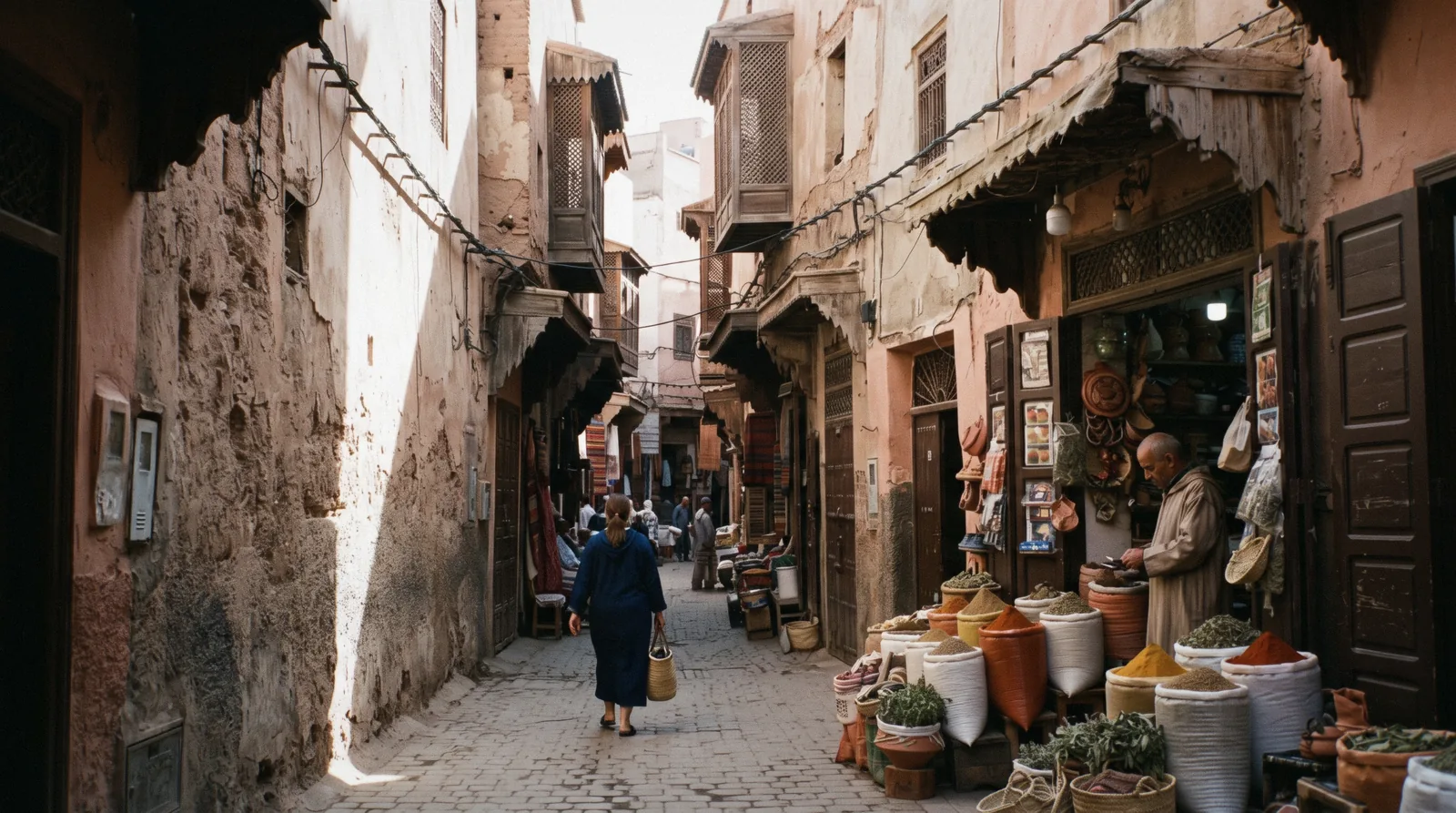
The Mellah, Marrakech
The Mellah Marrakech travellers search for is the historic Jewish quarter in the south-east of the walled city, wedged between the Bahia Palace, El Badi and the Place des Ferblantiers. No Moroccan authority publishes anything about the quarter, its synagogue or its cemetery, and pages printing confident opening hours for those buildings cite no one. This guide sets out what stands there and what is verifiable. For how a Marrakech trip fits together, see things to do in Marrakech.
Quick answer What it is, what is verifiable, what nobody publishes
The Mellah is the historic Jewish quarter of Marrakech, a quarter of the medina rather than an arrondissement, sitting between the Bahia Palace and El Badi inside the World Heritage property. It is free to walk. It is also the only district on this site for which not one official Moroccan source could be reached: not on the quarter, not on its synagogue, not on its cemetery.
Key takeaways
- There is no admission and no boundary marker. What is ticketed is next door: Bahia Palace 0.27 km from Dar Si Said and El Badi 0.56 km away, both $10.65 (100 MAD) for a foreign adult
- We print no synagogue or cemetery hours, because no authority publishes any. Every figure in circulation traces back to blogs and tour listings rather than to a source
- A four-hour guided walk covering the Bahia, the Saadian Tombs, the souks and the lanes is listed at $17.58 and is the practical way to see the quarter with someone who can read the doorways
- Rooms here are usually the cheapest inside the walls, which is the strongest argument for the address: where to stay compares it against the other five areas
What Stands Within Ten Minutes of the Mellah
Distances are straight lines from the Bahia Palace, whose coordinate the Ministry of Culture publishes, because no official coordinate exists for the Mellah itself. Prices are international adult rates read in Q3 2026, at 1,000 MAD to $106.52.
| Nearby | From the Bahia | Hours | International adult | Whose tariff |
|---|---|---|---|---|
| Bahia Palace | At the quarter's northern edge | 09:00 to 17:00 | $10.65 (100 MAD) | Ministry of Culture |
| Dar Si Said | 0.27 km | Tuesday to Sunday 10:00 to 18:00 | $3.20 (30 MAD) | Fondation Nationale des Musees |
| El Badi Palace | 0.56 km | 09:00 to 17:00 | $10.65 (100 MAD) | Ministry of Culture |
| Saadian Tombs | 0.84 km | 09:00 to 17:00 | $10.65 (100 MAD) | Ministry of Culture |
| Place Jemaa el-Fna | 0.86 km | No published hours | Free | No ticketing authority |
| The Place des Ferblantiers and the spice lanes | A few minutes on foot | No published hours | Free to walk | No ticketing authority |
Dar Si Said is the only Monday closure in this corner of the medina and the cheapest ticketed door in the city at 30 MAD. The other Ministry monuments list no weekly closing day.
Guided Walks That Take In This Corner of the Medina
No tour on this site is sold as a Mellah tour, and we do not invent one. These are the medina walks whose route runs through or beside the quarter, with listed USD prices read and gate fees usually paid separately in cash.
 from $17.58
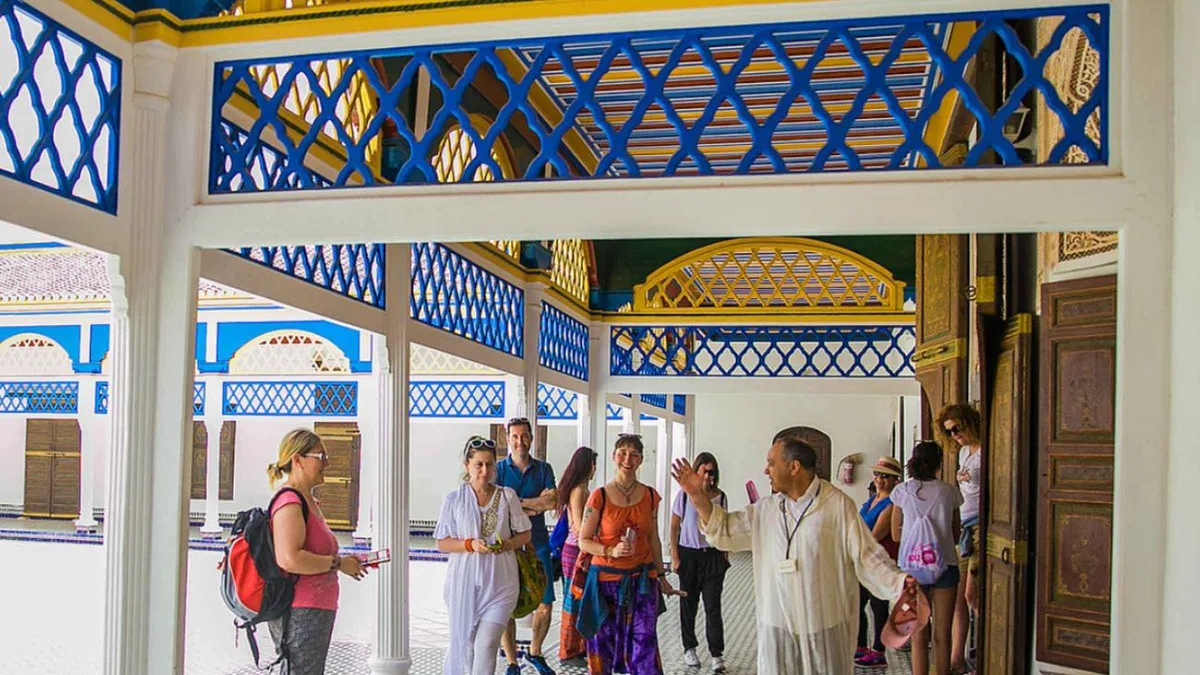
Marrakech: Bahia Palace, Saadian Tombs, Souk and Medina Tour
listed at $17.58
Four-hour licensed-guide walk covering Bahia Palace, the Saadian Tombs, the souks and the medina, with a WhatsApp reminder the day before. Monument tickets are paid in cash on site: 100 MAD per adult per monument, 30 MAD ages 7-13.
Check Availability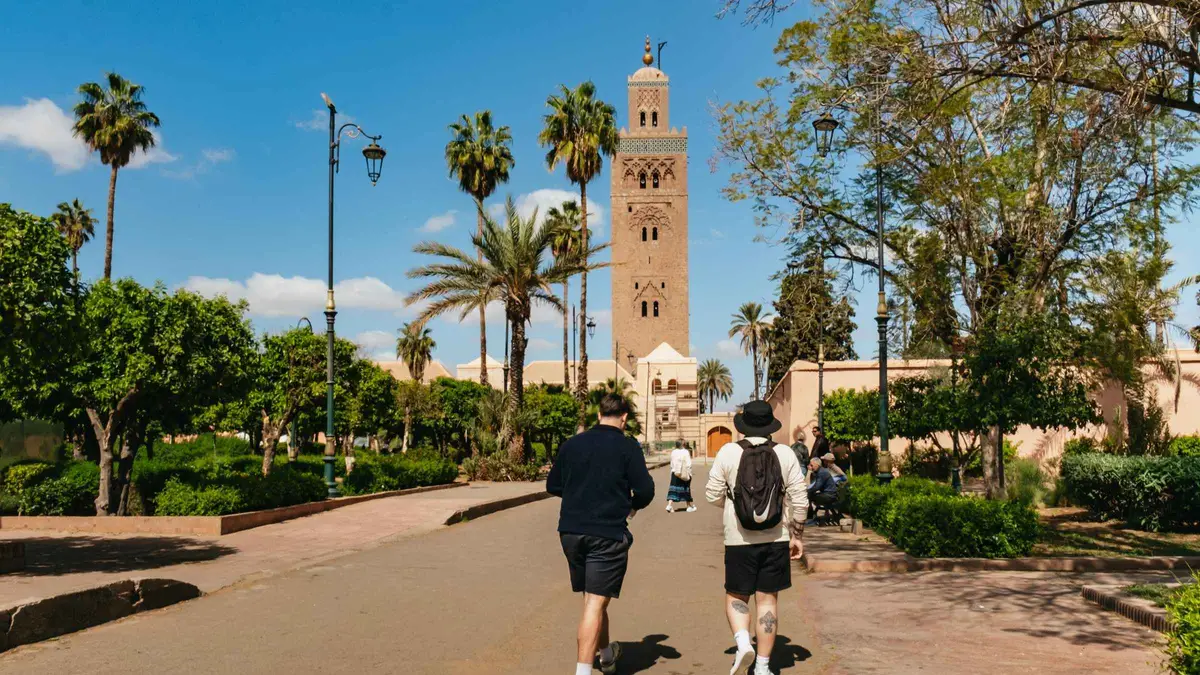 from $16.85
Marrakech: Saadian Tombs & Bahia Palace, Medina Guided Tour
listed at $16.85
Four-hour guided walk linking the Saadian Tombs, Bahia Palace and the medina lanes, with pickup available. Runs in several languages and is sold as shared or private.
Check Availability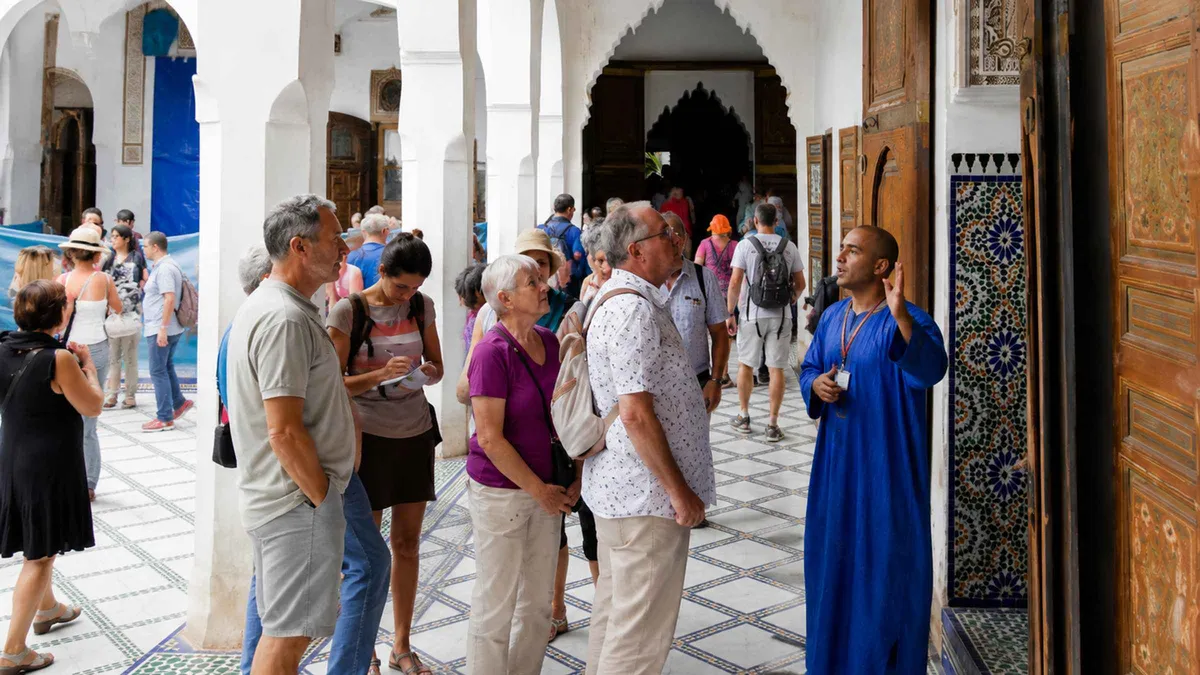 from $8
Marrakech: Bahia Palace Guided Tour with Skip-the-Line Entry
listed at $8
Ninety-minute guided visit of Bahia Palace with the guide handling the entry line, then free time inside. Some sections of the palace are under renovation.
Check Availability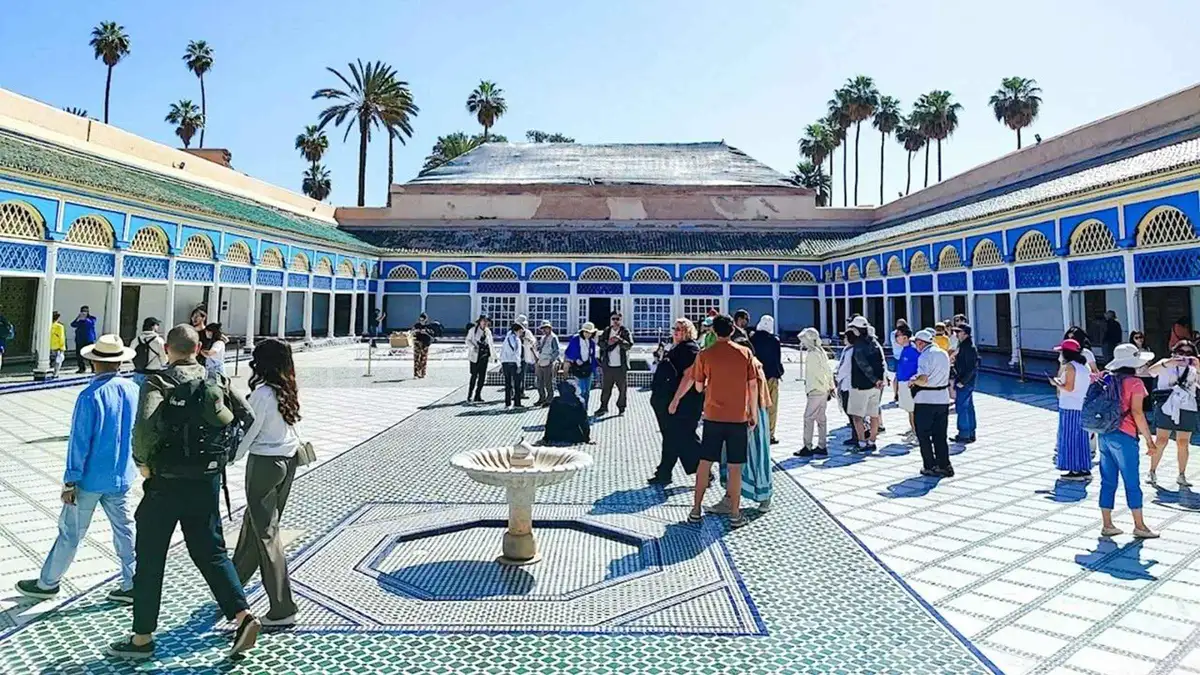 from $20.92
Marrakech: Bahia Palace, Saadian Tombs & Medina Walking Tour
listed at $20.92
Three-hour private walking tour of Bahia Palace, the Saadian Tombs and the medina with a local guide and water. Monument tickets are not included and are paid in cash at each gate.
Check Availability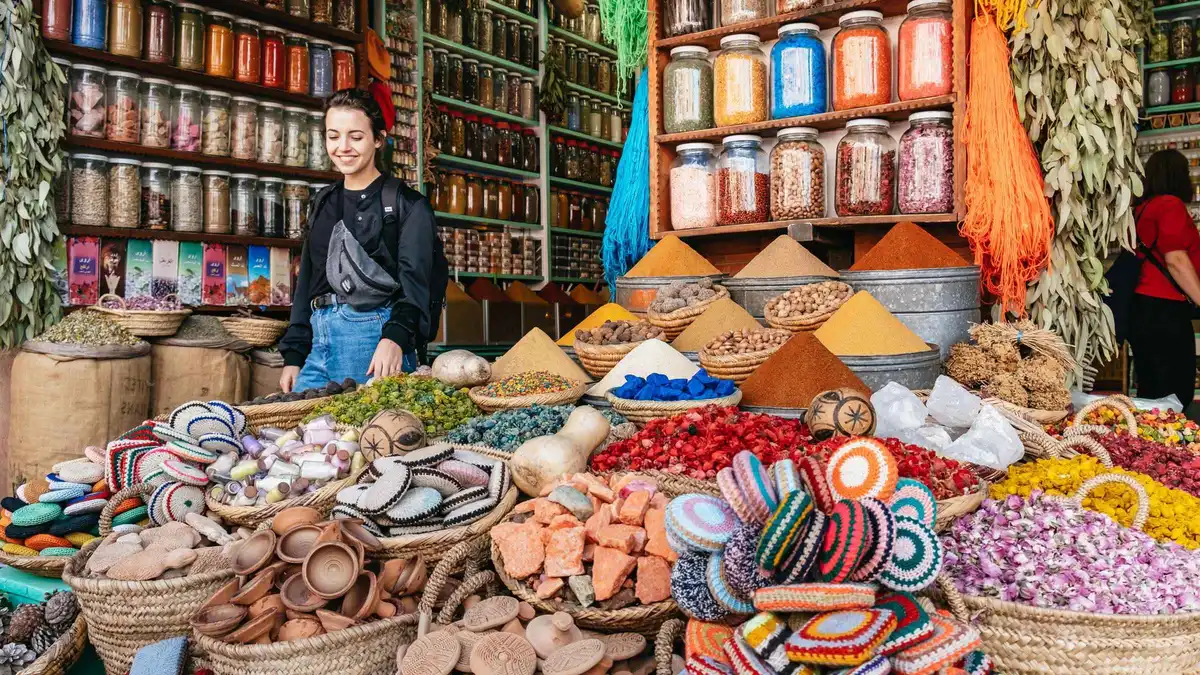 from $17.90
Marrakech: Colorful Medina Souks Guided Walking Tour
listed at $17.90
Three-hour guided walk through the dyers', metalworkers' and spice souks with a local guide. Sold as a shared small group or a private walk, pickup optional.
Check Availability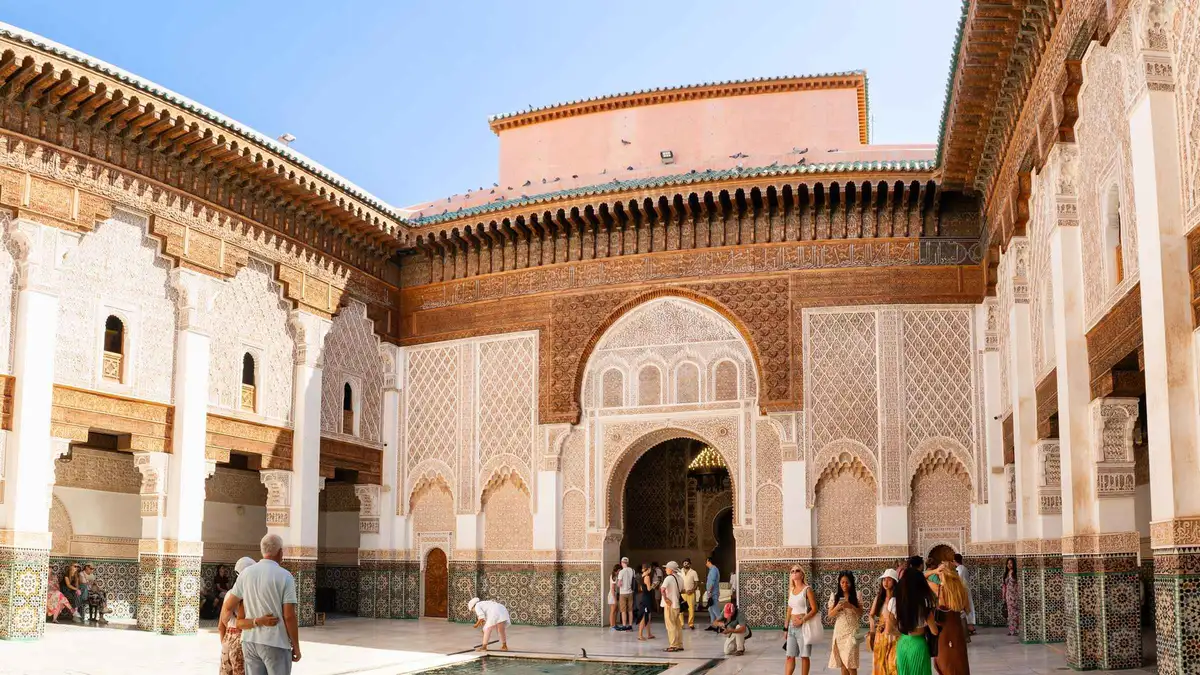 from $17.47
Marrakech: Historical Monuments, Souks & Medina Guided Tour
listed at $17.47
Four-hour licensed-guide circuit of the medina monuments, souks and lanes, with a WhatsApp briefing the day before. Private option includes riad pickup; monument tickets are separate.
Check AvailabilityPrices, ratings and details are the platform's own. Dollar figures are the listed prices. The platform bills in your account's currency.
What Nobody Publishes About the Mellah, and What We Tried
This is the most useful section on the page, because it is the one that stops you acting on a number somebody made up.
The Mellah is the least officially documented district in Marrakech. The city's own site does not respond, the main Moroccan Jewish heritage organisation has no reachable Marrakech page, the government portal's search returns no article on the quarter, and Wikidata carries an item for the Mellah with no coordinate, which is why every distance on this page is measured from the Bahia Palace. The restoration of the quarter's historic name in 2017 by royal instruction is reported only by non-official media.
The four things we will not print
Opening hours and admission for the Lazama synagogue, opening hours for the Miaara cemetery and guide fees for either all circulate online without any source behind them, so they may be right, stale or never true. Ask your riad on the morning you want to go, because a house four streets away knows this week's answer.
What is verifiable
The quarter exists as a named quarter of the medina, not as an arrondissement, which puts it administratively inside Marrakech-Medina, population 81,103 at the 2024 census. It sits inside the World Heritage property, whose boundary is the ramparts, and is therefore covered by the same protection regime as the rest of the walled city, Law 22-80 and the Architectural Charter of the Medina. Its geography is checkable against the published coordinates of the monuments around it.
Everything else on this page is either sourced elsewhere on this site or flagged as our own reading.
Source: Wikidata, Ministry of Culture, Moroccan Jewish heritage organisation, Moroccan government portal, Marrakech commune.
What a Mellah Is
The word, before the place, because the search that brings most people here is asking about the term.
A mellah is the Jewish quarter of a Moroccan city, a walled district established beside the royal or administrative centre of the town. Marrakech's is one of the oldest in the country, and its position is the giveaway: it sits directly against the palace ground, between the Bahia and El Badi, which is exactly where such quarters were placed. Fez, Essaouira and other Moroccan cities have their own, which is why a search for the word returns as many results from Essaouira and Fez as from here.
Why the geography is the argument
You cannot see a boundary on the ground and no authority publishes one, so what tells you where you are is the building stock. The lanes here run to tall narrow houses with wooden balconies overhanging the street, which is unusual in Marrakech, where the medina's houses turn inward around courtyards and show the street a blank wall. That difference in frontage is the most reliable thing anyone can tell you about the quarter's limits, and it is an observation rather than a citation.
The name it carries now
The quarter has been officially known as Hay Essalam in the modern administrative record, and press reports say the historic name was restored by royal instruction in 2017, though no government site confirms that instruction. Both names are in use on signs and in addresses, which is worth knowing when a taxi driver or a booking confirmation gives you one and your map gives you the other.
Source: UK 2024 census list of Marrakech arrondissements, non-official media reporting on the name restoration.
Walking the Quarter, and What It Joins Up
The Mellah is not a destination in the way a monument is. It is the connective ground between three of the city's biggest doors, and that is how to use it.
Come in from the Bahia. The palace stands at the quarter's northern edge and its exit puts you within a couple of minutes of the Place des Ferblantiers, the metalworkers' square, which is the natural hinge of a southern morning: El Badi is through the arch on one side, the lanes of the Mellah run off the other. The spice and jewellery trades sit in the streets between, and unlike the big souks north of Jemaa el-Fna they work at a scale you can walk through in fifteen minutes rather than an hour.
The table gives the sequence and what each leg costs.
| Leg | Straight line | What is there | Cost |
|---|---|---|---|
| Jemaa el-Fna to the Bahia Palace | 0.86 km | About fifteen minutes through the lanes | Free to walk |
| Bahia Palace | The quarter's north edge | Courtyards and painted ceilings, 09:00 to 17:00 | $10.65 (100 MAD) |
| Bahia to Dar Si Said | 0.27 km | The weaving and carpet museum, closed Mondays | $3.20 (30 MAD) |
| Bahia to the Place des Ferblantiers | A few minutes | Metalworkers' square, the hinge of the walk | Free |
| Place des Ferblantiers to El Badi | Through the arch | The Saadian ruin and its terrace | $10.65 (100 MAD) |
| El Badi to the Saadian Tombs | 0.30 km | Into the Kasbah quarter | $10.65 (100 MAD) |
What there is to look at that costs nothing
The balconied street fronts, which exist nowhere else in the medina at this density. The spice sellers' open frontages. The metal workshops around the square, which are a working trade rather than a display.
And the quarter's edges, where you cross from the tall houses into the palace walls in a few steps. None of it has hours, none of it has a ticket, and none of it takes more than a slow half hour unless you shop.
The buildings people come for
Two Jewish heritage sites stand in the Mellah. The Lazama synagogue, also written Slat al-Azama, is the historic synagogue of the quarter and is generally described as visitable. The Miaara cemetery is the historic Jewish cemetery on the quarter's eastern side.
Neither has an official page, set of hours or price. Treat both as places to ask about locally on the day, dress as you would for any religious site, and expect a donation to be appropriate rather than a printed fee.
Source: Ministry of Culture, Fondation Nationale des Musees.
Sleeping in the Mellah
The cheapest good address inside the walls, with one real caveat and two legal facts.
The argument for the quarter is simple: it is inside the ramparts, it is a fifteen minute walk from Jemaa el-Fna, three of the city's monument doors are within ten minutes, and riad rates in here are usually the lowest inside the walls. The argument against is that it is residential rather than commercial, so the evening is quieter and thinner than the streets around the square, and you will walk north for dinner more often than not. That is the same trade the Kasbah asks you to make, half a kilometre further south.
Two rules bear on the booking, and the where to stay hub sets out both in full. Riad and kasbah are now classified accommodation categories on their own star ladders, with a transition period, so a star advertised here in 2026 is usually not a reclassified one. The tourist tax runs per person per night on top of the rate, with a statutory band of $1.60 to $3.20 (15 to 30 MAD) for a riad or guest house and an exemption for children under twelve.
The exact commune rate inside that band is not published online.
Access, which works exactly as it does everywhere inside the walls
No vehicle reaches most doors here either. Your riad will meet you at the nearest point a car can stop, often on the Bahia side or by the Place des Ferblantiers, and walk in with your luggage. Send the arrival time and take the meeting point they name rather than an address you found yourself. The medina page explains how derb addresses work and why an airport transfer is quoted to that point rather than to the door.
Source: where to stay, transfer operators' own listings.
Etiquette, Photography and the Guiding Question
A residential quarter with religious buildings in it asks for slightly more care than a monument does, and none of that care is complicated.
Dress as you would for any religious site anywhere: shoulders and knees covered, and a head covering to hand if you are going into the synagogue. The streets themselves are ordinary residential streets, so the usual medina courtesy applies, which is that people's doorways and their children are not photo subjects without a word first. What to wear covers the city-wide version of this.
On guides, the pattern travel advisories describe for the whole medina is people presenting themselves as official guides and asking for payment afterwards. It is not a Mellah-specific problem, but the quarter is small, quiet and easy to be steered around, which makes it a likely spot for it. A licensed guide in Morocco holds a card under the guiding law and will show it.
If you want one for this corner, the four-hour walk through the Bahia, the tombs and the medina lanes is listed at $17.58 and rated 4.7 from 7,296 reviews. Safety and scams has the full pattern.
Finally, cash. This is a market quarter, and the spice and metal trades take notes rather than cards, like almost everything inside the walls. The dirham cannot be bought before you fly and only 2,000 MAD may be carried in or out, so it is changed after you land. What Marrakech costs sets out the rules and the ATM position.
Source: safety and scams, Office des Changes.
The Mellah on the Map
There is no published coordinate for the Mellah, so this map is centred on the Bahia Palace at its northern edge and every distance on this page is measured from there. Terracotta pins are ticketed, green pins are free.
Coordinates from the Ministry of Culture ticketing platform and the Fondation Nationale des Musees pages. The quarter itself has no published coordinate, and no pin is placed on the synagogue or the cemetery because no official location or hours were obtainable.
Next Stop From the Mellah
The palace at the quarter's edge
Courtyards, painted cedar ceilings and the 100 MAD national tariff: Bahia Palace.
At the northern boundaryThe royal quarter to the south west
El Badi, the tombs and the free Almohad gate, all in one short walk: the Kasbah.
0.84 km to the Saadian TombsThe rest of the walled city
The souks, the market streets and every other ticketed door inside the ramparts: the medina.
1.18 km northSleeping in the Mellah, and the Two Alternatives
Three bases compared on what each one does to your day rather than on price. No nightly rate band is published, so each card opens a live search for your own dates.
The Mellah
- Straight line to Jemaa el-Fna
- 0.86 km, measured from the Bahia Palace
- Suits
- Cheaper riad rates inside the walls, three monument doors within ten minutes
Residential and quiet, with the spice and metal trades around the Place des Ferblantiers and the Bahia at the top of the quarter. Dinner usually means walking north. Riad and guest house rooms fall in the $1.60 to $3.20 (15 to 30 MAD) statutory tax band per person per night.
See stays in the MellahThe medina around the square
- Straight line to Jemaa el-Fna
- Under 0.8 km for most addresses
- Suits
- A first visit, the souks on the doorstep, dinner without a walk back
The market city north and west of Jemaa el-Fna, where the riad supply and most of the eating is. Busier by day and by night, which is the point. The medina guide.
See stays in the north medinaGueliz, outside the walls
- Straight line to Jemaa el-Fna
- 2.09 km
- Suits
- Late arrivals, lifts, longer stays, a taxi that reaches the door
The ville nouvelle, where addresses work in the way visitors expect and the airport bus terminates. Every medina evening ends with a fare back. The Gueliz guide.
See stays in GuelizAreas compared on the published coordinates of the monuments beside them and on the statutory tax bands. These links open a hotel search for that area, and we take a commission if you book through them, at no extra cost to you.
The Mellah, Marrakech: Questions
What is the Mellah in Marrakech?
It is the historic Jewish quarter of the city, a named quarter of the medina rather than an arrondissement, lying between Bahia Palace and El Badi on the south-eastern side of the walled city. It is free to walk, it has no gate and no hours, and it sits inside the same World Heritage property as the rest of the medina.
What does the word mellah mean?
It is the Moroccan term for the Jewish quarter of a city, historically a walled district placed beside the royal or administrative centre. Several Moroccan cities have one, including Fez and Essaouira, which is why a search for the word returns results from several places at once. Marrakech's sits directly against the palace ground, which is exactly where such quarters were laid out.
Can you visit the synagogue in the Marrakech Mellah?
The Lazama synagogue, also written Slat al-Azama, is generally described as visitable, but no official source publishes its hours, its price or any conditions of entry, and this guide will not repeat figures it cannot source. Ask your riad on the morning you want to go, dress as for any religious site, and expect a donation rather than a printed fee.
Is the Mellah worth staying in?
Yes, if the priority is being inside the walls at the lowest rate and next to the monument belt: Dar Si Said is 0.27 km from the Bahia and El Badi 0.56 km. The cost is the evening, because the quarter is residential and dinner usually means walking fifteen minutes north towards Jemaa el-Fna. On a first two-night trip, book nearer the square instead.
How do you get to the Mellah?
On foot, in about fifteen minutes from Jemaa el-Fna through the lanes, or by taxi to the Bahia Palace or the Place des Ferblantiers, which is as close as a vehicle gets. There is no bus stop inside the walls and no vehicle route to most doors. Getting around covers the taxi rules, including the point that the meter is compulsory but no Marrakech tariff is published.
What is there to see in the Mellah itself?
The street architecture, which is unlike the rest of the medina: tall narrow houses with wooden balconies overhanging the lane, where the medina proper turns inward around courtyards. Then the spice and jewellery trades in the streets off the Place des Ferblantiers, and the metal workshops on the square itself. None of it is ticketed and none of it has published hours; a slow half hour covers the quarter unless you shop.
Why is there so little official information about the Mellah?
This is not established by any first-party source. What is verifiable is its position inside the World Heritage property and the monuments around it, which is what this page is built on.
The Mellah on Video
Three films made inside the quarter, chosen because they show the streets and the buildings rather than repeating opening hours nobody can source.
The Jewish Experience in Marrakech
A walk through the quarter and its religious buildings, which is the closest thing to a visual guide that exists.
Video: Insightful NomadHay El Mellah: Exploring Marrakesh's Historic Jewish Quarter
Street-level footage under the quarter's modern administrative name, useful for recognising the balconied frontages.
Video: PlacesMellah, the Jewish quarter
A short local film of the lanes and the market ground beside the Place des Ferblantiers.
Video: Marrakech RiadVideos load from YouTube only when you press play.
Prices, hours and terms are set by the venue or operator and confirmed at checkout.
We may earn a commission if you book through one of our links, at no extra cost to you. Full affiliate disclosure